
A 3kW solar panel system is the most popular entry-level installation for UK homeowners. It sits comfortably on most semi-detached and terraced roofs, costs between £5,000 and £6,500 fully installed, and generates enough electricity to cover a significant chunk of a smaller household’s annual needs. If you’re a 1-3 person household with moderate electricity use, a 3kW system is often the sweet spot between cost and output.
Contents
- 1 Key Takeaways
- 2 What is a 3kW Solar Panel System?
- 3 How Many Panels Do You Need for a 3kW System?
- 4 How Much Does a 3kW Solar System Cost in the UK?
- 5 How Much Electricity Does a 3kW System Generate?
- 6 How Much Can You Save with a 3kW Solar System?
- 7 Payback Period for a 3kW Solar System
- 8 Should You Add Battery Storage to a 3kW System?
- 9 Is a 3kW System Right for You?
- 10 Case Study: A Retired Couple in Coventry With a 3kW System
- 11 Expert Insights From Our Solar Panel Installers About 3kW Systems
- 12 Frequently Asked Questions
- 12.1 How many kWh does a 3kW solar system produce per day in the UK?
- 12.2 Is a 3kW solar system big enough for a 3-bedroom house?
- 12.3 How much roof space does a 3kW solar system need?
- 12.4 What’s the difference between 3kW and 4kW solar systems?
- 12.5 Can a 3kW solar system power a house completely?
- 12.6 Do I need planning permission for a 3kW solar system?
- 12.7 How long does it take to install a 3kW solar system?
- 12.8 What inverter do I need for a 3kW solar system?
- 13 Summing Up
Key Takeaways
- A 3kW system typically uses 6-8 panels and requires around 15-20m² of south-facing roof space.
- Installed cost ranges from £5,000 to £6,500 including VAT at 0% (valid until March 2027).
- Annual generation: approximately 2,500-2,700 kWh depending on location and orientation.
- Annual savings: £450-£650 combining self-consumption savings and Smart Export Guarantee income.
- Payback period: 9-12 years, leaving 13+ years of free generation within panel warranty period.
- Best suited to 1-3 person households in 2-3 bedroom properties with annual consumption under 3,500 kWh.
What is a 3kW Solar Panel System?
A 3 kilowatt-peak (3kWp) solar system is a residential installation that can generate up to 3,000 watts of electrical power under ideal conditions (full midday sun, optimal angle). In the UK, “peak” conditions are rarely sustained for more than a few hours per day, so real-world output is based on annual yield rather than peak instantaneous power.
Modern 400-450W panels mean a 3kW system requires just 7-8 panels, down from 12-15 panels a decade ago when 200-250W panels were standard. This reduction in panel count makes 3kW systems viable on roofs that might have been too small or too obstructed for solar installations previously.
The system components include the solar panels themselves, a string inverter (typically 3kW capacity), mounting hardware, DC and AC cabling, a generation meter, and connection to your consumer unit. Some installers include basic system monitoring as standard; others charge extra for app-based monitoring platforms.
How Many Panels Do You Need for a 3kW System?
With 400W panels, the current UK market standard, a 3kW system needs exactly 7.5 panels, meaning installers will quote you for either 7 panels (2.8kW) or 8 panels (3.2kW). Most go for 8 panels to round up to a clean system size. With 450W panels, 7 panels gives you 3.15kW, making 7 the more common count at the premium end of the market.
Each panel measures approximately 1.7m x 1.0m. Seven panels in a portrait single row span 7m, wider than most UK roofs. In practice, panels are arranged in rows of 3-4, with 7 panels fitting in a 4+3 arrangement or 8 in a 4+4 grid. Required roof area: 15-18m² of usable space after edge setbacks.
How Much Does a 3kW Solar System Cost in the UK?
Installed costs for a 3kW system in 2026 typically range from £5,000 to £6,500, depending on the installer, panel brand, inverter quality, and roof complexity. The 0% VAT rate on residential solar installations (in place until at least March 2027) means no VAT is added to this price, previously at 5%, that’s a saving of around £275-325 on a 3kW system.
| Component | Budget Option | Mid-Range | Premium |
|---|---|---|---|
| Panels (7-8 x 400-450W) | Tier 2 brand | Jinko/Trina/LONGi | REC/Panasonic |
| Inverter | Growatt/Solis | SolarEdge/Fronius | SolarEdge HD Wave |
| Installed cost | £5,000-5,500 | £5,500-6,000 | £6,000-6,500 |
| Monitoring | Basic app | Full platform | Full platform + optimisers |
| Warranty (panels) | 10-12 years | 12-15 years | 25 years |
Get at least three quotes from MCS-accredited installers before committing. Prices vary significantly by region, installers in London and the South East typically charge 10-15% more than those in the Midlands and North.
How Much Electricity Does a 3kW System Generate?
A 3kW system in the UK generates approximately 2,500-2,750 kWh per year on a south-facing roof at 30-40 degree pitch. This varies by location, solar irradiance is roughly 20-25% higher in the South West than in Scotland, which is a meaningful difference in output.
| Region | Annual Output (3kW south-facing) | Monthly Average |
|---|---|---|
| South West England | 2,700-2,800 kWh | 225-233 kWh |
| South East England | 2,600-2,700 kWh | 217-225 kWh |
| Midlands | 2,400-2,550 kWh | 200-212 kWh |
| North West England | 2,250-2,400 kWh | 188-200 kWh |
| Scotland | 2,100-2,300 kWh | 175-192 kWh |
Generation is heavily seasonal. In June and July, a 3kW system in the Midlands can generate 350-400 kWh per month. In December and January, that drops to 60-80 kWh. This seasonal swing is why self-consumption rates vary so much throughout the year, and why battery storage becomes more valuable if you want to make use of the summer surplus.
| Month | Estimated Output (Midlands, 3kW) |
|---|---|
| January | 70 kWh |
| February | 110 kWh |
| March | 200 kWh |
| April | 270 kWh |
| May | 320 kWh |
| June | 350 kWh |
| July | 345 kWh |
| August | 300 kWh |
| September | 220 kWh |
| October | 145 kWh |
| November | 85 kWh |
| December | 65 kWh |
How Much Can You Save with a 3kW Solar System?
Your savings depend on how much of your solar generation you use directly (self-consumption) versus export to the grid. A household that’s home during the day, remote workers, retirees, families with young children, will self-consume 50-70% of generation. A household where everyone is out from 9-5 will self-consume closer to 25-35%, with the rest exported.
| Scenario | Self-Consumption | Units Used (2,550 kWh gen) | Saved at 27p | SEG Income at 15p | Total Annual Benefit |
|---|---|---|---|---|---|
| Home all day | 65% | 1,658 kWh | £448 | £134 | £582 |
| Typical household | 50% | 1,275 kWh | £344 | £191 | £535 |
| Out all day | 30% | 765 kWh | £207 | £249 | £456 |
| With 5kWh battery | 75% | 1,913 kWh | £517 | £96 | £613 |
Smart Export Guarantee rates vary by supplier. As of 2026, Octopus Energy offers 15p/kWh and OVO Energy 12p/kWh. Some time-of-use tariffs (Octopus Flux, Intelligent Octopus) allow you to import cheap overnight electricity AND export at premium rates, which can further improve the economics if you add battery storage.
Payback Period for a 3kW Solar System
At an installed cost of £5,500 and annual savings of £535, payback takes approximately 10-11 years. That’s comfortably within the 25-year performance warranty on quality panels, leaving 14+ years of near-free electricity generation after you’ve recouped the installation cost.
| System Cost | Annual Saving | Payback Period | 25-Year Net Saving |
|---|---|---|---|
| £5,000 | £535 | 9.3 years | £8,375 |
| £5,500 | £535 | 10.3 years | £7,875 |
| £6,000 | £535 | 11.2 years | £7,375 |
| £6,500 | £535 | 12.1 years | £6,875 |
Adding battery storage (typically £3,500-5,000 for a 5-10kWh unit) extends payback by 4-7 years on the battery element, but significantly improves annual savings by increasing self-consumption. The combined payback on a 3kW system with battery is typically 12-16 years.
Should You Add Battery Storage to a 3kW System?
Battery storage makes the most sense when your self-consumption rate without a battery is low, typically less than 40%. If you’re out of the house during daylight hours, a 5kWh battery captures the midday generation peak and makes it available when you return in the evening. For a 3kW system generating around 2,550 kWh annually, a 5kWh battery is well-matched, it’s large enough to store meaningful surplus without being oversized for what the panels can realistically fill.
At 0% VAT (until March 2027), a 5kWh battery costs roughly £3,500-4,500 installed. On a smart time-of-use tariff like Octopus Go, you can also charge the battery cheaply overnight (7-10p/kWh) and use that stored power during peak-rate hours, adding another layer of savings on top of solar generation. This combined approach, solar charging by day, cheap-rate grid charging overnight, can push total annual savings well above the solar-only figure.
Is a 3kW System Right for You?
A 3kW system is the right choice if you have a smaller roof, a modest budget, or a 1-3 person household with electricity consumption under 3,000 kWh per year. It’s particularly effective for households that are home during the day, where self-consumption rates are highest.
Consider stepping up to a 4kW or 5kW system if any of the following apply: you have an electric vehicle and want to charge it from solar, you use a heat pump for heating, you have four or more people in the household, or your annual electricity bill exceeds £1,200. The incremental cost of going from 3kW to 4kW is typically just £1,000-1,500, and the extra panel or two will pay back at the same rate as the original system, so it’s usually worth doing at installation rather than retrofitting later.

Case Study: A Retired Couple in Coventry With a 3kW System
Background
A retired couple in Coventry owned a 1970s semi-detached with a south-facing pitched roof. Both home during the day, their annual electricity consumption was around 2,800 kWh. They wanted a system that would meaningfully reduce their electricity bills without taking on a large upfront cost.
Project Overview
Their installer quoted a 3.2kW system (8 x 400W Jinko panels) with a Solis string inverter. The total installed cost was £5,400 including scaffolding, with no battery initially. The installation took one day.
Implementation
Generation monitoring via the Solis app showed annual output of 2,680 kWh in the first year. Being home all day, the couple self-consumed around 68% of generation directly, running the washing machine, dishwasher and oven during daylight hours. They registered with Octopus Energy for SEG at 15p/kWh for their exports.
Results
First-year savings: £487 in avoided electricity purchases (1,822 kWh at 27p) plus £129 in SEG income (858 kWh exported). Total annual benefit: £616. At that rate, payback on the £5,400 installation is 8.8 years, ahead of their 10-year estimate, partly because they shifted more consumption into daylight hours than projected. They are now considering adding a 5kWh battery to capture overnight storage, which would push self-consumption above 80%.
Expert Insights From Our Solar Panel Installers About 3kW Systems
One of our senior solar panel installers with over 15 years of experience in UK residential installations says the 3kW system remains the most common request from smaller households. “It’s the natural first step for people who are cautious about outlay. And honestly, for a 2-bedroom house with one or two people, 3kW is often the perfect size, not over-engineered, not under-powered. The mistake I see is people going smaller to save money and then regretting it when they add an EV three years later.”
Frequently Asked Questions
How many kWh does a 3kW solar system produce per day in the UK?
On average across the year, a 3kW system in the UK produces around 7 kWh per day. This varies enormously by season, roughly 11-13 kWh on a clear June day, dropping to just 2-3 kWh on a grey December day. The annual average of around 7 kWh/day is a useful planning figure, but monthly variation means battery storage is important for evening out the seasonal swings.
Is a 3kW solar system big enough for a 3-bedroom house?
It depends on the household’s electricity use. A 3kW system generates around 2,500-2,700 kWh per year. The average UK 3-bedroom household uses 3,100-3,500 kWh annually. So 3kW covers roughly 70-85% of a typical 3-bed household’s needs in generation terms, though self-consumption patterns mean you’ll still import from the grid during evenings and winter. A 4kW system offers better coverage, but 3kW is a reasonable starting point.
How much roof space does a 3kW solar system need?
A 3kW system using 7-8 panels requires approximately 15-18m² of usable roof space. This is the net area after excluding setbacks from edges, chimneys and roof lights. Most 3-bedroom semi-detached homes have 25-35m² of south-facing roof area, of which around 17-24m² is usable, comfortably enough for a 3kW system with space to spare.
What’s the difference between 3kW and 4kW solar systems?
A 4kW system uses 9-10 panels versus 7-8 for a 3kW system, and generates around 3,400 kWh per year compared to 2,550 kWh for 3kW. The installed cost difference is typically £1,000-1,500. For most households, the extra panels pay back at the same rate as the original system, so upgrading to 4kW at installation is usually worth the additional investment if your roof has the space.
Can a 3kW solar system power a house completely?
Not year-round, and not at night. During summer days, a 3kW system can exceed a small household’s electricity demand and export surplus to the grid. But in winter, output drops to a fraction of summer levels, and you’ll still need to import grid electricity for evenings and overnight. Adding battery storage improves coverage significantly but doesn’t eliminate grid dependence at 3kW, particularly in winter.
Do I need planning permission for a 3kW solar system?
For most UK homes, no. A 3kW residential system qualifies as permitted development as long as the panels don’t protrude more than 200mm from the roof plane. Exceptions include listed buildings (which need listed building consent) and conservation areas (where panels visible from a highway may need planning permission). Your installer will confirm permitted development eligibility as part of the survey.
How long does it take to install a 3kW solar system?
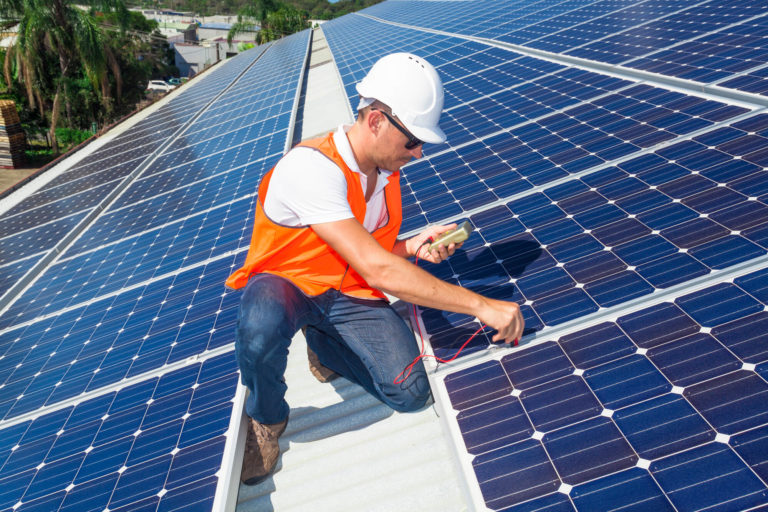
A 3kW system typically takes one day to install, including mounting the panels, connecting the inverter, and commissioning the system. Scaffolding is usually erected the day before and collected within a few days of installation. The total disruption period is 2-4 days from scaffolding erection to removal.
What inverter do I need for a 3kW solar system?
A 3kW string inverter is the standard choice, brands like Solis, Growatt, Fronius and SolarEdge all make reliable 3kW units. If your roof has partial shading from a chimney or nearby trees, a microinverter system (where each panel has its own small inverter) or power optimisers can improve output from shaded panels significantly. Your installer will recommend the best option based on your roof’s shading profile.
Summing Up
A 3kW solar panel system costs between £5,000 and £6,500 installed and generates around 2,500-2,700 kWh of clean electricity per year, saving a typical household £450-£620 annually when combining self-consumption savings with Smart Export Guarantee income. Payback takes 9-12 years, leaving well over a decade of free generation within the 25-year panel warranty period. For a 1-3 person household in a smaller property, 3kW is often the ideal starting point. If your household is larger, you have an electric vehicle, or your roof has space for more panels, it’s worth getting quotes for 4kW or 5kW systems before committing, the incremental cost is modest and the long-term benefit is meaningfully better.
Updated