
A 6kW solar panel system is the natural choice for large family homes and households that want to maximise solar generation: those with an electric vehicle, an air source heat pump, or simply a high electricity demand that a smaller system wouldn’t adequately address. It sits at the upper end of residential solar in the UK, delivering substantial generation output while still fitting comfortably on larger house roofs under permitted development rights.
Contents
- 1 Key Takeaways
- 2 What is a 6kW Solar Panel System?
- 3 How Many Panels Does a 6kW System Need?
- 4 How Much Does a 6kW Solar System Cost in the UK?
- 5 DNO Notification for 6kW Systems
- 6 How Much Electricity Does a 6kW System Generate?
- 7 How Much Can You Save with a 6kW Solar System?
- 8 Payback Period for a 6kW Solar System
- 9 Battery Storage for a 6kW System
- 10 Case Study: A Large Family Home in Cheshire With a 6kW System
- 11 Expert Insights From Our Solar Panel Installers About 6kW Systems
- 12 Frequently Asked Questions
- 12.1 Is 6kW too big for a domestic solar installation?
- 12.2 Do I need DNO approval for a 6kW solar system?
- 12.3 How much does a 6kW solar system save per year?
- 12.4 What’s the difference between a 5kW and 6kW solar system?
- 12.5 Can a 6kW solar system run a heat pump?
- 12.6 How many panels does a 6kW solar system have?
- 12.7 What inverter do I need for a 6kW solar system?
- 12.8 Is it worth upgrading from 4kW to 6kW?
- 13 Summing Up
Key Takeaways
- A 6kW system uses 13-15 panels and requires approximately 24-28m² of usable roof space.
- Installed cost ranges from £9,500 to £12,500 at 0% VAT (valid until March 2027).
- Annual generation: approximately 4,800-5,500 kWh depending on location and orientation.
- Annual savings: £880-£1,100 combining self-consumption savings and Smart Export Guarantee income.
- Payback period: 9-14 years, leaving 11+ years of free generation within the 25-year panel warranty.
- Best suited to large families (4+), households with EVs or heat pumps, and higher-consumption properties.
What is a 6kW Solar Panel System?
A 6 kilowatt-peak (6kWp) solar installation is a large residential system designed for households with above-average electricity demands. At peak output, the panels generate 6,000 watts of DC power, converted by the inverter to approximately 5,700 watts of usable AC electricity. Annual generation in UK conditions ranges from around 4,800 kWh in Scotland to over 5,500 kWh in the South West of England.
At this system size, you’re entering territory where the economics are particularly compelling if your household has high electricity use. A home with an EV, a heat pump, and a family of four or five can absorb significantly more solar generation directly, pushing self-consumption rates above 55-60% and maximising the value of every kWh generated.
UK permitted development rules don’t set a capacity limit on residential solar installations, so 6kW systems can qualify as permitted development as long as the panels don’t exceed physical size and projection constraints. Your installer will confirm this as part of the pre-installation survey.
How Many Panels Does a 6kW System Need?
With 400W panels, 6kW requires exactly 15 panels. With 420W or 450W panels, 14 panels gives 5.88kW or 6.3kW respectively, making 14 the more common count when using higher-rated panels. The actual number depends on panel wattage, roof dimensions, and whether you need to split panels across two roof slopes.
Fifteen panels occupy approximately 25-27m² of gross roof space. Many 4-bedroom detached houses have 40-60m² of south-facing roof, so there’s often room for 6kW and potentially more. If your south-facing slope is smaller, installers can often split the array between a south-facing main slope and a southeast or southwest secondary slope, though output from the secondary slope will be reduced by 10-20%.
How Much Does a 6kW Solar System Cost in the UK?
A fully installed 6kW system in 2026 costs between £9,500 and £12,500, including all panels, inverter, mounting hardware, wiring, scaffolding, and MCS registration. The 0% VAT rate saves approximately £500-625 compared to the old 5% rate.
| Component | Budget | Mid-Range | Premium |
|---|---|---|---|
| Panels (13-15 x 400-450W) | Tier 2 brand | Jinko/LONGi/Trina | REC/Panasonic |
| Inverter | Growatt 6kW | SolarEdge SE6000H / Fronius 6kW | SolarEdge HD Wave |
| Installed cost | £9,500-10,500 | £10,500-11,500 | £11,500-12,500 |
| Monitoring | Basic app | Full platform | Full platform + optimisers |
| Panel warranty | 12 years | 15-20 years | 25 years |
At 6kW, the cost per watt typically falls slightly compared to a 4kW or 5kW system, as fixed costs (scaffolding, DNO notification if required, inverter installation) are spread over more panels. This means the marginal cost of going from 5kW to 6kW is often just the additional panels, making the step up excellent value.
DNO Notification for 6kW Systems
Systems up to 3.68kW can export to the grid without notifying your Distribution Network Operator (DNO). Systems above 3.68kW require a G98 application to your DNO before installation. For a 6kW system, your installer will submit the G98 application as part of the process. This is straightforward for residential systems and rarely delays installation by more than a week.
If your system has a battery and you plan to export more than 16A per phase (approximately 3.68kW), you may need a G99 application instead, which requires DNO approval before installation and can take longer. Your installer will advise based on your specific configuration.
How Much Electricity Does a 6kW System Generate?
A south-facing 6kW system at 30-40° pitch generates approximately 4,800-5,500 kWh per year in the UK. This compares with average household consumption of around 3,500 kWh for a typical home, rising to 5,000-7,000 kWh for homes with EVs and heat pumps.
| Region | Annual Output (6kW south-facing) | Monthly Average |
|---|---|---|
| South West England | 5,300-5,600 kWh | 442-467 kWh |
| South East England | 5,000-5,300 kWh | 417-442 kWh |
| Midlands | 4,700-5,000 kWh | 392-417 kWh |
| North West England | 4,300-4,700 kWh | 358-392 kWh |
| Scotland | 3,900-4,400 kWh | 325-367 kWh |
| Month | Estimated Output (Midlands, 6kW) |
|---|---|
| January | 138 kWh |
| February | 216 kWh |
| March | 396 kWh |
| April | 534 kWh |
| May | 630 kWh |
| June | 696 kWh |
| July | 678 kWh |
| August | 588 kWh |
| September | 434 kWh |
| October | 286 kWh |
| November | 164 kWh |
| December | 120 kWh |
How Much Can You Save with a 6kW Solar System?
A 6kW system’s substantial generation output means the savings are highest for households that can absorb more of it directly. Homes with EVs and heat pumps, or those with high daytime occupancy, benefit most from the larger system size.
| Scenario | Self-Consumption | Units Used (4,900 kWh gen) | Saved at 27p | SEG Income at 15p | Total Annual Benefit |
|---|---|---|---|---|---|
| EV + heat pump household | 70% | 3,430 kWh | £926 | £221 | £1,147 |
| Typical large family | 50% | 2,450 kWh | £662 | £368 | £1,030 |
| Out all day, no EV | 30% | 1,470 kWh | £397 | £514 | £911 |
| With 10kWh battery | 75% | 3,675 kWh | £993 | £184 | £1,177 |
Payback Period for a 6kW Solar System
At an installed cost of £11,000 and annual savings of £1,030, payback takes approximately 10.7 years, after which the remaining years of panel life generate largely free electricity.
| System Cost | Annual Saving | Payback Period | 25-Year Net Saving |
|---|---|---|---|
| £9,500 | £1,030 | 9.2 years | £16,250 |
| £11,000 | £1,030 | 10.7 years | £14,750 |
| £12,000 | £1,030 | 11.7 years | £13,750 |
| £12,500 | £1,030 | 12.1 years | £13,250 |
Battery Storage for a 6kW System
A 6kW system generates enough summer surplus to fill a 10kWh battery every decent day, making battery storage particularly valuable at this system size. A 10kWh battery captures peak midday generation when household consumption is low, shifting it to the evening when demand peaks and grid import rates are highest.
Popular battery choices for pairing with a 6kW system: Tesla Powerwall 3 (13.5kWh, excellent smart tariff integration), Fox ESS H3 Pro (expandable modular system), Solis RHI series (reliable, widely serviced), and Puredrive Energy (UK-developed, LiFePO4 chemistry). All qualify for 0% VAT until at least March 2027 when retrofitted alongside or with a solar system.

Case Study: A Large Family Home in Cheshire With a 6kW System
Background
A family of five in Cheshire owned a 5-bedroom detached house with a large south-facing main roof slope and a secondary southwest-facing slope. Their annual electricity consumption was approximately 7,200 kWh (including two EVs and an air source heat pump). Their energy bills had risen substantially, and they wanted to offset as much demand as possible from solar.
Project Overview
Their installer surveyed the property and designed a split-array 6kW system: 10 panels (4kW) on the south-facing main slope and 5 panels (2kW) on the southwest slope, using 400W LONGi panels with SolarEdge optimisers to manage the different orientations. A Tesla Powerwall 3 (13.5kWh) was included. Total installed cost: £20,500.
Implementation
First-year monitoring: 5,200 kWh generated (the southwest array contributed around 1,350 kWh at roughly 90% of south-facing performance). The family self-consumed 78% of generation, boosted by the large battery and Zappi EV chargers prioritising solar export. They registered with Octopus Intelligent for overnight EV charging at 7p/kWh.
Results
Year one total saving: £1,430 from reduced grid imports plus £172 in SEG income from Octopus Energy. Combined with the cheap overnight EV charging enabled by Octopus Intelligent, total annual energy saving versus pre-solar baseline: estimated £2,100. Payback on the £20,500 total investment is approximately 9.8 years at this rate.
Expert Insights From Our Solar Panel Installers About 6kW Systems
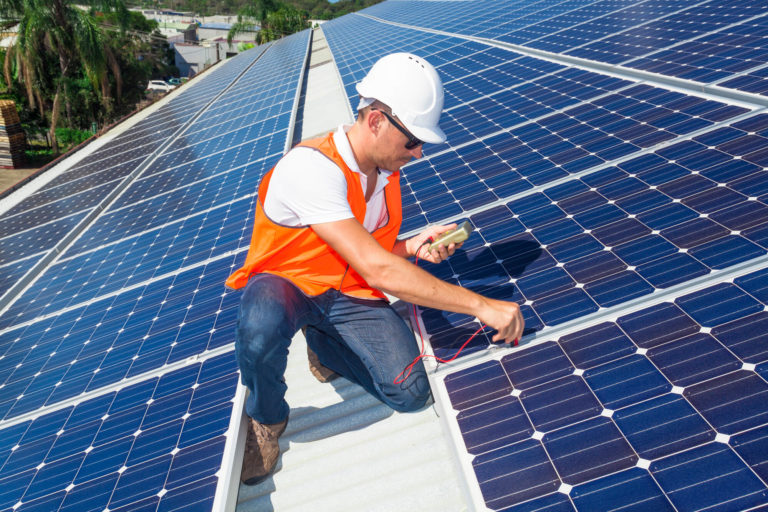
One of our senior solar panel installers with 22 years of experience across England and Wales says 6kW is becoming the default for high-demand homes. “Clients with two EVs and a heat pump are consistently disappointed if they go smaller. You need the generation headroom. On a big south-facing roof, 6kW self-finances beautifully. The thing that surprises people is how the summer months generate so much they almost don’t notice the electricity bill at all, and that surplus is what pays for itself.”
Frequently Asked Questions
Is 6kW too big for a domestic solar installation?
Not at all. UK permitted development rules don’t set a capacity limit for domestic solar. A 6kW system is a large residential installation but well within what roof surveys typically accommodate for 4-bedroom or larger properties. Your installer will confirm what’s feasible based on your roof’s available area, structural condition, and orientation.
Do I need DNO approval for a 6kW solar system?
Yes. Systems above 3.68kW that export to the grid require a G98 notification to your Distribution Network Operator. Your MCS-accredited installer handles this as standard. G98 applications are typically straightforward for residential systems and can usually be processed within a few days. Approval is almost always granted without issue for residential installations of this size.
How much does a 6kW solar system save per year?
Annual savings depend on household electricity use and self-consumption patterns. A typical large family home saves £880-£1,100 per year from combined electricity bill reduction and Smart Export Guarantee income. Homes with EVs or heat pumps that can absorb more generation directly can save £1,100-£1,400 annually. Adding a 10kWh battery and a time-of-use tariff can push total annual savings above £1,500.
What’s the difference between a 5kW and 6kW solar system?
One or two additional panels, roughly £1,000-1,500 in additional installation cost, and approximately 800-1,000 kWh more electricity per year. The extra generation pays back at the same rate as the base system, so going from 5kW to 6kW is typically good value if your roof has space. For households with high electricity demand (EVs, heat pumps, large families), the 6kW system often justifies the additional investment through greater self-consumption and faster effective payback on the marginal cost.
Can a 6kW solar system run a heat pump?
In summer, yes: a 6kW system on a good day generates more than enough to power both household loads and an air source heat pump’s compressor (typically 1-3kW during a heating cycle). In winter, solar generation drops significantly and the heat pump’s heating demand is highest, so you’ll still import substantial grid electricity during colder months. The combination of solar and heat pump works best as a long-term energy stack rather than expecting the solar to fully offset the heat pump’s winter consumption.
How many panels does a 6kW solar system have?
Typically 13-15 panels, depending on the wattage rating of each panel. With 400W panels, 15 panels give exactly 6kW. With 420W or 450W panels, 14 panels give 5.88kW or 6.3kW, which installers usually round to “6kW”. The exact count will be specified in your installer’s quote and depends on what panels are available and how your roof is configured.
What inverter do I need for a 6kW solar system?
A 6kW string inverter is the standard choice. Good options include the SolarEdge SE6000H, Fronius Primo 6.0-1, and Solis S6 6kW. If you’re pairing with battery storage, a hybrid inverter (such as the SolarEdge Energy Hub or Fox ESS H3 Pro) manages both solar input and battery charge/discharge in one unit, which simplifies the installation and often reduces cost compared to separate string and battery inverters.
Is it worth upgrading from 4kW to 6kW?
If you’re installing from scratch and your roof has space, stepping from 4kW to 6kW typically adds £2,500-4,000 to the installation cost for an extra 1,600-2,000 kWh of annual generation. That additional generation will pay back at the same rate as the base system, so you’re not overpaying for the upgrade. It’s worth doing from the outset if you have an EV, heat pump, or simply want to future-proof against rising electricity prices and potential additional electrical demand in the years ahead.
Summing Up
A 6kW solar panel system is the right choice for large family homes, households with electric vehicles or heat pumps, and anyone who wants to maximise solar generation from a capable roof. At £9,500-£12,500 installed, it generates 4,800-5,500 kWh per year, saving a typical household £880-£1,150 annually, with EV and heat pump households seeing savings of £1,100-£1,400 or more. Payback takes 9-14 years within the 25-year panel warranty period. If your household electricity consumption exceeds 4,500 kWh per year, or if you’re planning to add an EV or heat pump, a 6kW system gives you the generation headroom to make the most of every unit of sunshine.
Updated