
If you’re considering solar panels for your home, cost is often the first question that comes to mind. The good news is that solar installation has become significantly more affordable in recent years, and the 0% VAT scheme running until March 2027 makes now a particularly favourable time to invest. But what should you actually expect to pay?
Installation costs vary considerably depending on your home’s size, roof type, panel quality, and location. A typical 3kW system costs between £5,000 and £7,000, whilst a larger 5kW system ranges from £8,000 to £12,000. These figures include labour, materials, and all necessary electrical work. Understanding what drives these costs helps you get fair quotes and makes informed decisions about your solar investment.
In this guide, we’ll break down the real installation expenses, explain what factors affect your final bill, and show you how to calculate payback periods based on typical UK energy usage and the Smart Export Guarantee rates.
Key Takeaways
- A standard 3kW system costs £5,000-7,000 installed, a 4kW system £6,000-8,000, and a 5kW+ system £8,000-12,000
- The 0% VAT relief is available until 31 March 2027, saving approximately 20% on your total installation cost
- Labour typically accounts for 20-30% of total cost, materials for 50-60%, and electrical work for 10-20%
- Roof type, location, and panel quality all significantly affect your final price
- Most UK homes achieve payback in 8-12 years with current energy prices and Smart Export Guarantee rates
- Getting 3-5 quotes allows you to compare pricing and identify genuinely competitive installers
- MCS-accredited installers ensure quality workmanship and eligibility for performance guarantees
- Battery storage adds £3,500-7,000 but significantly improves self-consumption and winter savings
Typical Solar Installation Costs by System Size
3kW Systems (8-10 Panels)
A 3kW system is the entry point for most UK homes. It’s suitable for smaller properties or those with limited roof space. Installed costs typically fall between £5,000 and £7,000, depending on your location and installer. This price assumes MCS-accredited installation with a 10-year warranty on workmanship.
Cost breakdown for a 3kW system: panels and mounting equipment £2,500-3,200, inverter £800-1,200, electrical labour £1,200-1,600, materials and certification £500-700. A 3kW system produces approximately 2,500-3,000 kWh per year in the UK (varies by region and weather), which covers roughly 80-100% of an average household’s electricity use.
4kW Systems (10-12 Panels)
The 4kW system is increasingly popular and represents the sweet spot for many UK homeowners. Installation costs range from £6,000 to £8,500. This size works well for families with moderate energy consumption and enough roof space facing south or south-west.
A 4kW system generates around 3,200-3,800 kWh annually, covering 100-120% of typical household consumption. Excess power feeds to the grid under the Smart Export Guarantee, earning you approximately £50-100 per year at current SEG rates (rates vary by supplier). The additional cost over a 3kW system is modest, making it excellent value.
5kW and Larger Systems (12+ Panels)
Larger systems (5-6kW) cost £8,000 to £12,000 installed and suit homes with high energy use or those planning an air source heat pump. These systems generate 4,000-4,800 kWh yearly. You’ll see stronger returns when combining solar with electric heating or vehicle charging.
Systems larger than 6kW become proportionally more expensive per kilowatt, but they’re necessary for homes planning to electrify heating or support multiple electric vehicles. At this scale, battery storage becomes genuinely worthwhile for maximising self-consumption.
What’s Included in Installation Costs?
Solar Panels (30-40% of Total Cost)
Modern panels typically cost £200-300 per kilowatt. Quality differs significantly. Monocrystalline panels from Tier 1 manufacturers (Canadian Solar, JA Solar, Hanwha Q Cells) perform better in low light conditions and have better temperature coefficients. Cheap budget panels save perhaps £200-300 upfront but deliver inferior energy output and less attractive appearance.
Your installer should source panels with at least 25-year product warranties and 25-year linear degradation warranties (typically guaranteeing 80% output after 25 years). Avoid panels with less than 25-year coverage.
Inverter and Electrical Equipment (15-20% of Total Cost)
The inverter converts DC power from your panels to AC power used in your home. Hybrid inverters (which support battery storage) cost more upfront but allow you to upgrade to storage later. Standard grid-tied inverters cost £800-1,200, whilst hybrid inverters are £1,500-2,500.
Electrical equipment includes AC/DC disconnect switches, surge protection, metering equipment, and cabling. This is essential safety equipment and should never be skimped on. Quality matters here.
Labour and Installation (20-30% of Total Cost)
Labour is where you see significant cost variation. Experienced MCS installers with good safety records and guaranteed workmanship warranties typically charge £1,200-2,000 for a 3-4kW installation. This includes structural assessment, roof preparation, electrical installation, testing, and certification.
Cheaper quotes sometimes reflect less experienced installers or those cutting corners on site safety and workmanship. Always check that your installer carries public liability insurance (£5-10 million minimum) and is MCS-accredited.
Scaffolding and Site Access (£300-800)
If your roof is steep, high, or difficult to access, scaffolding hire adds £300-800. Single-storey properties with pitched roofs often avoid this cost. Always ask whether scaffolding is included in quotes you receive.
Certification and Approvals (£200-400)
Building Control certification, MCS accreditation paperwork, DNO (Distribution Network Operator) notifications, and electrical testing are required. Reputable installers include this in their quoted price. If a quote doesn’t mention these, clarify whether they’re included.
Factors That Affect Your Installation Cost
Your Roof Type
Pitched roofs (most common in the UK) are straightforward to install on. Slate or tile roofs add slightly to labour costs because roofers must carefully remove and replace tiles around the mounting rails. Metal roofs are quick to install on. Flat roofs require ballast-mounted systems, which cost more because they’re heavier and require additional structural assessment.
Asbestos surveys are required before any roof work if your home dates from before 1990. This adds £200-400 to your project. If asbestos is found, removal becomes necessary, adding £1,500-3,000 to costs. Installers should identify this upfront.
Your Roof Condition
If your roof needs repairs or replacement before solar can be installed, expect additional costs. Rotten timber, missing tiles, or damaged flashing all require fixing first. A good installer will point this out during the survey. If you’re installing solar on an old roof, consider replacing the roof first, as solar panels have a 25+ year lifespan and you don’t want to remove and reinstall them partway through.
Your Location
London and South East England typically have the highest installer prices (£200-250 per kW installed). Northern regions often show 10-15% lower costs due to less competition and lower overhead. Scotland can be cheaper still, though Scottish installers may cover a wider service area and price accordingly. Always get local quotes.
Distance from Electrical Infrastructure
If your consumer unit (fuse box) is far from your roof, installing the inverter and cabling costs more. If the inverter is mounted on the side of your house near the consumer unit, labour is minimised. If you want it in a garage or utility room, additional cabling and conduit work increases costs by £200-400.
Panel Quality and Brand
Premium panels (Sunpower, LG if still available, Enphase microinverters) cost 10-15% more but deliver better efficiency and aesthetics. Budget panels save upfront but may degrade faster or perform poorly in UK low-light conditions. For most UK homes, Tier 1 panels (Canadian Solar, JA Solar, Jinko, LONGi) offer the best balance of price and reliability.
VAT Relief and Available Grants
0% VAT Relief (Until 31 March 2027)
This is the biggest saving available right now. Normally, installation labour is charged at 5% VAT (the reduced rate for energy-saving materials). Until 31 March 2027, the rate is 0%. On a £6,000 installation, you save approximately £300. Always check whether your quote is inclusive of or exclusive of VAT, and verify that 0% VAT is being applied.
This relief applies to installed systems only. Panels cannot be purchased separately and installed later at the reduced rate. It must be a complete, installed system from an accredited installer.
Smart Export Guarantee (SEG)
The SEG isn’t a grant, but it significantly improves your financial return. Any excess power your system generates feeds to the National Grid, and your energy supplier pays you for it. Rates vary by supplier (typically £0.15-0.20 per kWh in April 2026, down from previous years). A 4kW system generates roughly 500-800 kWh of excess annually, earning £75-160 per year.
You must register your system with your supplier and ensure your meter is compatible. Installation takes 10 minutes on your supplier’s online portal. This is free and can be changed annually if better rates appear.
Building Upgrade Scheme (BUS) Grant
The BUS grant supports heat pump installation with maximum grants of £7,500. If you’re planning to combine solar with an air source heat pump, you can claim BUS support for the heat pump (reducing your overall cost of electrifying heating). Solar panels themselves don’t qualify directly, but the combination becomes highly affordable.
Installation Timescale
Survey to Installation (4-12 Weeks)
After requesting a quote, a surveyor visits to assess your roof, electrical system, and site access (usually free for established installers). This takes 30-45 minutes. Installers typically provide quotes within 5-7 working days.
Once you accept a quote and pay a deposit (usually 25-50% of the total), installation is scheduled. Lead times vary by season. Summer (May-September) is busy, with waits of 8-12 weeks common. Winter offers faster slots but poorer weather means less ideal installation conditions. Spring (April) and autumn (October-November) typically offer 4-6 week lead times.
Installation Day (1-2 Days)
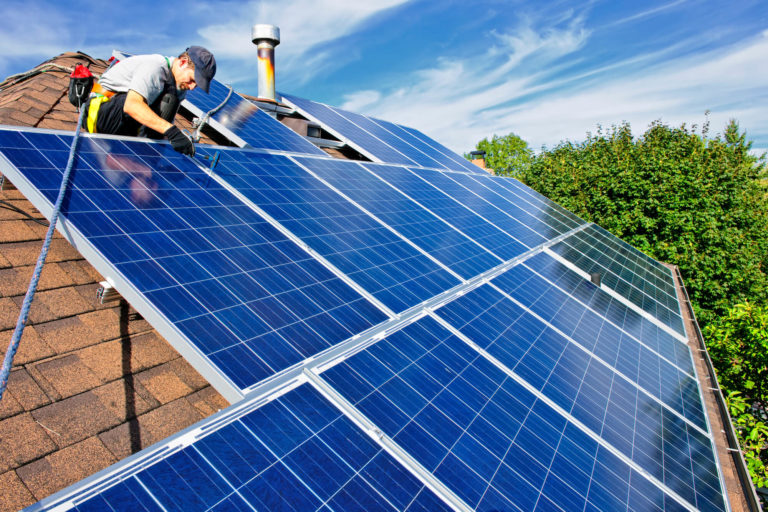
A 3-4kW system takes one full day to install. Larger systems or complex roofs may need two days. The actual installation process involves removing roof tiles or sections, installing mounting rails and flashing, wiring panels together, installing the inverter and protection equipment, testing everything, and carrying out Building Control certification. By the end of day one, your system is generating power.
Case Study: New Homeowner in Greater Manchester
Background
A homeowner had recently purchased a 1970s semi-detached property with an east-west facing roof. The property’s electricity bills were running at £1,200 per year. They were interested in reducing their energy costs but uncertain whether solar was worthwhile on an older property.
Project Overview
The surveyor identified that whilst the east-west roof orientation was not ideal (south-facing is best), the property had good sun exposure and sufficient roof space for a 4kW system (11 panels). Building Control approval was straightforward. The roof was in good condition and required no repairs.
Implementation
A 4kW system was installed with quality Canadian Solar panels and a Solis inverter. The total installed cost was £7,200 (before the 0% VAT saving, which reduced the final bill to £6,000). Installation took one working day. The family registered for Smart Export Guarantee with their supplier the same week.
Results
Year-one output was 3,400 kWh. The system covered 70-75% of the household’s electricity demand (lower than south-facing because of the east-west orientation). They saved approximately £850 on grid consumption, plus £55 from exporting excess power via SEG. Total year-one saving was £905, representing a 15% return on their £6,000 investment. At this rate, the system will pay for itself in approximately 6-7 years. After 15 years, the net financial benefit exceeds £12,000.
Expert Insights From Our Solar Panel Installers About Installation Costs
“The biggest mistake homeowners make is choosing installers purely on price,” says one of our senior solar panel installers with over 18 years of experience. “A quote that’s 20-30% cheaper than others often means corners are being cut. We see systems installed without proper earthing, with inadequate isolation devices, or with cheap panels that’ll degrade fast. When you’re investing £6,000-8,000, the difference between a cheapest quote and a mid-range quote is often just £400-600, but the difference in quality is enormous. Check that your installer is MCS-accredited, carries proper insurance, and provides at least a 10-year workmanship warranty. That’s your protection.”
Frequently Asked Questions
Does the 0% VAT relief apply to my installation?
Yes, if your installation is completed by 31 March 2027 with an accredited installer and the system is a complete, installed unit. The 0% VAT applies to labour and installation costs. Your installer must ensure they’re applying this correctly in their quote. If they’re not, clarify why.
Can I get a grant to help pay for solar installation?
Solar panels themselves don’t have a direct grant, but the 0% VAT relief saves approximately 20%. The Smart Export Guarantee provides ongoing income from excess power. If you’re combining solar with a heat pump, you may qualify for up to £7,500 under the Building Upgrade Scheme for the heat pump portion.
What’s the difference between quotes of £5,500 and £7,500 for the same size system?
Quality differences account for most of the variation. Cheaper quotes often use budget panels, less experienced installers, or minimal warranties. More expensive quotes may include premium panels, hybrid inverters (allowing future battery storage), or more comprehensive workmanship guarantees. Check what’s included in each quote carefully.
How long will my installation take?
From requesting a quote to having a working system typically takes 8-12 weeks (longer during summer). The actual installation day is usually 1-2 days depending on system size and roof complexity. Lead times vary by season and installer availability.
Do I need to replace my roof before installing solar?
Only if your roof is damaged or nearing the end of its lifespan. Since solar panels last 25+ years and you don’t want to remove them to replace the roof, it’s worth considering if your roof is approaching replacement anyway. Most surveys will identify if roof work is necessary.
Should I always choose the cheapest quote?
No. The cheapest quote often reflects lower quality, less experienced installers, or hidden costs. Get 3-5 quotes and compare specification, warranty, and installer accreditation alongside price. A quote that’s 10-15% higher but includes better panels and guarantees is typically better value over 25 years.
What should I check to ensure the installer is reputable?
Verify MCS accreditation, check public liability insurance (minimum £5-10 million), ask for references from recent installations, confirm they provide at least 10-year workmanship warranty, and check online reviews. Ask about their NICEIC or ELECSA electrical certification too. These standards protect you and your investment.
Can I install solar on a flat roof, and will it cost more?
Yes, you can. Flat roof installations use ballast-mounted systems (panels weighted down rather than anchored to the roof), which typically cost 10-15% more than pitched roof installations because they’re heavier and require additional structural assessment. They also require more roof space because panels can’t be angled as aggressively.
Summing Up
Solar panel installation in the UK costs between £5,000 and £12,000 depending on system size, quality, and your location. A standard 3-4kW system for an average home costs £6,000-8,000 installed with the 0% VAT relief applied. The most important factor is choosing an MCS-accredited installer with proper insurance and workmanship warranties, even if they’re not the absolute cheapest option.
With current energy prices, typical payback periods are 8-12 years, and over the 25+ year lifespan of your system, total savings easily exceed £15,000-25,000. Add battery storage, heat pump integration, or electric vehicle charging, and the financial case becomes even stronger. The 0% VAT relief is available until March 2027, making now an excellent time to invest in solar. Get multiple quotes, verify accreditation, and don’t rush. A well-installed system will serve you reliably for decades.
Updated