

Commercial solar panels represent one of the most attractive investments available to UK businesses today. Whether you operate a warehouse, office building, manufacturing facility, retail shop, or any other commercial property, solar panels can significantly reduce your electricity bills, improve your ESG credentials, and deliver a tangible return on capital investment.
This guide covers everything UK businesses need to know about commercial solar: system sizing, costs, grants and incentives, the planning process, and financial returns. We’ll also look at specific considerations for SMEs versus larger businesses, and help you understand what separates a good commercial solar proposal from a poor one.
Contents
- 1 Key Takeaways
- 2 Commercial Solar Costs in 2026
- 3 Financial Incentives for Commercial Solar
- 4 Planning Permission for Commercial Solar
- 5 Grid Connection for Commercial Systems
- 6 Commercial vs Residential Solar: Key Differences
- 7 Is Solar Right for My Business?
- 8 Case Study: A Warehouse Business Goes Solar
- 9 Expert Insights From Our Solar Panel Installers
- 10 Frequently Asked Questions
- 10.1 Is VAT charged on commercial solar panels in the UK?
- 10.2 How do Capital Allowances work for commercial solar?
- 10.3 Do I need planning permission for solar panels on a commercial building?
- 10.4 What is a G99 grid connection and why does it take so long?
- 10.5 What size solar system does my business need?
- 10.6 Can tenants install solar on leased commercial premises?
- 10.7 What payback period should I expect from commercial solar?
- 10.8 Is MCS certification required for commercial solar installations?
- 11 Summing Up
Key Takeaways
- Commercial solar panels in the UK typically deliver payback periods of 5-8 years for most business types
- 0% VAT applies to commercial solar panel installations (supply and installation) since April 2022
- Capital Allowances (including full expensing) allow businesses to deduct 100% of solar installation costs from taxable profits in year one
- The Smart Export Guarantee pays for surplus electricity exported to the grid
- Commercial systems are typically 20kWp to 500kWp+ for rooftop installations
- Planning permission is usually required for commercial installations, though many qualify under Class J permitted development
- MCS certification is not required for commercial installations over 50kWp, but G99 grid connection approval is mandatory
Commercial Solar Costs in 2026
Cost Per kWp by System Size
Commercial solar costs have fallen significantly. The per-kWp installed cost decreases as system size increases due to economies of scale:
| System Size | Installed Cost Range | Per kWp |
|---|---|---|
| 10-30kWp | £12,000-£35,000 | £1,100-£1,400 |
| 30-100kWp | £35,000-£100,000 | £900-£1,100 |
| 100-250kWp | £95,000-£220,000 | £750-£900 |
| 250-500kWp | £200,000-£375,000 | £650-£800 |
| 500kWp+ | From £325,000 | £550-£700 |
These are installed costs including design, racking, panels, inverters, electrical work, grid connection application, and commissioning. They exclude planning application fees and any structural reinforcement required.
Financial Incentives for Commercial Solar
0% VAT on Supply and Installation
Since April 2022, commercial solar panel installations (supply and installation of solar panels and associated equipment) attract 0% VAT. This is a significant saving compared to the previous 20% standard rate. The 0% rate applies to the complete installation package.
Capital Allowances and Full Expensing
Businesses can deduct 100% of solar installation costs from taxable profits in the year of installation under the Full Expensing rules introduced in April 2023. This means a business with £100,000 of taxable profit that installs a £80,000 solar system pays corporation tax on only £20,000 that year (at the standard 25% rate, saving £20,000 in tax).
For SMEs subject to corporation tax, this is a powerful incentive that effectively reduces the net cost of a solar installation by 25% (the corporation tax rate).
Smart Export Guarantee
Commercial systems export surplus generation to the grid under the Smart Export Guarantee. Rates from major suppliers are 15-20p/kWh for export. For businesses with significant surplus generation (common in manufacturing or warehouses where consumption is lower at weekends), SEG income adds meaningfully to ROI calculations.
Enhanced Capital Allowances (R&D and Innovation)
Some commercial solar projects involving innovative technology (storage integration, smart grid optimisation, or advanced monitoring) may qualify for additional R&D tax credits under HMRC’s schemes. Consult a tax adviser for specific advice on your circumstances.
Planning Permission for Commercial Solar
Class J Permitted Development
Under Class J of the General Permitted Development Order, solar panels on commercial buildings can qualify as permitted development without a formal planning application. The key conditions are:
- The panels are on the roof (not a wall) of a commercial building
- The system is used to provide power for the building
- Panels don’t protrude more than 200mm beyond the roof surface
- The installation is not on a listed building or in certain sensitive locations
However, many commercial installations exceed these limits or are in sensitive areas. Larger systems (typically above 50kWp), ground-mounted systems, and installations in conservation areas or near listed buildings will usually require a full planning application.
Environmental Impact Assessment
Larger commercial solar projects (typically above 1MWp or in sensitive locations) may require an Environmental Impact Assessment (EIA) as part of the planning process. EIAs assess visual impact, ecological effects, and drainage. Your installer or planning consultant will advise if this applies to your project.
Grid Connection for Commercial Systems
All commercial solar systems require a grid connection agreement with your local Distribution Network Operator (DNO). For systems up to 50kWp, a G98 notification process applies (simpler, faster). For systems above 50kWp, a G99 application is required, which involves a more detailed technical review and can take 3-6 months for approval.
The G99 process can be a significant bottleneck in commercial solar project timelines. Your installer should apply for grid connection approval as early as possible in the project, ideally at the same time as the planning application.
Commercial vs Residential Solar: Key Differences
| Factor | Residential | Commercial |
|---|---|---|
| System size | 3-10kWp | 20kWp-5MWp+ |
| MCS certification | Required | Not required above 50kWp |
| Grid connection | G98 notification | G99 application (above 50kWp) |
| Planning | Usually permitted development | Often requires full planning |
| VAT rate | 0% (supply and install) | 0% (supply and install) |
| Capital allowances | Not applicable | Full expensing (100% year 1) |
| Payback period | 7-12 years | 5-8 years |
Is Solar Right for My Business?
Best Candidates for Commercial Solar
- Businesses with high daytime electricity consumption (manufacturing, retail, logistics)
- Properties with large, south-facing flat or shallow-pitched roofs
- Businesses paying high electricity unit rates (25p/kWh or more)
- Companies with ESG targets or sustainability commitments
- Businesses with significant taxable profits (to maximise capital allowance benefit)
Less Suitable Candidates
- Businesses with primarily evening or overnight electricity use
- Properties with heavily shaded or north-facing roofs
- Short-lease tenancies (unless the landlord agrees and benefits from the installation)
- Listed buildings or those in sensitive planning areas without feasibility assessment
Case Study: A Warehouse Business Goes Solar
Background
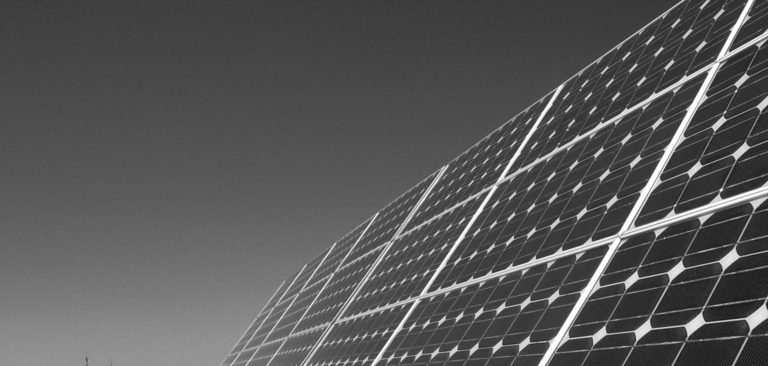
A logistics company in the East Midlands operated a 3,000m² warehouse with an annual electricity bill of £45,000 (approximately 180,000 kWh at an average blended rate of 25p/kWh). The roof was flat, south-facing, and largely unshaded.
Project Overview
Their installer designed a 250kWp ballasted rooftop system using 500 x 500W bifacial panels. Total installed cost: £185,000 (inclusive of 0% VAT). A G99 grid connection application was submitted to the DNO at the same time as planning.
Implementation
Planning approval was obtained in 10 weeks (commercial Class J permitted development with prior approval). G99 connection took 4 months. Installation was completed in 6 days by a team of 12 engineers. Total project timeline from decision to commissioning: 7 months.
Results
First year generation: approximately 212,000 kWh. Self-consumption (daytime warehouse operations): 78% (165,000 kWh). Electricity cost saving at 25p/kWh: approximately £41,250. SEG export income (22% exported at 16p/kWh): approximately £7,500. First year financial benefit: approximately £48,750. Corporation tax saving from full expensing (25% of £185,000): £46,250. Net cost after tax relief: £138,750. Simple payback (without tax relief): 3.8 years. Simple payback (with tax relief): 2.8 years.
Expert Insights From Our Solar Panel Installers
“Commercial solar has become the most straightforward financial case in the renewable energy space. When you factor in Full Expensing, 0% VAT, and electricity unit rates that have stabilised at a higher level than pre-2022, the numbers work very well for most medium to large commercial properties. The business we lose most often isn’t to competitors. it’s to indecision. A business that waits 12 months to make a decision loses 12 months of savings. The grid connection process alone takes 4-6 months, so the earlier you start the G99 application, the sooner you’re generating. Don’t wait until you need to urgently reduce costs. The best time to install commercial solar is when your cash flow is strong enough to fund it properly.”
Frequently Asked Questions
Is VAT charged on commercial solar panels in the UK?
No. Since April 2022, the supply and installation of solar panels for commercial properties attracts 0% VAT. This applies to the complete installation including panels, inverters, mounting systems, and electrical work. The 0% rate significantly reduces the upfront capital requirement compared to the previous 20% standard rate.
How do Capital Allowances work for commercial solar?
Under Full Expensing (introduced April 2023), businesses can deduct 100% of solar installation costs from their taxable profits in the year of installation. For a company paying corporation tax at 25%, this means a £100,000 solar installation effectively costs £75,000 net of the corporation tax saving. This is one of the most significant financial incentives for commercial solar in the UK and makes the economics particularly compelling for profitable businesses.
Do I need planning permission for solar panels on a commercial building?
Many commercial rooftop installations qualify as Class J permitted development without a full planning application, subject to conditions including panel protrusion limits and building type restrictions. However, larger systems, ground-mounted arrays, listed buildings, and installations in sensitive areas typically require full planning permission. Your installer should assess planning requirements as part of the feasibility stage. Always confirm planning status before committing to installation timelines.
What is a G99 grid connection and why does it take so long?
A G99 application is the technical approval process required for solar systems above 50kWp to connect to the electricity distribution network. The DNO (Distribution Network Operator) must assess whether your local network can accommodate the additional generation capacity. This assessment can take 3-6 months and sometimes requires network reinforcement at the business’s expense. Applying for G99 approval early in the project is essential to avoiding delays in commissioning.
What size solar system does my business need?
The optimal system size depends on your annual electricity consumption, roof area available, and daytime consumption profile. As a rule of thumb, size the system to cover 70-85% of daytime electricity demand. A business consuming 100,000 kWh annually with primarily daytime operations might target a 100-120kWp system. Your installer will model this precisely using your actual consumption data and site-specific irradiance analysis.
Can tenants install solar on leased commercial premises?
This depends on your lease terms. Most commercial leases require landlord consent for structural alterations, which solar installation typically constitutes. In practice, many landlords are now supportive of solar installations because they improve the EPC rating of the building and reduce tenant operating costs (which supports tenant retention). Some landlords prefer to own the installation themselves and supply the electricity to tenants. Discuss with your landlord early if you’re considering solar on a leased property.
What payback period should I expect from commercial solar?
Most UK commercial solar installations deliver simple payback periods of 5-8 years before tax relief, and 3-6 years after Full Expensing corporation tax savings are factored in. Businesses with high electricity unit rates (30p/kWh+), large daytime consumption, and substantial taxable profits see the fastest payback. After payback, the system generates virtually free electricity for the remaining 20+ years of its operational life.
Is MCS certification required for commercial solar installations?
MCS (Microgeneration Certification Scheme) certification is required for residential solar installations and commercial systems up to 50kWp if the owner wants to access certain export tariffs through MCS-registered channels. For commercial systems above 50kWp, MCS certification is not mandatory, but installers should hold relevant competency certifications (BPEC, City and Guilds 2399, or equivalent) and all electrical work must be certified under Part P of the Building Regulations.
Summing Up
Commercial solar in the UK offers some of the most compelling return-on-investment figures in the business investment landscape. The combination of 0% VAT, Annual Investment Allowance capital allowances (solar panels qualify for 100% AIA up to £1 million), high electricity prices, and Smart Export Guarantee income has created conditions where a well-designed commercial solar installation can pay back in under 5 years for many businesses. For a full breakdown of HMRC capital allowance rules, see our solar panels and tax guide.
The key steps are: assess your roof and consumption profile, get a detailed proposal with generation estimates and ROI calculations, confirm planning and grid connection requirements early, and structure the financing to maximise capital allowance benefits in year one. With the right approach, commercial solar delivers decades of reduced operating costs and improved sustainability credentials.
Updated