
The Warm Homes Local Grant is a council-administered government scheme providing free or heavily subsidised energy efficiency improvements — including solar panels — to eligible low-income and fuel-poor households in England. It’s the most significant route to a free solar panel installation currently available in 2026, with grants of up to £15,000 for owner-occupiers and up to £30,000 for private rented properties.
The scheme is funded under the government’s Warm Homes Plan and delivered by local councils, which means availability, timelines, and exact eligibility criteria vary significantly by area. This guide explains who qualifies, what the grant covers, how the application process works, and what to do if your local programme isn’t yet accepting applications.
Key Takeaways
- The Warm Homes Local Grant provides up to £15,000 for owner-occupiers and up to £30,000 for private renters towards energy efficiency improvements including solar panels.
- To qualify, your household income must be below £36,000 per year, or you must receive a qualifying means-tested benefit, and your property must have an EPC rating of D, E, F, or G.
- Apply via the central government page at gov.uk/apply-warm-homes-local-grant, which directs you to your local council’s delivery programme.
- The grant is for England only — Scotland, Wales, and Northern Ireland have equivalent schemes administered separately.
- The grant is not a loan — there is nothing to repay. Qualifying households receive the installations at no personal cost.
What Is the Warm Homes Local Grant?
The Warm Homes Local Grant (WHLG) is a central government scheme, funded through the Department for Energy Security and Net Zero, that is delivered by local councils across England. It replaces and substantially scales up previous local authority delivery funds and aims to upgrade the energy efficiency of the least efficient homes occupied by lower-income households.
Unlike the Energy Company Obligation (ECO4), which is administered through energy suppliers, the WHLG is directly administered by local authorities who commission local delivery partners — typically approved contractors and installers — to carry out the assessments and installations. This means the quality of delivery and the speed of rollout vary by council, but it also means local delivery partners are accountable to the council rather than to an energy company at arm’s length.
Who Qualifies for the Warm Homes Local Grant?
Income Eligibility
To qualify for the Warm Homes Local Grant, your household must meet one of the following income criteria:
Combined household income below £36,000 per year before tax — this is assessed on total household income across all adult occupants. For a couple where both work, it’s the combined gross income that counts, not just one person’s salary.
Alternatively, any adult in the household receives one of the following qualifying benefits: Universal Credit, Pension Credit (Guarantee Credit), Income Support, income-based Jobseeker’s Allowance, income-related Employment and Support Allowance, Child Tax Credit (with income below £16,190), Working Tax Credit (with income below £16,190), Housing Benefit, or Disability benefits in specific circumstances.
Property Eligibility
The property must have an EPC (Energy Performance Certificate) rating of D, E, F, or G to qualify. A-rated and B-rated properties are excluded as they are already considered reasonably efficient. C-rated properties are generally excluded, though some local programmes may include them under specific circumstances.
If your property doesn’t have a current EPC, you can commission one from an accredited assessor — the cost is typically £60–£120 for a standard residential property. The assessor will visit the property and produce a certificate rating its energy efficiency and recommending improvements.
What Does the Warm Homes Local Grant Cover?
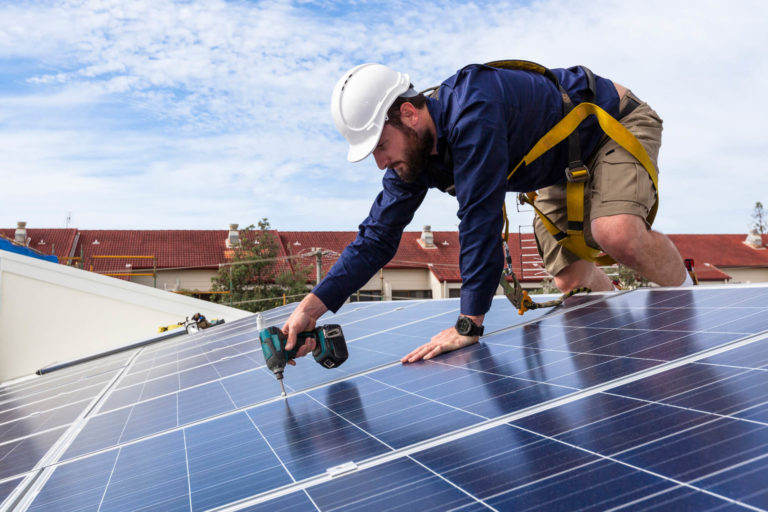
The Warm Homes Local Grant funds a range of energy efficiency and clean heat measures. Solar panels are an eligible measure under the scheme. The specific measures recommended for your property will depend on an energy surveyor’s assessment — the grant funds what the surveyor deems most appropriate for your property type, tenure, and existing energy systems.
Eligible measures typically include solar panels and battery storage, loft and cavity wall insulation, solid wall insulation (internal or external), heat pump installation, electric storage heaters, smart heating controls, and double or triple glazing in some circumstances.
The maximum grant of £15,000 for owner-occupiers covers the total cost of all recommended measures, not just one improvement. A package of solar panels, battery storage, and loft insulation could all be funded within this limit for many properties.
Warm Homes Local Grant for Private Renters
Private renters in eligible households can receive up to £30,000 — double the owner-occupier limit — under the Warm Homes Local Grant. The higher limit for private rented properties reflects the typically higher cost of improvement works on older, less maintained properties and the additional complexity of landlord engagement.
For private renters, the grant is paid to the landlord rather than to the tenant. Landlords must consent to the improvements, which they are required to do under the Minimum Energy Efficiency Standards (MEES) regulations for rented properties. The tenant’s eligibility (income and benefit status) triggers the application, but the works are carried out on the property and benefit both parties.
How to Apply for the Warm Homes Local Grant
The application process begins at the central government portal at gov.uk/apply-warm-homes-local-grant. This page carries out a preliminary eligibility check and then directs you to your local council’s delivery programme.
Because delivery is managed locally, the stage of rollout varies significantly. Some councils began accepting applications in late 2024; others are still in the procurement phase for their delivery partners. If your council’s programme is not yet open, the gov.uk portal will indicate this and advise you to check back — or you can contact your local council directly to ask about their timeline.
Once you’ve made contact with the local delivery programme, the process typically involves a home energy survey (arranged and funded by the programme), a schedule of recommended works, confirmation of approved measures and costs, and then installation by an approved contractor.
Case Study: Lincolnshire Couple Receives Full Solar and Insulation Package
Background
A retired couple in a Lincolnshire market town owned a 1960s detached bungalow with an EPC E rating and a combined income below £36,000. Their energy bills had risen significantly and they’d enquired about solar panels independently but found the costs prohibitive.
Project Overview
Their local council’s Warm Homes Local Grant programme launched in early 2026 and they applied through the council’s delivery partner. A surveyor assessed the property and recommended a 3kWp solar system with a 5kWh battery, loft insulation top-up, and cavity wall insulation — total works valued at £12,800, covered in full under the £15,000 owner-occupier grant limit.
Results
Works were completed over two days. In the first year, the solar system generated 2,750kWh, reducing their electricity bill by approximately £680. The improved insulation reduced heating costs by an estimated £340. Combined annual saving: approximately £1,020 with no capital outlay. Their EPC rating improved from E to C.
Expert Insights From Our Solar Panel Installers About the Warm Homes Local Grant
“The grant amounts are genuinely substantial — £15,000 for an owner-occupier covers a complete solar and battery installation for most homes,” says one of our senior solar panel installers with over 13 years of UK experience. “The main frustration is the variable rollout. Some councils have been excellent — well-organised programmes, fast turnarounds, good contractors. Others are still getting started. My advice is to apply now even if your local programme isn’t fully live yet — the demand for these grants will exceed the available funding eventually, and early applicants get prioritised.”
Frequently Asked Questions
What is the Warm Homes Local Grant?
The Warm Homes Local Grant is an England-only government scheme providing grants of up to £15,000 for owner-occupiers and up to £30,000 for private rented properties towards energy efficiency improvements including solar panels, insulation, and heat pumps. It’s funded under the Warm Homes Plan and administered by local councils.
Who qualifies for the Warm Homes Local Grant?
Households with a combined income below £36,000 per year, or where any adult receives a qualifying means-tested benefit (Universal Credit, Pension Credit, etc.), and where the property has an EPC rating of D, E, F, or G. The property must be in England.
How do I apply for the Warm Homes Local Grant?
Apply at gov.uk/apply-warm-homes-local-grant. This runs a preliminary eligibility check and directs you to your local council’s programme. Contact your local council directly if the online portal shows your area’s programme hasn’t yet launched.
Does the Warm Homes Local Grant cover solar panels?
Yes. Solar panels and battery storage are eligible measures under the Warm Homes Local Grant. The specific measures funded for your property are determined by an energy surveyor’s assessment. Solar is typically recommended for properties with good roof access to south or south-west facing aspects.
Is the Warm Homes Local Grant a loan?
No. It’s a grant — there is nothing to repay. Qualifying households receive approved energy efficiency improvements at no personal cost. This distinguishes it from the Home Energy Scotland Loan scheme in Scotland, which is interest-free but does require repayment.
Is the Warm Homes Local Grant available in Scotland?
No — the Warm Homes Local Grant is for England only. Scotland has the Home Energy Scotland scheme (interest-free loan up to £15,000 plus cashback up to £7,500 for solar). Wales has the Warm Homes Programme. Northern Ireland has the Affordable Warmth scheme.
How long does the Warm Homes Local Grant process take?
Timelines vary by local council. Once a programme is accepting applications, the process from initial contact to completed installation typically takes 6–16 weeks depending on demand, surveyor availability, and contractor scheduling. Applying early maximises your chances of being processed quickly before funding windows close.
What if my local council’s programme isn’t running yet?
Register your interest through the gov.uk portal or directly with your council. Most councils are in the process of launching their programmes — demand is expected to significantly exceed supply once programmes are fully operational, so early expression of interest helps ensure you’re prioritised when applications open.
Summing Up
The Warm Homes Local Grant is the most direct route to a free solar panel installation for qualifying UK households in 2026. With grants of up to £15,000 for owner-occupiers covering solar panels, battery storage, and other efficiency improvements at no personal cost, it represents a substantial benefit for households that meet the income and EPC eligibility criteria.
The key is to apply early — programme funding is not unlimited, and demand is expected to grow significantly as awareness increases. Start at gov.uk/apply-warm-homes-local-grant, and contact your local council directly if your area’s programme isn’t yet accepting applications.
Updated