
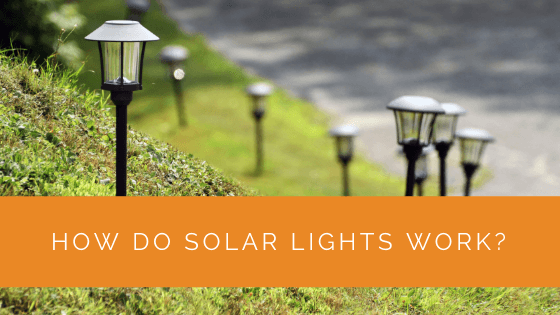
A solar light sits on a shelf at a garden centre, costs between £5 and £100, and requires zero installation. You stake it in the ground, and it glows every night. To most people, it’s magic. To engineers, it’s an elegant system that converts sunlight into electrical energy, stores it, and releases it as light on demand.
Understanding how solar lights work helps you choose the right ones, place them correctly, and troubleshoot when they’re not performing. The principles are straightforward, the technology is proven, and the UK climate is more suitable than you’d expect.
Contents
- 1 Key Takeaways
- 2 The Five Key Components
- 3 How the System Works Together
- 4 The Photovoltaic Effect Explained
- 5 Why Solar Lights Work in the UK
- 6 Component Degradation and Failure
- 7 Case Study: Troubleshooting a Dimming Solar Light
- 8 Expert Insights From Our Solar Panel Installers About Solar Light Technology
- 9 Frequently Asked Questions
- 9.1 Do solar lights work without direct sunlight?
- 9.2 How long does it take to charge a solar light?
- 9.3 Can I replace a solar light battery myself?
- 9.4 What happens if a solar light battery fully depletes?
- 9.5 Why does my solar light dim throughout the night?
- 9.6 Can I use a solar light indoors or in a windowsill?
- 9.7 Do all solar lights have the same internal design?
- 9.8 How much electricity does a solar light generate?
- 10 Summing Up
Key Takeaways
- Solar lights contain five essential components: solar panel, charge controller, rechargeable battery, LED, and light sensor
- The photovoltaic (PV) cell converts sunlight directly into direct current (DC) electricity via the photovoltaic effect
- A charge controller regulates charging to protect the battery from overcharge, which would reduce lifespan
- Rechargeable batteries (typically lithium-ion, NiMH, or LiFePO4) store electrical energy from daytime charging for nighttime use
- A light sensor (photoresistor) automatically detects darkness and triggers the LED to illuminate
- LEDs produce light efficiently, consuming far less power than traditional bulbs and lasting 10+ years
- No mechanical parts mean no maintenance beyond occasional cleaning and battery replacement (typically every 2-3 years)
- Solar lights work year-round in the UK, though performance varies seasonally with daylight hours and sun angle
- Quality solar lights with larger panels and better batteries maintain brightness through entire UK nights
- Understanding how each component works helps diagnose common problems like dimness or battery failure
The Five Key Components
Every solar light contains five essential components. Understanding what each one does helps you understand how the whole system works:
1. Photovoltaic (Solar) Panel
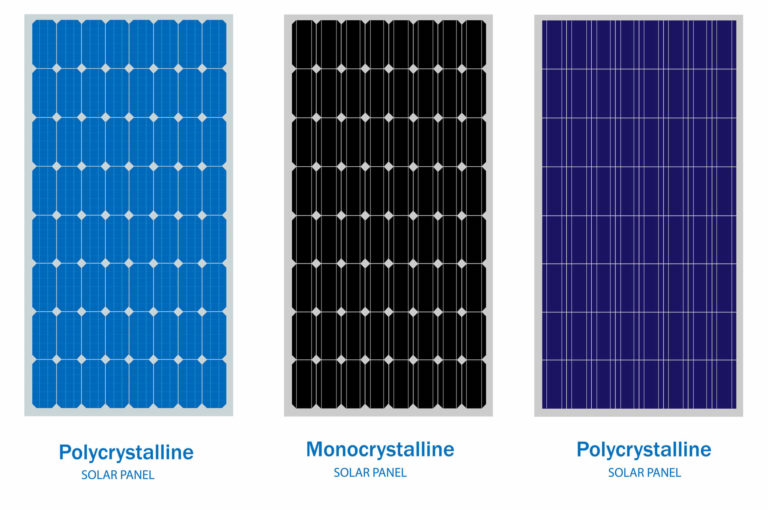
The solar panel sits at the top of the light and captures sunlight. It’s typically a small monocrystalline or amorphous silicon cell, measuring just a few square centimetres.
The panel converts sunlight into electricity via the photovoltaic effect – a quantum phenomenon where photons (light particles) knock electrons loose from the silicon material, creating a flow of electrical current. Unlike solar PV systems that convert light to AC current (and require an inverter), the solar panel in a light produces direct current (DC) directly.
The efficiency of this conversion determines how much electrical energy the light can generate in a given amount of sunlight. Modern monocrystalline panels are 15-20% efficient (meaning 15-20% of the sun’s energy becomes usable electricity). Older amorphous silicon panels are 5-10% efficient but handle cloudy conditions and low light better because they lack the harsh power loss threshold that crystalline silicon has.
2. Charge Controller
The charge controller is a simple electronic circuit that sits between the solar panel and the battery. Its job is to manage charging safely.
As the solar panel produces current during daylight, the charge controller channels this current into the battery. But it monitors the battery voltage constantly. When the battery reaches full charge, the controller cuts off the current flow, preventing overcharge.
Why is this important? Overcharging a rechargeable battery reduces its lifespan significantly. A battery overcharged repeatedly lasts only a few months. A properly charged battery lasts 2-4 years. The charge controller extends battery life by preventing this damage.
Most solar lights use a simple PWM (pulse-width modulation) controller rather than a more sophisticated MPPT controller. This is because PWM is cheaper and adequate for the low power levels in lights. MPPT controllers, used in larger solar systems, are unnecessary here.
3. Rechargeable Battery
The battery stores electrical energy generated during the day for use at night. Common types include:
Lithium-ion (Li-ion): Most common in modern solar lights. Energy dense, long lifespan (3-4 years), and performs well in the UK. Typically 300-2000mAh capacity. Cost-effective and reliable.
Nickel-metal hydride (NiMH): Older technology, less efficient than Li-ion, and shorter lifespan (1-2 years). Found in budget solar lights. Performs decently in cool climates like the UK.
Lithium iron phosphate (LiFePO4): Premium technology, extremely durable (5+ year lifespan), and safe at high temperatures. Increasingly used in expensive solar lights. More expensive upfront but lasts longer.
Battery capacity is measured in milliamp-hours (mAh). A 500mAh battery holds more charge than a 300mAh battery, meaning the light runs longer before the battery is depleted. This is why bigger, more expensive solar lights have higher mAh batteries and longer nighttime runtime.
4. LED (Light-Emitting Diode)
The LED is the light source. Unlike traditional incandescent or halogen bulbs, LEDs produce light by passing electrical current through a semiconductor material, causing it to emit photons (light).
LEDs are incredibly efficient. A 1-watt LED produces the same brightness as a 10-watt incandescent bulb. This efficiency means the battery depletes slowly, allowing all-night operation on a modest charge.
LEDs also last indefinitely – 10,000+ hours of continuous operation is typical. The battery depletes before the LED fails, making LED replacement unnecessary.
Modern solar lights use white, warm white, or colour-changing LEDs depending on the model. The colour temperature (measured in Kelvins) affects mood: warm white (2700K) is cosy and comfortable, cool white (5000K) is bright and clinical, and colour-changing lights cycle through the spectrum for ambiance.
5. Light Sensor (Photoresistor)
A light sensor (usually a photoresistor) detects when daylight fades and triggers the LED to turn on. As daylight decreases, the sensor’s electrical resistance increases. At a preset threshold (typically twilight level, around 50 lux), the sensor sends a signal to the charge controller, which turns on the LED.
When dawn arrives and light levels rise, the sensor’s resistance decreases, and the controller turns the LED off. This cycle repeats daily with no user intervention.
Some solar lights add a PIR (passive infrared) sensor to detect motion. The PIR triggers the LED only when movement is detected, extending battery life dramatically. A motion-sensor security light might run for 10 hours per night with constant illumination, or 30+ hours if it only illuminates for 30 seconds whenever motion is detected.
How the System Works Together
Here’s the complete cycle:
Sunrise (6-7am in winter, 4-5am in summer): Sunlight hits the solar panel. The photovoltaic effect begins, producing DC current. The charge controller detects this and opens a circuit, allowing current to flow into the battery. The light sensor detects rising light levels and signals the charge controller to turn off the LED.
Midday: Maximum sunlight reaches the panel, maximum current flows into the battery. The charge controller continues charging until the battery reaches full capacity (typically 4.2V for Li-ion cells).
Late afternoon: Sun angle lowers as the day progresses. Panel current decreases as less direct sunlight hits it. The charge controller still feeds this declining current into the battery as long as the battery isn’t full.
Dusk (4-5pm in winter, 8-9pm in summer): Light levels drop. The light sensor crosses its threshold, signalling the charge controller to turn on the LED. Current from the battery flows through the LED, producing light.
Night: The battery discharges through the LED. As the night progresses, battery voltage drops and brightness may slightly decrease (depending on the circuit design). The LED remains on as long as the battery has sufficient voltage.
Late night into early morning: If the battery is fully depleted before dawn, the LED turns off even if it’s still dark. A fully charged battery on a clear day typically lasts 8-12 hours in summer, 4-8 hours in winter (due to shorter charging period and lower battery charge capacity).
The Photovoltaic Effect Explained
The photovoltaic effect is the physics that makes solar lights work. Here’s what happens at the atomic level:
Silicon atoms in the solar panel are arranged in a crystal lattice. When a photon (light particle) hits the panel with sufficient energy, it strikes an electron in the silicon atoms. If the photon’s energy is high enough, it knocks the electron free, allowing it to move through the material.
The solar panel is constructed with two layers: one with extra electrons (n-type silicon) and one lacking electrons (p-type silicon). The boundary between them creates an electric field. Freed electrons are pushed through this field toward the n-type side, whilst “holes” (missing electrons that act like positive charges) move toward the p-type side.
This separation creates a voltage difference – a few tenths of a volt per photon interaction. When you connect a circuit (the LED, for example) across this voltage difference, electrons flow through the circuit, creating current and powering the light.
The more photons hitting the panel, the more electrons are freed, and the more current is produced. On a sunny day, a solar light panel produces several volts and hundreds of milliamps of current. On a cloudy day, it produces lower voltage and current, but still enough to charge the battery slowly.
Why Solar Lights Work in the UK
The UK’s reputation for grey, overcast weather makes people sceptical that solar lights work here. But they do, reliably.
First, even cloudy days provide diffuse light. When clouds scatter sunlight, the light is less intense but still charges solar panels. Diffuse light from cloud cover provides roughly 20-40% of the charging energy of direct sun. This means on a typical UK cloudy day, a solar light charges to about 30-40% capacity.
30-40% charge is usually sufficient for 4-6 hours of nighttime light, which is adequate for most UK uses. It’s only on several consecutive days of heavy cloud (like during persistent winter weather) that solar lights begin to struggle.
Second, amorphous silicon panels (used in cheaper solar lights) are specifically engineered to perform better in low-light conditions than monocrystalline panels. They have a lower efficiency in direct sun but don’t “cliff” (lose all output) in cloudy conditions as sharply as crystalline panels do. This makes amorphous panels ideal for the UK climate.
Third, the UK’s summers are long – 15+ hours of daylight in June means extended charging time, and solar lights charge fully and perform brilliantly. This compensates for winter struggles.
Component Degradation and Failure
Every component in a solar light has a finite lifespan. Understanding this helps you plan maintenance and replacement:
Solar panel: Effectively permanent. No moving parts, no chemical reactions. A solar panel from 20 years ago still works. Dust and algae reduce efficiency (clean them to restore performance) but don’t cause failure.
Charge controller: Usually permanent. Solid-state electronics with no wear-out mechanism. Occasionally a component shorts and the light stops working, but this is rare and usually indicates a manufacturing defect, not age-related failure.
Battery: This is the wear item. Rechargeable batteries degrade with each charge cycle. After 500-1000 charge cycles (roughly 1-3 years of daily use), capacity begins to noticeably decrease. You’ll see reduced brightness or shorter runtime. Replacement batteries cost £5-20.
LED: Effectively permanent. 10,000+ hour lifespan means the battery empties before the LED fails. LED replacement is almost never necessary.
Light sensor: Usually permanent but can fail if moisture penetrates the seal. Water damage is the typical cause.
This means the typical maintenance pattern is: clean the panel annually, replace the battery every 2-3 years, and use the same light indefinitely.

Case Study: Troubleshooting a Dimming Solar Light
Background
A property owner in Kent installed a solar path light two years ago. It worked brilliantly for the first year, glowing brightly all night. Now, in its third year, it’s noticeably dimmer and the brightness fades quickly after darkness falls.
Project Overview
The light itself hadn’t failed – it was still turning on at dusk. The issue was reduced brightness and shortened runtime, a classic sign of battery degradation.
Implementation
First, the solar panel was cleaned to rule out dirt-related efficiency loss. Then the battery was replaced with a fresh Li-ion cell of the same capacity. The light was tested for several nights to confirm restoration.
Results
After battery replacement, the light glowed as brightly as when new. Nightly runtime extended from 4-5 hours back to 8+ hours. The owner learned that battery replacement every 2-3 years is normal maintenance, not a sign of product failure. The light continues working well.
Expert Insights From Our Solar Panel Installers About Solar Light Technology
One of our senior solar installers with 16 years of experience in renewable energy systems shared this perspective: “Solar lights are a brilliant application of solar technology because they’re simple and self-contained. Everything needed – generation, storage, control, and load – is in one unit. No wiring, no inverter, no installation. Understanding how each component contributes to the overall function helps people choose better products and maintain them properly. A quality solar light with a good battery and proper placement will work reliably for years with minimal fuss.”
Frequently Asked Questions
Do solar lights work without direct sunlight?
Yes. Diffuse light from cloud cover still charges solar panels, though at reduced rate (20-40% efficiency compared to direct sun). Solar lights work on cloudy days, just with reduced brightness or runtime. On consecutive days of heavy cloud, charging becomes marginal and performance noticeably declines. This is normal for the UK, not a malfunction. For reliable all-weather performance, choose well-made lights with larger panels and batteries.
How long does it take to charge a solar light?
Charging time depends on daylight hours and sun intensity. On a clear summer day, a solar light charges fully in 4-8 hours of exposure. On a cloudy day, it might take 12+ hours to reach full capacity. In winter with fewer daylight hours, even a full day of sunlight might only charge the battery to 70-80% capacity. This is why winter performance is reduced compared to summer.
Can I replace a solar light battery myself?
Usually yes, though it depends on the light design. Some models have user-replaceable batteries accessible by opening a cover. Others have batteries soldered or glued in, making replacement difficult. Check the product manual before buying if DIY replacement matters to you. Replacement batteries for common solar lights cost £5-20 online and take 10-15 minutes to install if accessible.
What happens if a solar light battery fully depletes?
If the battery fully depletes before dawn (typically only in winter after a cloudy day), the light turns off even if it’s still dark. Once the sun rises, the panel begins charging the battery. By evening, the battery has enough charge to power the light through the night again. This is normal occasional behaviour in UK winters, not permanent failure. Persistent inability to hold any charge indicates a failed battery needing replacement.
Why does my solar light dim throughout the night?
As the battery discharges, its voltage drops. Most solar lights are simple circuits that reduce brightness as voltage drops – this is normal. A light might glow brightly for the first 4 hours, then gradually dim as the battery depletes. This isn’t a failure; it’s the battery draining. Premium lights use voltage regulators to maintain constant brightness until the battery is nearly empty, then shut off. This feels more satisfying but is a higher-cost feature.
Can I use a solar light indoors or in a windowsill?
No. Indoor light from windows is far too dim to charge solar panels adequately. Even a south-facing windowsill provides only 5-10% of outdoor direct sun intensity because glass filters UV and reduces overall intensity. Solar lights placed indoors will charge extremely slowly (if at all) and won’t function reliably. Solar lights must be outdoors where they receive direct or bright indirect sunlight.
Do all solar lights have the same internal design?
Broadly yes – all contain solar panel, controller, battery, LED, and sensor. But design varies: panel size (affects charging speed), battery capacity (affects runtime), LED type (affects brightness), and controller sophistication (affects charging efficiency). These variations create the performance differences between a £5 path light and a £60 security light. Higher-quality designs have larger panels, better batteries, and smarter controllers.
How much electricity does a solar light generate?
A typical solar light panel (5-10 square centimetres) in direct sun produces 0.5-2 watts of electrical power depending on panel size and sunlight intensity. Over 8 hours of daylight, this generates 4-16 watt-hours of energy. This seems small but is sufficient to power a 0.5-1 watt LED for 8-10 hours at night. Larger solar light panels (10-15cm) in a flood light produce proportionally more power.
Summing Up
Solar lights work through elegant conversion of sunlight to electricity via the photovoltaic effect, storage in rechargeable batteries, and release through LEDs when darkness is detected. The system is simple, robust, and designed to perform in UK conditions. Understanding the five key components – solar panel, charge controller, battery, LED, and light sensor – explains how solar lights work and why they’re reliable. Maintenance is minimal (annual panel cleaning, battery replacement every 2-3 years), and the technology is proven to last decades. For marking pathways, adding ambiance, and perimeter security, solar lights are one of the most practical applications of renewable energy available to UK homeowners.
Updated