
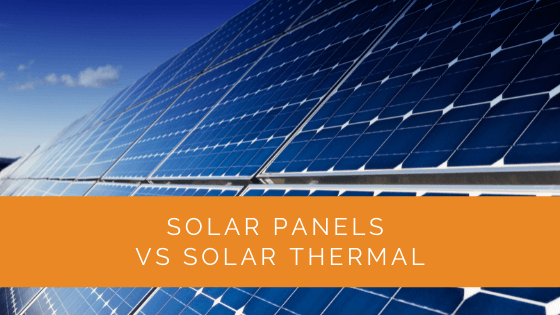
Solar PV panels and solar thermal collectors both use energy from the sun, but they do fundamentally different things and serve different purposes. Solar PV converts sunlight to electricity that can power your home, charge batteries, and earn export income. Solar thermal converts sunlight to heat, specifically for domestic hot water. Choosing between them, or deciding whether both make sense, depends on your priorities, your roof space, and your heating setup.
This guide compares the two technologies across cost, performance, financial return, and suitability for UK conditions, and covers the emerging PVT (photovoltaic-thermal) hybrid technology that attempts to combine both.
Contents
- 1 Key Takeaways
- 2 How Solar PV Works
- 3 How Solar Thermal Works
- 4 Side-by-Side Comparison
- 5 Financial Comparison
- 6 Solar PV With a Hot Water Diverter: The Best of Both?
- 7 When Solar Thermal Still Makes Sense
- 8 PVT: Hybrid Photovoltaic-Thermal Panels
- 9 Expert Insights From Our Solar Panel Installers
- 10 Frequently Asked Questions
- 10.1 What is the difference between solar PV and solar thermal?
- 10.2 Which is better for the UK, solar PV or solar thermal?
- 10.3 Can I have both solar PV and solar thermal?
- 10.4 What is a solar hot water diverter?
- 10.5 Does solar thermal work in the UK winter?
- 10.6 Is solar thermal eligible for any grants in 2026?
- 10.7 What is PVT (photovoltaic-thermal)?
- 10.8 How much roof space do I need for solar PV vs solar thermal?
- 11 Summing Up
Key Takeaways
- Solar PV generates electricity for your home, charges batteries, and earns Smart Export Guarantee income, it’s versatile and applicable to many household needs.
- Solar thermal heats water only, typically covering 50 to 65% of annual domestic hot water demand, but does so efficiently and with simple, reliable technology.
- Solar PV costs more upfront (£5,000–£11,000 for a full system) but delivers multiple income and saving streams; solar thermal costs £3,000–£5,000 and delivers only hot water savings.
- Solar thermal is NOT eligible for the Boiler Upgrade Scheme in 2026; solar PV benefits from 0% VAT and SEG income.
- Solar PV with a hot water diverter (iBoost/Eddi) can replicate much of solar thermal’s hot water function at no additional hardware cost beyond the diverter.
- PVT (hybrid) panels generate both electricity and heat simultaneously, but are more expensive per unit of each than dedicated panels.
How Solar PV Works
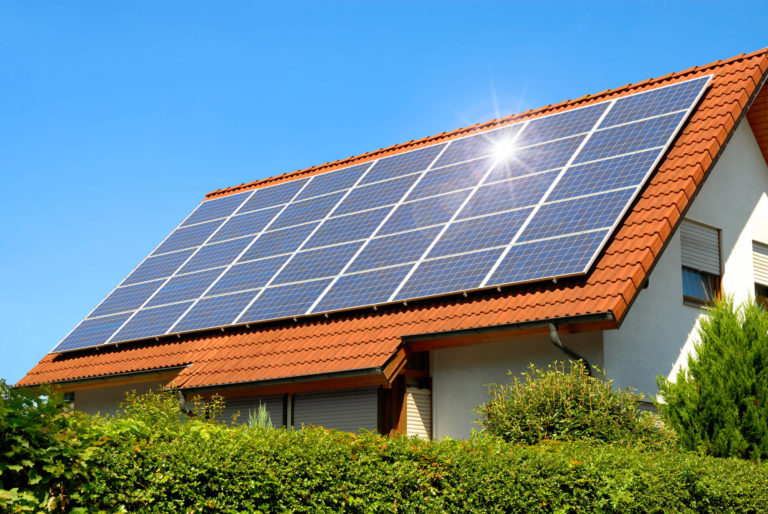
Photovoltaic solar panels convert light directly into electricity via the photovoltaic effect in silicon cells. The generated DC electricity passes through an inverter that converts it to 230V AC for use in your home. What you don’t use in real time can be sent to a battery for later use or exported to the grid, earning Smart Export Guarantee payments.
Solar PV works in both direct and diffuse sunlight, it generates meaningful output on overcast UK days, just less than on clear ones. A typical 4kW system on a south-facing UK roof generates approximately 3,400 to 3,800 kWh per year, enough to cover the average UK household’s entire electricity consumption.
How Solar Thermal Works
Solar thermal collectors absorb solar radiation and convert it to heat, which is transferred via a heat transfer fluid to a hot water cylinder. The heat transfer fluid (typically a glycol-water mix) circulates between the collector on the roof and a heat exchanger coil inside the cylinder, raising the cylinder temperature. A differential temperature controller manages the circulation pump.
Solar thermal does not generate electricity. It produces only heat for domestic hot water, it cannot power appliances, charge phones, or contribute to space heating in most domestic installations. A typical domestic system covers 50 to 65% of annual hot water demand, with very strong performance in summer and limited output in the depths of winter.
Side-by-Side Comparison
| Feature | Solar PV (4kW) | Solar Thermal |
|---|---|---|
| What it produces | Electricity | Hot water |
| Installed cost | £5,000 – £8,000 | £3,000 – £5,000 |
| Annual output | 3,400–3,800 kWh electricity | 1,200–1,800 kWh heat equivalent |
| Annual financial return | £600–£1,000+ (savings + SEG) | £150–£300 (hot water savings only) |
| VAT rate | 0% | 0% |
| BUS grant eligible | No | No |
| SEG income | Yes (up to 15p/kWh) | No |
| Works in diffuse light? | Yes | Yes (reduced efficiency) |
| Payback period | 7–12 years | 15–25 years |
| Lifespan | 25–30 years | 20–25 years |
Financial Comparison
The financial case for solar PV is substantially stronger than for solar thermal in 2026. A 4kW PV system at £6,500 generates approximately 3,500 kWh per year. Self-consuming 50% saves approximately £473 in electricity costs (at 27p/kWh). Exporting the remaining 50% earns approximately £263 (at 15p/kWh). Total annual return: approximately £736. Payback: approximately 8.8 years on a 25-year asset.
A solar thermal system at £4,000 saves approximately £150 to £300 per year in hot water heating costs, depending on whether it displaces gas, oil, or electric heating. Payback is 13 to 27 years, often approaching or exceeding the system’s useful life. The financial case for solar thermal standalone is marginal in 2026 without grant support.
Solar PV With a Hot Water Diverter: The Best of Both?
One of the most compelling developments for UK solar households is the hot water diverter, a device (such as the iBoost, Eddi, or Solar iBoost+) that monitors surplus solar export and diverts it to an immersion heater in the hot water cylinder before it’s exported to the grid.
When your solar panels are generating more electricity than your home is using, the diverter senses this surplus and routes it to the immersion heater, heating your water “for free” from solar rather than exporting it at SEG rates. A diverter costs £200 to £600 installed and integrates with an existing hot water cylinder with an immersion heater element.
The result: a solar PV system with a diverter provides both electricity generation AND hot water heating, often covering 40 to 60% of annual hot water demand, comparable to solar thermal, whilst also generating electricity savings and SEG income that solar thermal cannot. For most UK homeowners in 2026, PV plus a diverter is the more financially rational approach than solar thermal alone.
When Solar Thermal Still Makes Sense
Solar thermal remains the right choice in specific circumstances. If your roof is too small for a meaningful PV array (south-facing space for only 1–2 panels), a compact solar thermal collector uses less roof area for a disproportionate hot water contribution. Solar thermal is also simpler and more robust, fewer electronics, no inverter, and a proven track record of 20+ years of operation in UK conditions with minimal maintenance.
For properties with oil or electric hot water heating where the per-unit cost of displaced fuel is high, solar thermal’s savings per installed pound improve. Off-gas-grid properties in rural Scotland or Wales can see better solar thermal economics than urban gas-connected homes.
PVT: Hybrid Photovoltaic-Thermal Panels
PVT panels generate both electricity and heat simultaneously from a single panel. The photovoltaic layer converts a portion of sunlight to electricity; the remaining energy (which would otherwise just heat the panel and reduce its electrical efficiency) is captured by a thermal collector behind the panel and transferred to a heat store.
PVT’s advantage is dual functionality from a single roof area, useful where roof space is genuinely limited and both electricity and heat are needed. The disadvantage is cost: PVT panels are significantly more expensive per unit of each output than dedicated PV or thermal panels. They also require both an inverter (for the electrical output) and a thermal circuit (for the heat output), adding to installation complexity and cost.
Commercial PVT products are available in the UK from manufacturers including Naked Energy (Virtu) and PVT Systems Ltd, but uptake remains niche. For most homeowners, separate PV and thermal systems (or PV plus diverter) deliver better value per pound invested.

Expert Insights From Our Solar Panel Installers
One of our senior solar panel installers with over 17 years of experience across both PV and thermal installations commented: “The honest answer for most clients is solar PV plus an iBoost, you get the electricity savings, the SEG income, and the hot water benefit from one installation. Solar thermal made excellent sense under the RHI when you got 21p/kWh for seven years. Without that, the payback is very long. There are still customers for whom thermal makes sense, particularly off-grid oil-heated properties up north, but for the average UK homeowner in a gas-connected house, PV wins every time in 2026.”
Frequently Asked Questions
What is the difference between solar PV and solar thermal?
Solar PV (photovoltaic) panels convert sunlight directly into electricity using silicon cells. Solar thermal collectors convert sunlight into heat, specifically for domestic hot water. PV is versatile, the electricity can power any appliance, charge batteries, or be exported for income. Solar thermal produces heat only, with no electricity generation.
Which is better for the UK, solar PV or solar thermal?
For most UK homeowners in 2026, solar PV offers a significantly better financial return. A 4kW PV system typically pays back in 7 to 12 years and earns SEG income throughout its 25-year lifespan. Solar thermal payback is 15 to 25 years with no export income. PV with a hot water diverter replicates solar thermal’s hot water benefit at minimal additional cost.
Can I have both solar PV and solar thermal?
Yes, but it requires sufficient south-facing roof space for both. The combination provides electricity generation from PV and dedicated hot water production from thermal. In practice, most UK installers now recommend solar PV with a hot water diverter as a simpler alternative that achieves similar overall results from a single technology installation.
What is a solar hot water diverter?
A solar hot water diverter (such as an iBoost, Eddi, or Solar iBoost+) monitors your home’s solar export and automatically diverts surplus electricity to your immersion heater before it’s exported to the grid. It typically costs £200 to £600 installed and can cover 40 to 60% of your annual hot water demand using surplus solar electricity that would otherwise earn only SEG export rates.
Does solar thermal work in the UK winter?
Solar thermal produces significantly reduced output in winter, typically 10 to 20% of summer output on a typical winter day. This is why backup heating (an immersion heater or boiler top-up) is always required in a UK solar thermal system. In contrast, evacuated tube collectors perform better than flat plate in cold and overcast conditions, making them the preferred choice for northern UK regions.
Is solar thermal eligible for any grants in 2026?
No. Solar thermal is not eligible for the Boiler Upgrade Scheme, which covers only air source heat pumps, ground source heat pumps, and biomass boilers. Solar thermal benefits from 0% VAT on installation. The Renewable Heat Incentive, which previously supported solar thermal at 21.16p/kWh for 7 years, closed to new applications in March 2022.
What is PVT (photovoltaic-thermal)?
PVT panels combine PV electricity generation and thermal heat collection in a single panel unit. They generate electricity from the front and capture waste heat from behind, delivering both outputs simultaneously. They’re useful where roof space is very limited, but cost more per unit of each output than dedicated panels. Uptake in the UK is currently niche but growing.
How much roof space do I need for solar PV vs solar thermal?
A 4kW solar PV system (10 panels) needs approximately 17 to 20 square metres of south-facing roof space. A domestic solar thermal system (flat plate or evacuated tube) for a 3–4 person household needs approximately 4 to 6 square metres. Solar thermal uses significantly less roof area, making it more practical on roofs with limited south-facing space.
Summing Up
For the majority of UK homeowners in 2026, solar PV with a hot water diverter delivers a better financial return and more practical versatility than solar thermal alone. PV generates electricity for all household uses, earns SEG export income, and, with a diverter, covers a significant portion of hot water demand too. Solar thermal remains a valid choice for specific situations: limited roof space, off-gas-grid properties, or homeowners prioritising simplicity over maximum financial return. Whatever your situation, a conversation with our MCS-certified team will help identify which technology makes most sense for your property and energy goals.
Updated