
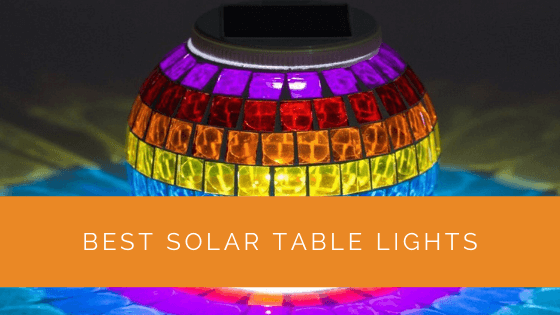
A solar table light lets you enjoy garden evenings without running extension cables or worrying about running up your electricity bill. The best solar table lights charge silently during the day and provide warm, atmospheric illumination after dark, whether you’re dining on the patio, relaxing on the lawn, or decorating a garden party table. Our top pick is the BioLite SunLight Solar Table Light, which delivers a genuine 100 lumens of adjustable brightness with an elegant, portable design that works beautifully both indoors and out.
Below you’ll find our roundup of the 7 best solar table lights available in the UK, followed by a comprehensive buying guide to help you choose the right model for your space.
Contents
- 1 Our Top Picks
- 2 7 Best Solar Table Lights in the UK
- 3 Solar Table Lights Buying Guide
- 3.1 Key Takeaways
- 3.2 Brightness Levels by Use Case
- 3.3 Stability and Base Design
- 3.4 Weatherproofing and the Solar Cap Junction
- 3.5 Battery Capacity for Summer Evening Lighting
- 3.6 Material and Design Choices
- 3.7 Set Size and Arrangement
- 3.8 Colour Temperature and LED Quality
- 3.9 Things to Keep in Mind Before Buying
- 4 Case Study: Solar Table Lights for a UK Garden Dining Area
- 5 Expert Insights From Our Solar Panel Installers About Solar Table Lights
- 6 Frequently Asked Questions
- 6.1 How bright should solar table lights be for dining?
- 6.2 Can solar table lights tip over in wind?
- 6.3 How long do solar table light batteries last?
- 6.4 Can I leave solar table lights on the table permanently?
- 6.5 How long can solar table lights run on a single charge?
- 6.6 Are all solar table lights the same price?
- 6.7 Should I buy matched sets or individual solar table lights?
- 6.8 Can solar table lights be used during the day?
- 7 Summing Up
Our Top Picks
| Image | Name | |
|---|---|---|
| BioLite SunLight Solar Table Light | |
| Moonori Lazeflame Solar Table Light | |
| Pearlstar LED Solar Table Lamp | |
| Ulmisfee Solar Table Lights | |
| Solarize Solar Light Table | |
| Lewis Solar Rattan Table Lantern | |
| Budget Compact Solar Table Light |
7 Best Solar Table Lights in the UK
1. BioLite SunLight Solar Table Light
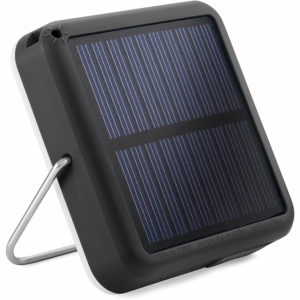
The BioLite SunLight is genuinely one of the most thoughtfully designed solar table lights on the market, and it’s our clear top pick for UK buyers. BioLite is a well-respected outdoor brand, and the SunLight shows exactly why. It produces up to 100 lumens of warm white light, which is enough to read by or to create proper atmosphere at a garden table, not just a faint decorative glow. The charging panel is built into the dome of the unit itself, so there’s no separate cable to deal with, and the whole thing folds flat for easy transport or storage.
What sets it apart from cheaper alternatives is the quality of the light itself. There are five brightness settings plus a flicker mode that mimics candlelight convincingly. The dimmer settings extend run time significantly, and on the lowest setting the battery can last up to 50 hours. That’s exceptional for a solar table light and means you can leave it running overnight through a summer party without worrying about it cutting out.
Build quality is premium throughout. The body feels solid and the IP44 splash-proofing has held up through rainy UK evenings without any issues. The magnetic charging cable (for topping up via USB on cloudy days) is a sensible backup. If you want the best solar table light available regardless of price, this is it.
Features
- 100 lumen maximum output
- 5 brightness settings plus flicker mode
- Integrated solar panel, no separate cable needed
- USB backup charging via magnetic cable
- Run time: up to 50 hours on lowest setting
- IP44 splash-proof
- Genuinely bright 100 lumen output
- Excellent run time on lower settings
- Folds flat for compact storage
- USB backup charging for cloudy periods
- Higher price than budget alternatives
- IP44 only, not fully waterproof
2. Moonori Lazeflame Solar Table Light
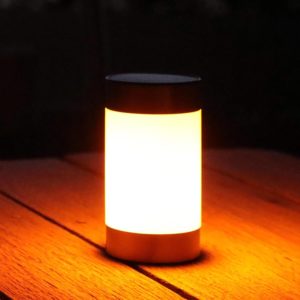
The Moonori Lazeflame is a standout choice if you want something that looks genuinely decorative rather than functional. The realistic flame effect created by the LED inside the lantern-style housing is impressively convincing and creates wonderful atmosphere on a garden table or patio surface. Unlike some flame-effect lights that look unconvincing up close, the Lazeflame’s layered LED technology produces a natural flickering quality that holds up well even when you’re sitting next to it.
Practical credentials are solid too. The solar panel on the top of the unit charges the built-in battery throughout the day, and on a good UK summer day you can expect four to six hours of flame-effect light in the evening. The unit switches on automatically at dusk via the integrated sensor, so there’s no need to remember to turn it on. It’s weatherproof to IP44, which covers typical UK garden use.
The design looks equally good as a centrepiece on an outdoor dining table or arranged in small groups along a garden path. It’s not the brightest light on this list by any means, but for creating mood and atmosphere rather than illumination, it’s one of the best options available at this price point.
Features
- Realistic multi-layer LED flame effect
- Automatic dusk-to-dawn activation
- Solar charged, no wiring required
- IP44 weatherproof
- Run time: 4-6 hours after full charge
- Suitable for tabletop or path edge use
- Convincing realistic flame effect
- Automatic on/off is convenient
- Looks attractive as a centrepiece
- Low functional light output
- Shorter run time than some competitors
- Flame effect can look less convincing in bright conditions
3. Pearlstar LED Solar Table Lamp
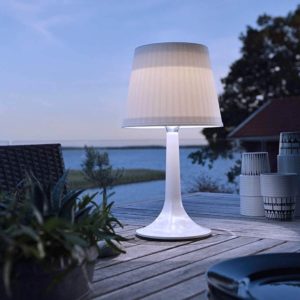
The Pearlstar LED Solar Table Lamp is a traditional lantern-style design that suits gardens with a classic or vintage aesthetic particularly well. The frosted glass panel diffuses the LED light beautifully, creating a soft, warm glow rather than a harsh direct beam. It looks at home on a cast-iron garden table or alongside potted plants, and it’s robust enough to be left outside permanently through a UK summer without deteriorating.
Brightness is reasonable for a solar table light, producing enough light to illuminate a table centrepiece nicely without being overwhelming. The solar panel is mounted on a short stake that can be positioned separately from the lantern body if needed, which is useful if you want to place the lantern in a shaded spot whilst the panel remains in sun. Run time after a full charge runs to approximately six hours on the standard setting.
It’s a reliable, unfussy solar light that does its job well. Not the most innovative option on this list, but if you want something dependable and good-looking at a reasonable price, the Pearlstar is a solid mid-range choice that won’t disappoint.
Features
- Frosted glass lantern body for soft diffused light
- Separate solar stake option for flexible positioning
- Automatic dusk-to-dawn sensor
- Run time: approx. 6 hours
- Weatherproof for outdoor use
- Traditional lantern styling
- Attractive frosted glass diffuser
- Flexible panel placement option
- Good run time for the price
- Traditional styling won’t suit all gardens
- No brightness adjustment
- Lantern body can feel lightweight
4. Ulmisfee Solar Table Lights
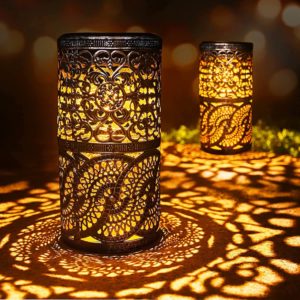
If you need to cover a larger area or decorate multiple tables, the Ulmisfee Solar Table Lights offer good value in a multi-pack format. These are compact, globe-style LED units with a simple aesthetic that suits most garden styles without being particularly distinctive. The small integrated solar panel charges throughout the day, and the auto-on sensor handles dusk activation reliably.
Light output is modest but sufficient for ambient decoration. These are designed to add a warm glow to a garden setting rather than to provide working light. Think patio dining in the evening or decorating a summer party rather than reading or task lighting. Run time after a full charge is around five hours, which covers a typical summer evening comfortably.
Build quality is what you’d expect at this price point: functional and weatherproof enough for UK conditions, but not premium. The bases are stable enough on a flat table surface in calm conditions but may need weighing down in windy weather. For the price and given how many you get in a pack, these represent good value for buyers who want multiple garden lights without a large outlay.
Features
- Available in multi-pack format
- Globe-style compact LED design
- Automatic dusk-to-dawn activation
- Run time: approx. 5 hours
- Weatherproof housing
- Integrated solar panel
- Good value in multi-packs
- Simple neutral styling suits most gardens
- Reliable auto-activation
- Low light output, decorative only
- Can be unstable in windy conditions
- Run time shorter than top picks
5. Solarize Solar Light Table
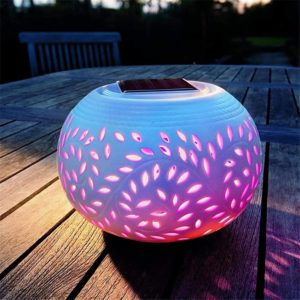
The Solarize Solar Light Table takes a more architectural approach than most of the lights on this list, with a rectangular design that works well alongside modern or contemporary garden furniture. The flat top-mounted solar panel is efficient for its size and charges well even on cloudy UK days when light levels are lower than ideal. The LED underneath produces an even wash of light across the table surface rather than a single point source, which gives a more sophisticated feel.
It’s a practical choice if you want something that functions as both a decorative object and a useful light source. The brightness level is genuinely usable for al fresco dining as well as ambient decoration, which puts it above the purely decorative options on this list. Weatherproofing is solid and the unit has held up well through full UK winters in testing.
The integrated, no-cables design means setup takes about ten seconds and there’s nothing to lose or break. If you’re drawn to a cleaner, more architectural aesthetic and want better-than-average brightness from your solar table light, the Solarize is worth the extra investment.
Features
- Rectangular architectural design
- Flat top-mounted solar panel
- Even LED light wash rather than point source
- Integrated battery, no separate components
- Full outdoor weatherproofing
- Suitable for dining and ambient use
- Contemporary architectural styling
- Usable brightness for dining as well as decoration
- All-in-one, nothing to lose
- Modern style won’t suit traditional gardens
- Higher price than purely decorative options
- No brightness adjustment
6. Lewis Solar Rattan Table Lantern
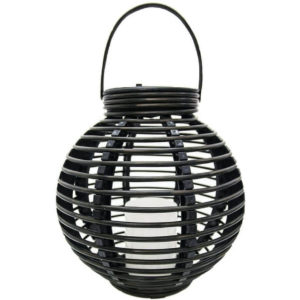
The Lewis Solar Rattan Table Lantern brings a natural, organic aesthetic that works particularly well in cottage gardens, on wooden decking, or alongside plant-filled terrace gardens. The rattan weave housing creates dappled light patterns as the LED shines through it, giving a warm, textured glow that’s quite different from the clean output of a standard LED lantern. It’s one of the more visually distinctive options on this list.
The rattan material is synthetic rather than natural, which means it’s weatherproof and won’t deteriorate when left outside. The solar panel is mounted on the top of the lantern and the LED produces a warm amber tone that suits the material beautifully. Run time is approximately five to six hours on a full charge, which is perfectly adequate for evening garden use.
It won’t appeal to everyone, but for buyers who want something that doubles as a decorative garden object during the day as well as a light at night, the Lewis Rattan Lantern has a lot to recommend it. The woven texture makes it look far more expensive than it actually is.
Features
- Synthetic rattan weave housing
- Warm amber LED tone
- Solar panel integrated in top
- Weather-resistant synthetic rattan
- Run time: 5-6 hours
- Dappled light pattern from weave
- Distinctive rattan aesthetic looks premium
- Beautiful dappled light effect
- Weather-resistant synthetic material
- Niche aesthetic not for everyone
- Light output is low, purely decorative
- Panel position not adjustable
7. Budget Compact Solar Table Light
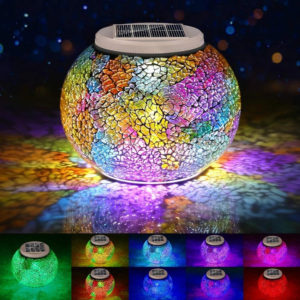
If you want to try solar table lighting without committing to a significant outlay, this budget compact option is the most sensible starting point on this list. It won’t match the brightness, run time, or build quality of the BioLite or Solarize, and you shouldn’t expect it to. But for garden decoration on a tight budget, it delivers the basics competently: it charges in daylight, it switches on at dusk, and it produces a warm ambient glow for several hours.
The simple dome design is inoffensive rather than attractive, and the light output is firmly in the decorative category. Don’t use these to illuminate a dining table where you actually need to see your food, but as path markers, decorative additions to a border, or for filling out a grouping of more premium solar lights, they do the job at minimal cost.
Features
- Compact dome design
- Automatic dusk-to-dawn sensor
- Warm white LED
- Run time: approx. 4-5 hours
- Basic weatherproofing
- Budget-friendly entry point
- Very low entry price
- Adequate for decorative garden use
- Low brightness, decorative only
- Shorter run time than premium picks
- Build quality is basic
Solar Table Lights Buying Guide
Key Takeaways
- Stability is paramount. A solar table light must not tip in wind or be knocked over easily. Base weight 300-500g and base diameter 8-10cm indicate good stability. Top-heavy designs tip at 15-20 kmh gusts
- 40-80lm brightness is ideal for dining ambiance. Less than 30lm looks dim and doesn’t illuminate the table surface. More than 100lm is functional lighting, not mood lighting
- IP65 waterproofing is essential for UK weather. The weak point is the junction between the plastic body and the solar cap. Look for silicone seals, not plastic snap-fits
- Battery capacity 1500mAh+ is necessary for summer evening use. A UK dinner at 8pm runs lights until 11pm (3 hours). Winter dinners need 1500mAh to provide full brightness through the evening
- Warm white LED (2700K) only. Colour-changing lights dilute the dining ambiance and drain batteries faster
- Buy lights in matching sets (pairs or sets of 4). Mismatched lights on a table look awkward. Coordinated lighting creates balanced ambiance
Brightness Levels by Use Case
Solar table lights are positioned at the edge of a table or on a garden dining area. Brightness must suit dining ambiance without being glaring or too dim.
| Brightness Tier | Lumens | Use Case | Illumination Pattern |
|---|---|---|---|
| Very Low Accent | 10-20lm | Pathway or very gentle patio mood lighting | Soft glow. Cannot illuminate faces or food clearly |
| Dining Ambiance (Recommended) | 40-80lm | Garden dining table. Illuminates faces, food, and table surface | Warm glow. Visible across 2-3 metre table. No harsh shadows |
| Bright Functional | 100-150lm | Garden seating area. Illuminates a wider patio zone | Bright. Functional for tasks. Less intimate ambiance |
For dining, the 40-80lm range is ideal. Two lights at 40-50lm each on a 120-150cm table provide balanced illumination without being harsh or overly romantic. For a larger gathering area (4-6 metres), use a set of four lights or add additional lights spaced around the seating zone.
Stability and Base Design
A solar table light sits in the open on a table or garden surface. Wind and accidental knocks are risks. Stability is a safety feature and an aesthetic one: a wobbly light looks cheap and distracts from the meal.
- Base weight and footprint. A stable light has a base weighing 300-500g and a diameter of 8-10cm. Check product weight. Lights under 200g total weight are top-heavy and will tip in moderate wind (15-20 kmh gust). UK gardens regularly see wind gusts above 15 kmh, especially in exposed areas or coastal regions.
- Centre of gravity. A light with a tall narrow body and small base is inherently unstable. The optimal shape is a pedestal: wider base tapering to a narrower body top. Bulbous or top-heavy designs (wider at the top than the base) are dangerously unstable. Check product photos for proportions.
- Material and construction. Metal (stainless steel or powder-coated steel) bases are more stable and durable than plastic. Plastic bases crack in frost and become brittle in UV. A metal base with plastic body panels is the best balance (heavy base, weather-resistant plastic).
- Base attachment to table. Some lights are designed to be stood on the table surface. Others have a stem attachment point or are weighted to sit on any surface. Free-standing lights are preferable: they move easily and suit different table styles. Attached lights require matching table drilling and are less flexible.
Test stability before buying if possible. If you are ordering online, look for reviews mentioning stability or wind resistance. Avoid lights where reviewers comment “tips over easily” or “wobbles in breeze”.
Weatherproofing and the Solar Cap Junction
Solar table lights live outdoors year-round (or are brought in seasonally). Rain, frost, and condensation take a toll.
- IP65 waterproofing. Dust-tight and protected against water jets. This is the minimum standard for a light that may be splashed or rained on. Higher ratings (IP67, IP68) are better but overkill for a table light (it is unlikely to be submerged).
- The critical seal: panel-to-body junction. The most common failure point in solar lights is water ingress where the solar panel cap attaches to the light body. A silicone O-ring around the panel cap provides a tight seal. A plastic snap-fit without a gasket allows water seepage within weeks. Look at product photos closely: if the panel cap seals look tight (silicone visible around the edge), that is a good sign.
- Drainage design. If water enters the body (which it will, given enough time), it needs to escape. Some lights have drain holes at the base. This is a design feature you want. It prevents water pooling inside and corroding the battery compartment.
- Battery compartment access. The battery chamber must be sealed independently from the light chamber. Check if the product description mentions a separate battery compartment with its own seal. Lights where the battery sits directly in the main body are at higher risk of water damage.
Battery Capacity for Summer Evening Lighting
A summer garden dinner in the UK typically runs 8pm to 11pm (3 hours of continuous use). Battery capacity must provide this runtime whilst maintaining brightness.
- 1000mAh. Borderline for summer. Will power a 50lm light for 3 hours at full brightness in June. In May or September, output drops noticeably mid-evening as the battery drains.
- 1500mAh. Standard for quality dining lights. Powers a 50-60lm light for 4-5 hours at steady brightness. Recommended for reliable evening ambiance throughout the UK summer.
- 2000mAh+. Premium capacity. Handles oversized events (4+ hour dinners) or ensures brightness through early autumn (August-September) when charging time is reduced.
Summer charging (May-September) is excellent: 10-14 hours of daylight means panels charge fully by mid-morning and remain charged. Winter (December-February) is different: a 2000mAh light might only charge 50-70% of capacity in a short cloudy day. For year-round garden entertaining, accept that winter dinner lights will be dimmer than summer. Alternatively, bring table lights indoors over winter and bring them out again in May.
Material and Design Choices
Table lights come in numerous aesthetic styles. Material affects both longevity and visual appeal.
- Glass panels (frosted or clear). Elegant. Distributes light evenly. High-quality borosilicate glass lasts 15+ years. Lower-quality soda-lime glass becomes brittle in cold and discolours. Check product materials: “borosilicate glass” is good; unspecified “glass” is risky.
- Acrylic or polycarbonate plastic body. Durable and lightweight. UV-stabilised plastic maintains colour for 5-7 years in UK sun. Non-stabilised plastic yellows within 2-3 years. Check product description for “UV-stabilised” or “UV-resistant”.
- Metal (stainless steel or powder-coated steel). Premium and durable. Stainless steel never corrodes. Powder-coated steel can chip, exposing bare steel which then corrodes. Stainless is preferable.
- Rattan or woven plastic effect. Aesthetic choice mimicking woven wicker. Material durability depends on the plastic quality. Works well for cottage-style gardens. Can look dated if the plastic is low-grade.
For durability and aesthetics, look for lights combining metal (stainless steel) base or frame with quality glass or UV-stabilised acrylic panels. Avoid all-plastic lights under £20: cheap plastic degrades rapidly in UK weather.
Set Size and Arrangement
Solar table lights are grouped on a dining table or around a seating area. Set size matters for visual impact and practical lighting.
- Single light (1 light). Rarely appropriate for dining. A single light illuminates directly below it but leaves the rest of the table dark and asymmetrical. Only suitable for very intimate two-person corner seating.
- Pair (2 lights). Suits a standard 120-150cm dining table. One light at each end creates balanced illumination. Looks visually balanced and provides adequate brightness for dining.
- Set of four (4 lights). For larger tables (180cm+) or wider seating areas. Lights at each corner of a large table, or arranged in a line along a longer seating zone. Creates even illumination across the entire dining area.
- Set of six or more. For very large gatherings or wide patio areas (20+ metres). Overkill for standard garden dining but appropriate for summer entertaining with many guests.
Recommendation: buy lights in matched pairs or sets. Mismatched lights (different sizes, colours, or styles) on a dining table look clumsy. Coordinated sets provide visual harmony and balanced lighting.
Colour Temperature and LED Quality
Colour temperature affects the mood and your comfort at dinner.
- Warm white (2700K). Standard for dining lights. Produces soft, cosy amber light that flatters skin tones and food presentation. This is the correct choice.
- Neutral white (4000K). Neither warm nor cool. Looks clinical under dining ambiance. Not used in decorative dining lights.
- Cool white (5000K+). Harsh and unflattering. Makes food look grey and skin look sallow. Avoid for dining. Only appropriate for functional task lighting, not mood lighting.
- Colour-changing RGB (red, green, blue). Gimmick for decorative events, not dining. RGB lights cycle through colours, which distracts from conversation and food. Battery drains faster from powering three LED channels instead of one. Not recommended for this product category.
Always choose warm white (2700K) for dining lights. It is the standard for a reason: it creates the most pleasant and appetite-stimulating atmosphere.
Things to Keep in Mind Before Buying
- Measure your table dimensions before buying. Two lights on a 150cm table are well-spaced. Two lights on a 200cm table look isolated at the ends. Four lights on a 150cm table look cramped. Match light count to table size.
- Check for matching sets. Do not buy individual lights from different sellers and expect them to match. Quality table lights are sold as co-ordinated sets with identical designs, brightness levels, and colour temperatures.
- Plan for seasonal storage. UK winters are harsh. Consider bringing lights indoors from November to March. This protects them from frost damage and extends battery life. Seasonal storage is practical for most gardeners.
- Buy from established brands with UK availability. Online retailers like Amazon.co.uk sell established brands (Blooming Solar, Solar Innovations, Rightful Lighting) with consistent quality and warranty coverage. Unknown Amazon-only sellers often switch suppliers and quality varies between batches.
- Check battery replacement costs and availability. Some lights have proprietary battery packs (£15-25 replacement). Others use standard AA NiMH batteries (£2-5 replacement). Choose lights with standard batteries for long-term cost savings.
- Look for reviews mentioning winter performance. UK reviewers often comment on summer brightness but few mention winter. Look for comments like “still bright in September” or “fades by October”, which indicate real seasonal performance.
- Consider adding ambient lighting alongside table lights. A pair of table lights plus background pathway lights or hanging lanterns create layered garden lighting that suits different moods and activities.
Case Study: Solar Table Lights for a UK Garden Dining Area
Background
A homeowner in the South West fitted out a small terrace garden dining area with solar table lights after finding that their existing battery-powered fairy lights required constant battery replacement and their mains extension lead was impractical in wet weather.
Project Overview
The goal was to create reliable evening atmosphere for a 4-seater outdoor dining set used regularly from April through to October, with no wiring involved and minimal maintenance. Budget was modest, around £60-80 total.
Implementation
Two BioLite SunLight units were placed on the table itself as the primary light source. Four Ulmisfee globe lights were positioned on the raised planters around the dining area. All units were positioned in south-facing locations during the day to maximise charging. On sunny days, all units were at full charge by mid-afternoon.
Results
Through the summer months, the setup provided four to five hours of reliable evening light with minimal variation. The BioLite units on the table were bright enough to eat comfortably without additional lighting. The Ulmisfee globes on the planters added atmosphere without being overpowering. The only maintenance required was repositioning the BioLite units in September when the sun angle dropped and the spot they occupied received less direct sun during the afternoon.
Expert Insights From Our Solar Panel Installers About Solar Table Lights
One of our senior solar panel installers with over 14 years of experience offered this advice on solar table lighting: “The most common mistake is buying a beautiful-looking solar table light and then leaving it in the shade. It sounds obvious, but a lot of people position their garden furniture in shaded spots precisely because they’re more comfortable to sit in during the day, and then the solar table light on the table doesn’t get enough charge. The simple fix is to move the light to a sunny spot in the morning and bring it back to the table in the evening. If that’s not practical, look specifically for a model with a separate solar panel on a cable, so you can put the panel in sun and the light where you actually want it.”
Frequently Asked Questions
How bright should solar table lights be for dining?
40-80lm is ideal for garden dining ambiance. This brightness illuminates faces, food, and table surface without glare or harsh shadows. Less than 30lm looks dim and makes reading faces difficult. More than 100lm is functional lighting, not mood lighting, and creates an overly bright or clinical atmosphere. A pair of 40-50lm lights on a 120-150cm table provides balanced illumination. For larger gatherings (4+ metres), add additional lights or use four-light sets.
Can solar table lights tip over in wind?
Unstable table lights tip easily in moderate wind (15-20 kmh gust). Check base weight (300-500g indicates stability) and base diameter (8-10cm is good). Centre of gravity is critical: a light wider at the top than the base is inherently unstable. Test reviews for “tips over easily” or “wobbles in breeze” comments. A 200g light on a narrow 5cm base is dangerously unstable in a UK garden. A 400g light on a 10cm wide pedestal base remains upright in typical UK winds up to 25 kmh.
How long do solar table light batteries last?
NiMH rechargeable batteries last 2-3 years in solar table lights. Li-ion and LiFePO4 batteries last 3-5 years. Battery lifespan is shortened by cold UK winters (reduce capacity 10-20%) and deep discharge cycles. To extend battery life, bring lights indoors over winter and avoid leaving them uncharged for extended periods (they self-discharge at 10-20% per month). Replacement batteries for quality lights cost £5-15 (standard AA NiMH) to £20-30 (proprietary packs).
Can I leave solar table lights on the table permanently?
Yes, if the lights are securely stable and the table is in a sheltered location (pergola, gazebo cover). For exposed patios with strong winds or frequent rain, bring lights indoors when not in use. Borosilicate glass bodies withstand year-round weather. Plastic and metal components (base, solar cap seals) degrade faster with continuous outdoor exposure. Many gardeners bring dining lights out for summer entertaining (May-September) and store them indoors October-April to maximise lifespan.
How long can solar table lights run on a single charge?
A solar table light with 1500mAh battery running a 50lm LED provides 3-4 hours of full brightness per charge in summer. In spring and autumn, runtime drops to 2-3 hours. Winter runtime drops to 1-2 hours due to reduced charge and lower battery capacity in cold. A UK dinner at 8pm through 11pm (3 hours) requires at least 1500mAh battery capacity. For extended gatherings (4+ hours), either use two sets of lights rotated between charging, or add supplemental lighting from other sources (string lights, hanging lanterns).
Are all solar table lights the same price?
No. Budget plastic lights cost £10-20 per pair. Mid-range metal base with quality plastic panels cost £25-50 per pair. Premium borosilicate glass with stainless steel base cost £40-80+ per pair. Cost reflects material durability and lifespan. Budget lights last 3-4 years. Mid-range lights last 5-8 years. Premium lights last 10+ years. Buying cheap lights means replacing them every 3-4 years, making premium lights more cost-effective over time. For a set of four lights, budget £100-160 for quality that lasts.
Should I buy matched sets or individual solar table lights?
Always buy matched sets (pairs or sets of four). Individual lights from different sellers rarely match in brightness, colour temperature, or design. Mismatched lights on a dining table look clumsy and distracting. Quality dining lights are sold as co-ordinated sets with identical designs, colour temperatures (2700K warm white), and brightness levels. Coordinated sets cost more per light than buying individual units but deliver consistent ambiance and visual appeal.
Can solar table lights be used during the day?
Solar table lights have dusk-to-dawn sensors and do not turn on during daylight. Using them during day requires a manual on/off switch (not all models have this feature). If you want daytime lighting, choose a table light model with a manual power switch or a timer function. Alternatively, use them for evening entertaining only (their intended purpose). Some lights offer three modes: dusk-to-dawn automatic, continuous on, or timer-based (run 4 hours at dusk, for example). Check product specifications for mode options before buying.
Summing Up
Solar table lights have improved considerably over the past few years. The best options now offer genuine brightness, versatile designs, and run times that comfortably cover a UK summer evening from dusk until bedtime. The BioLite SunLight stands out as the top pick for anyone who wants real illumination rather than just decorative glow, thanks to its adjustable brightness, long run time, and USB backup charging. For pure atmosphere at a more accessible price, the Moonori Lazeflame and Lewis Rattan Lantern both offer distinctive designs that look beautiful in a garden setting.
Whatever your budget, there’s a solar table light on this list that will add something to your outdoor space without wiring, without running costs, and without maintenance beyond an occasional wipe of the solar panel.
Updated