
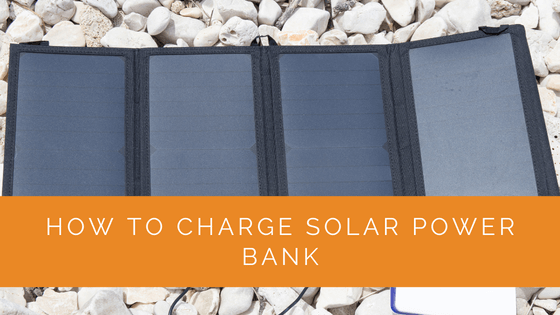
Charging a solar power bank is simple once you understand how the technology works. The quickest answer: place the solar panel in direct sunlight for several hours before you need it, or plug it into a USB wall charger for a full charge in a fraction of the time. Most solar power banks are dual-input devices, meaning you have options regardless of the weather.
This guide walks through every charging method, how long each takes, and what to do when your solar power bank isn’t charging as expected. The principles apply to all major brands available in the UK, including BLAVOR, Hiluckey, ADDTOP, and others.
Contents
- 1 Key Takeaways
- 2 How to Charge a Solar Power Bank via Solar Power
- 3 How to Charge a Solar Power Bank via USB (Recommended)
- 4 Charging a Solar Power Bank Through a Window
- 5 Tips for Maximising Solar Charging in the UK
- 6 What to Do If Your Solar Power Bank Won’t Charge
- 7 Case Study: Keeping Devices Charged During a Week-Long Wild Camping Trip in Scotland
- 8 Expert Insights From Our Solar Panel Installers About Solar Power Banks
- 9 Frequently Asked Questions
- 9.1 Can you charge a solar power bank while using it?
- 9.2 Does a solar power bank need direct sunlight or does daylight work?
- 9.3 How do I know when my solar power bank is fully charged?
- 9.4 Can I overcharge a solar power bank by leaving it in the sun too long?
- 9.5 Why does my solar power bank charge slowly via USB?
- 9.6 Is it worth buying a solar power bank in the UK?
- 10 Summing Up
Key Takeaways
- Solar power banks charge slowest via the solar panel and fastest via a USB wall charger
- Direct sunlight is required for effective solar charging: a window pane reduces solar output by up to 50%
- A full solar charge typically takes 25-50 hours of direct sun, depending on panel size
- USB charging takes 4-8 hours and is the most practical method for day-to-day use in the UK
- The solar panel keeps the battery topped up during outdoor use, extending how long your charge lasts
- Most solar power banks use a Micro USB or USB-C input alongside the solar panel
How to Charge a Solar Power Bank via Solar Power
Solar charging is the most useful feature of a solar power bank, but it works best under specific conditions. The solar panels on most consumer solar power banks are small, which limits how quickly they can charge the internal battery.
Step 1: Place It in Direct Sunlight
Take the power bank outside and place it with the solar panel facing directly at the sun. The panel needs to be perpendicular to the sun’s rays for maximum efficiency. In the UK, this means facing roughly south and tilting the panel at an angle that matches your latitude (roughly 50-55 degrees from horizontal, depending on where you are).
Direct sunlight matters more than you might expect. A thin layer of cloud can cut solar output by 50-80%. Window glass reduces it by around 50% even on a clear day. For effective solar charging, the device needs to be outside with nothing between the panel and the sky.
Step 2: Keep the Panel Positioned Throughout Charging
Solar panels generate the most power when they face the sun directly. If you leave the power bank flat on a table, the angle will shift as the sun moves across the sky. For the best results, reposition it every couple of hours to track the sun, or prop it up at an angle facing south at the start of the day.
Step 3: Check the Charging Indicator
Most solar power banks have LED indicators that show the current charge level. On many models, a separate indicator or light activates specifically when solar charging is happening. Check your device’s manual to confirm what the lights mean: a single LED usually indicates the panel is receiving sunlight and charging is underway.
How Long Does Solar Charging Take?
This is where realistic expectations matter. A typical solar power bank has a panel rated at 1-2 watts and a battery of 10,000-20,000mAh. At 1 watt of solar input, charging a 10,000mAh battery from empty takes roughly 50 hours of direct sun. A 2-watt panel halves that to around 25 hours.
In practice, you rarely get that continuously, particularly in the UK where summer sun hours average around 5-6 hours per day in southern England and fewer further north. A fully depleted 10,000mAh battery might take a week of consistent summer sun to charge completely via the solar panel alone.
This is why most solar power bank owners treat solar as a top-up method rather than a primary charging source. The panel keeps the battery partially charged during outdoor use, reducing how often you need to plug it into a wall charger.
How to Charge a Solar Power Bank via USB (Recommended)
USB charging is faster, more reliable, and the practical choice for keeping your solar power bank topped up between outdoor adventures.
Step 1: Find the Input Port
Most solar power banks have a dedicated input port separate from the USB-A output ports used to charge your phone. This input is typically a Micro USB port or, on newer models, a USB-C port. Some models have both. Check the side of the device: the input port is often labelled “DC IN”, “IN”, or just shown with an arrow pointing into the device.
Step 2: Use a Quality Charging Cable
Use the cable supplied with the power bank if possible. If you need a replacement, use a decent-quality cable rated for the correct connector type. Cheap cables can limit charging speed or fail to charge at all. A quality Micro USB cable rated for 2A or higher is ideal for most models.
Step 3: Plug Into a Wall Charger or USB Port
Connect the other end of the cable to a USB wall adapter. A standard 5V 2A charger works well for most solar power banks. Higher-wattage chargers (18W, 20W) may not deliver any benefit unless the power bank specifically supports fast charging. Check the spec sheet if you’re unsure.
Charging from a laptop USB port or a lower-output charger (5V 0.5A or 5V 1A) will work but will take longer. A 10,000mAh battery can take 8-12 hours from a low-output USB port compared to 4-6 hours from a 2A wall charger.
How Long Does USB Charging Take?
This depends on the battery capacity and the charger wattage. As a rough guide: 5,000mAh battery on a 2A charger takes around 3-4 hours. 10,000mAh takes around 6-8 hours. 20,000mAh takes around 10-14 hours. These figures assume the battery starts from near-empty and the charger can deliver its rated current consistently.
Charging a Solar Power Bank Through a Window
One of the most common questions is whether you can leave a solar power bank on a sunny windowsill to charge. The answer is yes, but with caveats.
Standard glass filters out a significant portion of UV and infrared light, both of which contribute to solar panel output. Depending on the glass type, you might get 40-60% of the output you’d get outside. On a bright summer day, this can still generate a useful trickle charge. On an overcast UK day, the output through glass is barely measurable.
For a window charge to be effective, you need: a south-facing window with no obstructions, a clear sunny day, and the device positioned flat against the glass or tilted directly toward the sun. Even then, treat it as a supplementary top-up rather than a reliable charging method.
Tips for Maximising Solar Charging in the UK
The UK isn’t known for its sunshine, but you can still get useful solar charging with a few practical adjustments.
Charge during peak hours. In summer, the sun is strongest between 10am and 2pm in the UK. Position your solar power bank in direct sun during these hours for maximum output. Early morning and late afternoon sun at lower angles is far less effective.
Keep the panel clean. Dust, fingerprints, and grime on the solar panel surface reduce output noticeably. Wipe the panel with a clean, dry cloth before outdoor use.
Use it outdoors during activities. The solar panel isn’t designed to charge a depleted battery quickly: it’s designed to keep a partially charged battery topped up during outdoor use. Take the power bank on a walk, hike, or camping trip and let it sit in the sun between uses. That’s the use case it excels at.
Accept the limitations in winter. Between October and March in the UK, solar charging output drops significantly. Days are short, the sun stays low in the sky, and cloud cover is frequent. Rely on USB charging as your primary method and treat the solar panel as a bonus for the summer months.
What to Do If Your Solar Power Bank Won’t Charge
If your solar power bank isn’t charging via the solar panel or via USB, work through these checks before concluding the device is faulty.
Check the indicator lights first. Most power banks require you to press a button to activate charging or to display the current level. A device that appears dead might simply be in standby mode. Press the power or indicator button while connected to a charger and check whether the lights respond.
Try a different cable and charger for USB charging. A faulty cable is one of the most common causes of charging failure and is easy to rule out by swapping the cable. Try a different wall adapter too, as some chargers don’t provide sufficient current.
For solar panel issues, check that you’re genuinely in direct sunlight. Even partial shade from a building edge or tree branch can cut output to near zero. If the indicator shows no charging activity in full sun, try USB charging to rule out a battery issue. If USB charging works but solar doesn’t, the solar panel circuit may be damaged.
Let a deeply discharged battery recover. Lithium batteries that have been fully discharged and left for extended periods can enter a protection mode that prevents normal charging. Some power banks recover when connected to a USB charger for 30-60 minutes before the battery starts accepting charge. Leave it connected and check the indicators after an hour.

Case Study: Keeping Devices Charged During a Week-Long Wild Camping Trip in Scotland
Background
A wild camper heading into the Cairngorms for a week wanted to keep a phone, GPS device, and headtorch charged without access to any mains power. The trip was planned for July, giving the best chance of useful solar charging in Scotland despite the higher latitude.
Project Overview
A 20,000mAh solar power bank with a 2-watt solar panel was chosen. The strategy was to use USB charging at home the night before departure to start with a full battery, then rely on solar top-ups throughout the trip.
Implementation
Each morning, the power bank was clipped to the outside of a rucksack using the built-in carabiner, with the solar panel facing skyward. During rest stops, it was removed from the bag and positioned directly facing the sun. The phone was charged from the power bank each evening, using around 3,000mAh per charge. By day four, the power bank had dropped to around 40% capacity despite the solar top-ups, thanks to several overcast days.
Results
The phone stayed charged throughout the week. The GPS was kept topped up. The solar charging contributed usefully on the three sunny days but made little difference on the cloudy ones. The starting full charge from USB the night before was essential: without it, the battery would have been exhausted by day five or six. The conclusion: solar power banks are genuinely useful for extended outdoor trips in the UK, but starting with a full USB charge is non-negotiable.
Expert Insights From Our Solar Panel Installers About Solar Power Banks
We spoke to one of our senior solar panel installers with over 15 years of experience working with solar technology in the UK about solar power banks and their limitations.
“The technology is sound, but there’s a huge gap between what people expect and what the small panels on these devices can actually deliver,” they explained. “A 2-watt panel on a power bank generates about the same power as a single LED bulb. In the UK, where you might realistically get four or five hours of useful sun per day in summer, you’re looking at maybe 8-10 watt-hours of energy per day. A phone battery is typically 10-15 watt-hours. So charging your phone once from a solar power bank via the panel alone would take a full sunny day.”
“That said, these devices make a lot of sense for people who spend extended time outdoors. Think of the solar panel as insurance, not a primary charger. Start every trip with a full USB charge, use the solar panel to slow the rate of depletion during outdoor use, and you’ll be happy with the results. Expect to fully charge the battery from flat via the panel, and you’ll be disappointed.”
Frequently Asked Questions
Can you charge a solar power bank while using it?
Yes, most solar power banks support pass-through charging: you can charge a phone from the power bank at the same time as the solar panel is topping up the internal battery. The net drain rate on the battery will be higher than the solar input rate, so the battery level will still fall, but more slowly than if the panel weren’t active. This is useful during extended outdoor use where every bit of top-up helps.
Does a solar power bank need direct sunlight or does daylight work?
Direct sunlight gives the best results by a significant margin. Diffuse daylight (overcast sky, shade) does generate some output, but typically only 10-30% of what direct sun produces. In the UK, overcast days are common enough that you can’t rely on daylight alone for meaningful solar charging. Direct sun is needed for practical results.
How do I know when my solar power bank is fully charged?
Most solar power banks have LED indicator lights that show the battery level. Typically, all four LEDs lit indicates a full charge. Many devices also stop drawing current from a USB charger automatically when full, which you can sometimes detect as a charger becoming cooler to the touch. Check your device’s manual for the specific indicator behaviour for your model.
Can I overcharge a solar power bank by leaving it in the sun too long?
No. Solar power banks have built-in battery management circuits that stop charging when the battery reaches full capacity. You can leave it in the sun all day without damaging the battery. The charge controller handles overcharge protection automatically.
Why does my solar power bank charge slowly via USB?
The most common causes are a low-output USB charger (5V 0.5A or 5V 1A instead of 5V 2A), a faulty or lower-quality cable, or the power bank being in a protection state after deep discharge. Try a different cable and a higher-output wall charger first. If the power bank has been sitting depleted for a long time, leave it connected for an hour before checking progress, as some devices take time to recover from deep discharge.
Is it worth buying a solar power bank in the UK?
Yes, if you spend significant time outdoors. The solar panel won’t charge a depleted battery quickly in UK conditions, but it will slow the rate of battery depletion during outdoor activities and keep the charge topped up during multi-day trips. For everyday urban use where you have access to mains power, a conventional power bank without a solar panel is simpler and usually cheaper. The solar panel adds real value specifically for camping, hiking, and other extended outdoor activities.
Summing Up
The most practical way to charge a solar power bank is to start with a full USB charge at home and use the solar panel to top it up during outdoor use. The solar panel alone can’t charge a large battery quickly in UK conditions, but it meaningfully extends how long the charge lasts on a camping trip or long day hike. If you want to learn more about the broader world of small solar products, our guide to the best solar power banks covers the top models available on Amazon.co.uk right now, and our article on how solar products perform in UK winter is worth reading if you plan to use yours year-round.
Updated