
Solar energy has been part of human innovation for nearly two centuries, but the story is far richer and more surprising than most people realise. It didn’t start with Tesla or modern climate concerns. It began in 1839 with a French scientist’s accidental discovery and evolved through contributions from physicists across Europe and America. Understanding the history of solar technology helps explain why modern panels work the way they do and how we went from laboratory curiosities to the efficient, affordable systems powering UK homes today.
In this guide, we’ll trace the journey from the photovoltaic effect‘s discovery through the space race, the oil crises of the 1970s, and the dramatic cost reductions of the 21st century. We’ll meet the key inventors and innovators who made solar possible, and explore why the UK now has over 17.6 gigawatts of solar capacity and a thriving renewable energy industry.
The story of solar is ultimately about human ingenuity, persistence, and the power of technology to solve real problems. It’s a testament to how scientific curiosity can eventually transform society.
Key Takeaways
- The photovoltaic effect was discovered by French scientist Edmond Becquerel in 1839, who noticed light increased electrical current in certain materials
- Albert Einstein’s 1905 work on the photoelectric effect provided theoretical understanding of how photons generate electricity, earning him a Nobel Prize
- The first practical silicon solar cell was created by Bell Labs in 1954, achieving 6% efficiency
- NASA’s space programme drove solar cell development in the 1960s and 1970s because panels were the only viable power source for satellites
- The 1973 oil crisis triggered intense solar research investment across the world, particularly in Europe and Japan
- Solar panel efficiency has steadily improved from 6% in 1954 to over 22% in commercial panels today
- Solar panel costs have fallen from approximately £3,000 per watt in the 1970s to approximately £1 per watt today, a 99.97% reduction
- The UK’s solar capacity grew from nearly zero in 2010 to 17.6 gigawatts by 2026, driven by Feed-in Tariff incentives and falling costs
The Photovoltaic Effect: Edmond Becquerel’s 1839 Discovery
On a day in 1839, a French physicist named Edmond Becquerel (the father of Henri Becquerel, who discovered radioactivity) was experimenting with electrical cells submerged in acid. He noticed something remarkable: when he exposed one of the electrodes to sunlight, the amount of electrical current increased. The light was somehow generating additional electricity.
This observation is the foundation of modern solar technology. Becquerel had discovered the photovoltaic effect: the ability of light to knock electrons loose from material, creating an electrical current. He didn’t understand the mechanism, and the amount of electricity generated was minuscule. But he had proven that light could be directly converted to electricity without heat or mechanical intermediaries.
For decades, the photovoltaic effect remained a laboratory curiosity. Scientists were fascinated but saw no practical use. The amount of electricity generated was too small, and more reliable sources of electricity (chemical batteries, fossil fuels) were readily available.
The Theoretical Explanation: Albert Einstein and the Photoelectric Effect (1905)
In 1905, Albert Einstein published a landmark paper explaining the photoelectric effect in theoretical terms. He proposed that light consists of discrete packets of energy called photons, each capable of dislodging an electron from a material if the photon has sufficient energy. This was radical thinking: light, previously understood as a wave, was now shown to have particle properties.
Einstein’s photoelectric equations provided a mathematical framework for understanding and predicting which materials would respond to light and how much energy would be required. His work was so significant that he won the Nobel Prize in Physics in 1921 specifically for this discovery (not, as many assume, for relativity).
Einstein’s theory provided the intellectual foundation for solar technology, but practical applications still lay decades ahead. The materials available in the early 1900s simply weren’t efficient enough to generate meaningful electrical power from sunlight.
Early Developments: Selenium Cells (1876-1930s)
In 1876, a British scientist named William Grylls Adams and his student Edward Day spotted observed the photovoltaic effect in selenium, a chemical element. Selenium cells were the first materials investigated seriously as a potential source of electrical power from light.
Selenium cells were briefly manufactured and sold in the late 1800s and early 1900s, but they were disappointing. Efficiency was less than 1%, meaning 99% of the sunlight energy was wasted. They were expensive to produce and unreliable: efficiency degraded over time, and performance varied wildly depending on temperature.
Selenium cells were eventually abandoned. They remain historically important as a proof-of-concept that the photovoltaic effect could be harnessed at a commercial scale, even if the results were poor.
Silicon Solar Cells at Bell Labs (1954)
The turning point came in 1954 at Bell Telephone Laboratories in New Jersey. A team of scientists, including Daryl Chapin, Calvin Fuller, and Gerald Pearson, created the first practical silicon solar cell. The breakthrough came from their work on transistors and semiconductor materials.
Bell Labs’ silicon cell achieved 6% efficiency, a remarkable improvement over selenium’s sub-1% performance. More importantly, silicon cells were durable, could be manufactured reliably, and showed no evidence of rapid degradation. The New York Times reported the discovery as a “sun battery” that could one day provide unlimited energy.
Bell Labs had created the blueprint for modern solar technology. Every silicon solar panel installed today is a direct descendant of that 1954 invention.
However, practical use was still limited. Silicon cells were expensive to produce, and without a compelling need, few companies invested in manufacturing them. The efficiency and cost made them uncompetitive with fossil fuels and fossil fuel-generated electricity, which were cheap and abundant in the 1950s.
The Space Race and NASA’s Role (1960s-1970s)
The real catalyst for solar development came from an unlikely source: the space race. Satellites orbiting Earth need electrical power, and the options were limited. Fossil fuels couldn’t be replenished in space, nuclear reactors were too heavy and dangerous for crewed missions, and solar panels were the only viable long-term power source for satellites.
NASA invested heavily in solar cell development throughout the 1960s and 1970s. The space agency needed reliable, efficient, lightweight solar cells that could operate in the harsh radiation environment of space. Every improvement in efficiency and durability translated directly into longer-lasting, more capable satellites.
This investment accelerated innovation dramatically. Solar cell efficiency improved from 6% in the 1950s to over 20% by the 1970s. Manufacturing techniques were refined, costs began to fall, and reliability increased.
By the 1970s, NASA had deployed solar panels on numerous satellites including Skylab, and the technology had proven its viability in the most extreme environment possible: outer space.
The 1973 Oil Crisis and the Solar Boom
On October 6, 1973, members of the Organisation of the Petroleum Exporting Countries (OPEC) embargoed oil shipments to Western nations over geopolitical disputes. Oil prices quadrupled overnight. This “oil shock” exposed the vulnerability of economies dependent on fossil fuels and ignited interest in alternative energy sources, particularly solar.
Governments across Europe, the United States, and Japan launched major solar research and development programmes. The U.S. government invested billions in solar technology through initiatives like the Solar Energy Research Institute (now the National Renewable Energy Laboratory). Europe and Japan launched their own equivalent programmes.
This investment paid off. Solar cell efficiency increased steadily throughout the 1970s and 1980s. Manufacturing became more efficient, and costs began to fall. The first solar homes were built, and businesses began installing small solar arrays.
By the 1980s, solar was no longer a laboratory curiosity or space technology. It was becoming a viable, if still expensive, source of electricity for remote locations (off-grid homes, remote lighthouses, water pumping stations) and complementary power source in grid-connected installations.
The Great Cost Decline (1980-2026)
The most dramatic chapter in solar history is the relentless cost reduction of the past 40 years. In 1980, a silicon solar cell cost approximately £3,000 per watt. By 1990, this had fallen to £1,000 per watt. By 2010, it was £3 to £4 per watt. By 2020, it was approximately £1 per watt. Today, 2026, silicon solar panels cost approximately £0.50 to £0.70 per watt wholesale, with retail installed system costs around £1.30 to £1.80 per watt.
This represents a reduction of over 99.9% in real terms over 45 years. No other technology in human history has experienced such dramatic cost reductions. This cost curve is driven by manufacturing efficiency, scale (the solar industry has grown exponentially), and fundamental improvements in how panels are designed and fabricated.
This cost decline is why solar is now competitive with fossil fuel electricity in most markets without subsidies. A kilowatt-hour of electricity from solar costs approximately the same or less than grid electricity in the UK, making solar a rational financial investment based on energy savings alone, before accounting for environmental benefits.
Key Contributors to Solar Technology
Beyond the major inventors, many scientists and engineers contributed to solar development:
Willoughby Smith (1873): Discovered photoconductivity in selenium.
Chapin, Fuller, and Pearson (1954): Bell Labs team that created the first practical silicon solar cell.
Martin Green (1980s onwards): Australian scientist who drove efficiency improvements in silicon cells and pioneered PERC and other high-efficiency designs used in modern panels.
Henrik Dau (1990s onwards): German researcher who developed improved manufacturing techniques for crystalline silicon panels.
Peter Würfel (2000s): German physicist who contributed to understanding of silicon solar cell losses and efficiency limits.
Numerous researchers at universities, national laboratories, and solar manufacturers worldwide have contributed incremental but crucial improvements in efficiency, durability, and manufacturing cost.
Major Milestones in Solar History
1839: Edmond Becquerel discovers the photovoltaic effect.
1876: Selenium cells exhibit photovoltaic properties.
1905: Albert Einstein explains the photoelectric effect theoretically.
1954: Bell Labs creates the first silicon solar cell (6% efficiency).
1960s: NASA begins investing in solar for satellites.
1973: OPEC oil embargo triggers global solar research investment.
1980: Crystalline silicon cell efficiency reaches 16%.
1985: Solar panels pass 20% efficiency milestone.
1990s: Solar costs begin to fall significantly due to manufacturing improvements.
2008: First feed-in tariff scheme launches in Germany, driving residential solar adoption.
2010: UK launches Feed-in Tariff, sparking residential solar boom.
2012: Solar becomes the fastest-growing electricity source globally.
2020: Solar costs fall below fossil fuel generation costs in most markets without subsidies.
2026: UK has 17.6GW installed solar capacity (up from near-zero in 2010). Solar is the second-largest renewable source after wind.
The UK Solar Journey (2010-2026)
The UK had almost no residential solar capacity before 2010. Everything changed with the introduction of the Feed-in Tariff on April 1, 2010. The FiT guaranteed homeowners approximately 43 pence per kilowatt-hour for solar electricity, with additional payment for energy exported to the grid.
This combination of guaranteed payment and environmental incentive triggered a residential solar boom. Thousands of homeowners installed panels. By 2012, the FiT had been reduced to 21 pence per kWh due to rapidly falling panel costs. By 2019, the FiT was wound down for new installations, replaced by the Smart Export Guarantee (SEG), which pays 10-15 pence per kWh for exported electricity.
Throughout this period, solar panel prices continued to fall. A 4kW system that cost £12,000 to £15,000 installed in 2010 costs approximately £7,000 to £8,500 in 2026 (at 0% VAT, in effect until March 2027).
By 2026, the UK had 17.6 gigawatts of installed solar capacity (up from essentially zero in 2010). This capacity generates approximately 17 to 18 terawatt-hours per year, approximately 5 to 6% of UK electricity demand. Solar is now the second-largest renewable source after wind.

Case Study: The Technology Journey Reflected in Residential Solar (1954 to 2026)
Background
The photovoltaic effect discovered by Becquerel in 1839 took over a century to become a practical technology. Bell Labs’ 6% silicon cell in 1954 improved to 15% efficiency by the 1980s, 20% by 2000, and over 22% by 2026. Similarly, costs fell from £3,000 per watt in 1980 to £1 per watt today.
Project Overview
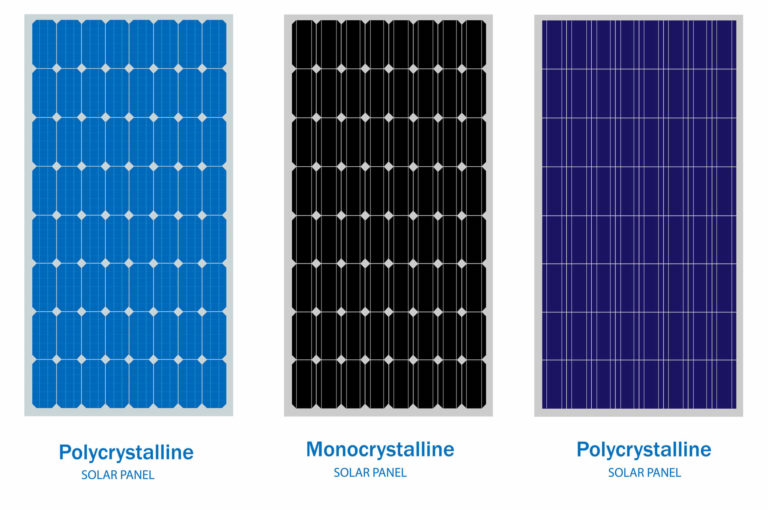
A UK homeowner in 2026 installing a 4kW system gets 10 modern monocrystalline panels of approximately 400-440W each, with an efficiency of 22-23%. The system costs approximately £7,500 all-in and generates 3,100 to 3,300 kWh per year. The same system in 1954 would have required 600+ panels of 6% efficiency, weighed 10 tonnes, cost over £200,000 in today’s money, and generated the same output. The same system in 1980 would have required 30 panels, cost approximately £150,000 in today’s money, and weighed 1 tonne.
Implementation and Results
This dramatic improvement in efficiency, cost, and weight reflects 170 years of scientific progress from Becquerel’s initial observation through Einstein’s theoretical framework, Bell Labs’ practical breakthrough, and the industrial scaling of manufacturing after the oil crises and the 2010 UK FiT.
Expert Insights From Our Solar Panel Installers About Solar History
One of our senior solar panel installers with over 20 years of experience says: “I started installing panels in 2006 when they still felt cutting-edge. We were fighting to get people interested in solar, trying to convince them it would ever be affordable. Nobody thought we’d reach the cost and efficiency levels we have today. If you’d told me in 2010 that by 2026 we’d be installing 22% efficient panels for less than £2 per watt, I wouldn’t have believed it. The progress has been extraordinary. We’re standing on the shoulders of 170 years of scientific and engineering innovation.”
Frequently Asked Questions
Who invented solar panels?
Solar panels resulted from contributions across centuries. Edmond Becquerel discovered the photovoltaic effect in 1839. Albert Einstein explained it theoretically in 1905. Bell Labs scientists Chapin, Fuller, and Pearson created the first practical silicon solar cell in 1954 (6% efficiency). NASA’s space programme in the 1960s and 1970s accelerated development. It was a collaborative, iterative process rather than a single invention.
What was the photovoltaic effect first discovered?
The photovoltaic effect was discovered by French physicist Edmond Becquerel in 1839. He noticed that light increased electrical current in certain materials. His discovery laid the foundation for all modern solar technology, though he didn’t understand the underlying mechanism.
What was Albert Einstein’s role in solar panel development?
Einstein’s 1905 paper on the photoelectric effect provided the theoretical explanation for how light generates electricity. He proposed that light consists of photons that can dislodge electrons from materials. His work earned him the 1921 Nobel Prize and provided the scientific foundation for developing practical solar cells, though he did not directly invent panels.
How much did solar panels cost in 1980 vs. today?
In 1980, silicon solar cells cost approximately £3,000 per watt (in today’s money). In 2026, they cost approximately £0.50 to £0.70 per watt wholesale (approximately £1.30 to £1.80 per watt installed). This represents a cost reduction of over 99.9%.
Why did NASA invest in solar panels?
Satellites and spacecraft need electrical power, but fossil fuels cannot be replenished in space and nuclear reactors were too heavy and hazardous. Solar panels were the only viable long-term power source for satellites. NASA’s investment in the 1960s and 1970s accelerated solar cell efficiency improvements from 6% to over 20%.
How much of the UK’s electricity comes from solar?
As of 2026, the UK has 17.6 gigawatts of installed solar capacity generating approximately 17-18 terawatt-hours per year, which accounts for approximately 5-6% of UK electricity demand. Solar is the second-largest renewable source after wind.
What role did the 1973 oil crisis play in solar development?
The 1973 OPEC oil embargo quadrupled oil prices and exposed the vulnerability of fossil fuel-dependent economies. This triggered massive government investment in alternative energy research, particularly solar. The research funding accelerated solar cell efficiency improvements and manufacturing cost reductions throughout the 1980s and beyond.
What is the highest efficiency solar panel ever created?
Laboratory research has achieved over 45% efficiency using multi-junction cells (stacked layers of different semiconductors). Commercial silicon panels reach approximately 22-23% efficiency. Perovskite and other emerging materials show promise for even higher efficiencies but are not yet commercially available at scale.
Summing Up
The story of solar energy spans 170 years from Edmond Becquerel’s initial observation through Albert Einstein’s theoretical explanation, Bell Labs’ practical breakthrough, and the space race that accelerated development. The 1973 oil crisis and subsequent manufacturing innovations transformed solar from a laboratory curiosity into a viable technology. The dramatic cost reductions of the past 40 years, driven by manufacturing efficiency and global scale, have made solar financially competitive with fossil fuels. Today, the UK has 17.6 gigawatts of installed capacity and solar provides 5-6% of national electricity demand. This remarkable progress reflects generations of scientific innovation and engineering achievement. If you’d like to participate in this energy revolution and install solar panels at your home, contact us for a free quote. Modern panels represent the culmination of a century and a half of human ingenuity and scientific progress.
Updated