
How Do Solar Panels Work? The Complete UK Guide to Solar Technology
Solar panels convert sunlight into electricity through a remarkable process called the photovoltaic effect. But understanding how this works is more than just physics curiosity; it helps you make informed decisions about whether solar is right for your home, how to maximise output, and what to expect from your installation. In this guide, we walk through the science of solar panels, how they connect to your home’s electrical system, and what happens to electricity at different times of day. We’ll use simple language and focus on the practical implications for UK homeowners.
Contents
- 1 How Do Solar Panels Work? The Complete UK Guide to Solar Technology
- 2 Key Takeaways
- 3 What Is the Photovoltaic Effect?
- 4 Solar Panel Structure and Components
- 5 How Electricity Flows From Panels to Your Home
- 6 Self-Consumption vs Export: What Happens During Daylight Hours
- 7 What Happens at Night? The Role of Battery Storage
- 8 Solar Output on Cloudy Days and in Winter
- 9 Panel Efficiency and How It’s Measured
- 10 Temperature Effects on Solar Output
- 11 Case Study: Typical 4kW Household Installation
- 12 Expert Insights From Our Solar Panel Installers About How Solar Works
- 13 Frequently Asked Questions
- 13.1 Do solar panels work on cloudy days?
- 13.2 What happens to my solar electricity at night?
- 13.3 What is an inverter and why do I need one?
- 13.4 How much electricity does a 4kW system generate annually in the UK?
- 13.5 Is battery storage essential for solar?
- 13.6 How long do solar panels last?
- 13.7 What’s the difference between monocrystalline and polycrystalline panels?
- 13.8 Can I install solar panels myself?
- 14 Summing Up
Key Takeaways
- Solar panels generate electricity when photons from sunlight knock electrons loose from silicon atoms in the panel, creating a direct electrical current (DC)
- Inverters convert DC electricity into alternating current (AC) that powers your home’s appliances
- A typical 4kW UK solar system generates 3,500-4,500 kWh annually, enough to power average household consumption
- Surplus electricity exports to the grid in daylight hours, earning income through the Smart Export Guarantee (SEG)
- Without battery storage, solar generation cannot power your home at night, though grid electricity is always available
- Battery storage retains excess daytime generation for use after sunset, dramatically improving self-consumption from 30% to 70%
- Modern panels work on cloudy days (generating 10-25% of rated output), but clearly sunny days produce far more electricity
- Panel efficiency has improved steadily; today’s best panels exceed 22% efficiency, converting more sunlight into electricity than previous generations
What Is the Photovoltaic Effect?
At the heart of solar panel operation lies the photovoltaic effect: when light strikes a semiconductor material (typically silicon), it releases energy that knocks electrons loose from atoms, creating a flow of electrical current.
Here’s what happens inside a solar cell. A solar cell consists of two layers of silicon: the top layer is “doped” with phosphorus (adding extra electrons), creating negatively charged silicon. The bottom layer is doped with boron (creating a deficit of electrons), making it positively charged. Between these layers sits a junction where an electric field naturally forms.
When a photon from sunlight strikes the solar cell, it transfers energy to an electron, loosening it from its atom. This freed electron is attracted to the positive charge below the junction, flowing toward it. Simultaneously, the hole left behind by the departed electron is attracted to the negative charge above the junction. This creates a one-way flow of electrons through an external circuit (your home’s wiring), generating electrical current.
Crucially, this happens without any moving parts, chemical reactions, or consumable fuel. Sunlight alone powers the process, and the silicon isn’t consumed; it can generate electricity for 25-30 years.
Solar Panel Structure and Components
A modern monocrystalline solar panel (the most efficient type commonly installed in UK homes) consists of multiple layers.
Silicon Cells
At the core are 60-72 silicon cells (depending on panel size), each approximately 15 centimetres square. Each cell generates roughly 0.5 volts DC and a small amount of current. Cells are wired in series (positive to negative) within the panel to add voltages, creating a total of approximately 30-40 volts DC output per panel.
Anti-Reflective Coating
The front of each cell is coated with an anti-reflective layer (typically silicon nitride or silicon oxide). Without this coating, the glass surface would reflect 30% of incoming sunlight back into the sky, wasting it. The anti-reflective coating reduces reflection to just 3-5%, allowing more light to penetrate the silicon and generate electricity.
Glass Cover
A tempered glass sheet (typically 3-4mm thick) protects the cells from impact and weather. This glass is transparent to visible light and most infrared radiation, allowing sunlight to reach the silicon whilst protecting the components beneath from rain, hail, and wind.
EVA Encapsulant
Between the glass and the silicon cells is ethylene vinyl acetate (EVA), a transparent plastic adhesive that bonds the layers together and provides electrical insulation. Over decades, EVA can yellow, slightly reducing light transmission, but this is minimal and doesn’t significantly affect panel performance.
Back Sheet and Aluminium Frame
The rear of the panel uses a composite back sheet that provides electrical insulation, UV protection, and moisture resistance. An anodised aluminium frame surrounds the panel, providing structural rigidity and mounting points for roof or ground installation.
Junction Box and Wiring
At the rear of each panel is a junction box containing bypass diodes and connectors. Bypass diodes prevent current flowing backwards through shaded cells, protecting the panel and optimising output during partial shading.
How Electricity Flows From Panels to Your Home
Solar panels generate direct current (DC) electricity, the same type produced by batteries. However, UK homes use alternating current (AC), the type delivered by the national grid and powering almost all household appliances.
The Inverter: DC to AC Conversion
An inverter is the crucial bridge between panels and your home. It converts the DC output from panels into AC electricity that matches grid frequency and voltage (230 volts, 50 hertz in the UK). Modern inverters are highly efficient, converting 96-98% of DC power into usable AC electricity.
String inverters are the most common for residential installations. All panels are wired together in “strings” (series circuits), feeding into a single central inverter. Advantages include low cost and simplicity. Microinverters are small inverters attached to each panel, converting DC to AC at the panel itself, allowing each panel to operate independently. Power optimisers are a hybrid approach: a small optimiser is attached to each panel, feeding into a central inverter, combining performance benefits with simpler architecture. Each type suits different roof configurations and budgets.
From Inverter to Home Circuits
AC electricity from the inverter feeds into your home’s main electrical panel (fusebox). A dedicated solar circuit breaker isolates the solar system, and electricity flows directly to circuits powering your appliances. Any excess electricity not consumed by your home is automatically exported to the grid. This export happens seamlessly: your home’s consumption is constantly monitored (via the smart meter), and any surplus flows back into the network without any action required.
Self-Consumption vs Export: What Happens During Daylight Hours
A typical 4kW solar system generates 30-40 kWh on a bright summer day. On the same day, a UK household uses approximately 15-20 kWh (more if someone is home, less if everyone is working or at school). The difference is surplus electricity that flows back to the grid. This is where the Smart Export Guarantee (SEG) comes in: your energy supplier buys this surplus electricity at a contractually agreed rate (typically 15-20p per kWh in 2026).
For every kWh you export, you earn SEG payments, making solar a dual-revenue installation: you save money on electricity you consume (by not buying from the grid at 25-30p per kWh) and earn income on electricity you export (at 15-20p per kWh via SEG). Annual SEG income depends on export volume. A typical 4kW system without battery exports 40-50% of annual generation, meaning roughly 1,500-2,000 kWh annually, earning £225-£400 per year at current rates.
What Happens at Night? The Role of Battery Storage
Solar panels generate electricity only when sunlight is present. At night, panels produce zero electricity, and homes must draw from the grid or from battery storage if installed. Without battery storage, night-time electricity comes entirely from the grid at normal rates (typically 25-30p per kWh). This is not a problem; the grid is designed to supply all homes at night, and solar doesn’t require battery storage.
However, battery storage dramatically improves the economics of solar. A battery captures excess daytime generation and stores it for evening and night use. Instead of exporting 50% of daytime generation at 15-20p per kWh (SEG income), a battery allows you to self-consume that electricity in the evening at avoided cost of 25-30p per kWh (the grid rate you’d otherwise pay). With battery storage, self-consumption rises from 30-40% to 70-80%, making the total value of solar generation significantly higher.
Popular batteries paired with 4kW systems include Tesla Powerwall (13.5 kWh, £6,000-£7,000), GivEnergy Elf (11.5 kWh, £4,500-£5,500), and Solis HyperM (10-15 kWh options, £5,000-£6,500). Battery storage is optional but economically attractive for most UK installations, particularly those with high evening and overnight electricity usage.
Solar Output on Cloudy Days and in Winter
A common misconception is that solar panels don’t work on cloudy days. This is false. Panels generate electricity on cloudy days, but at reduced output. Cloudy conditions reduce light intensity to approximately 10-25% of clear-day levels, depending on cloud thickness. This means that on an overcast day, a 4kW system might generate 4-10 kWh instead of 30-40 kWh on a bright day. This is still meaningful electricity, reducing grid purchases even on poor weather days.
Winter generation is lower than summer due to shorter daylight hours and lower sun angles. A well-designed 4kW system still generates meaningful electricity in winter months, providing useful offset to heating loads and electric vehicle charging. Annual UK solar output averages for a well-positioned 4kW system are approximately 4,500-4,800 kWh in the South West, 3,800-4,200 kWh in the Midlands and South East, 3,400-3,800 kWh in the North West and Wales, and 3,200-3,500 kWh in Scotland and the North East. These are multi-year averages; individual years vary based on actual weather conditions.
Panel Efficiency and How It’s Measured
Solar panel efficiency is the percentage of sunlight energy converted into electricity. Modern monocrystalline panels achieve 20-22% efficiency; the best commercially available panels exceed 22%. Efficiency matters because higher-efficiency panels generate more electricity per square metre of roof space, making them valuable when roof space is limited.
A higher-efficiency panel generates the same or more electricity in less space, which is important for properties with small south-facing roof sections or complex roof layouts. For most UK properties, the difference between 20% and 22% efficiency panels is modest in absolute generation terms, but high-efficiency panels justify their premium on space-constrained roofs. Efficiency is measured at Standard Test Conditions (1,000 W/m² light intensity, 25 degrees Celsius). Real-world UK conditions differ; actual annual output is typically 10-15% below nameplate STC ratings due to lower average light intensity and temperature effects.
Temperature Effects on Solar Output
Solar panels are less efficient when hot, which surprises many people. Panels operate most efficiently in cool conditions. Each degree Celsius above 25 degrees reduces panel output by approximately 0.4%. On a hot summer day when panels reach 55 degrees, output is reduced by roughly 12% compared to 25-degree conditions. In winter, when panels operate at 10-15 degrees, they’re actually more efficient than the STC baseline.
This is why winter output per peak hour of sun is competitive with summer, even though absolute daylight hours are shorter. Clear, cool winter days can generate impressive amounts of electricity per hour, partially offsetting the shorter generation window. Solar performance in the UK is therefore better balanced across seasons than many people expect.

Case Study: Typical 4kW Household Installation
Background
A three-bedroom semi-detached house in the South East with south-facing roof at 30-degree pitch. Annual electricity consumption was 4,200 kWh. The household wanted to reduce grid dependency and understand whether solar was financially viable.
Project Overview
A 4kW system with 10 monocrystalline panels (450W each) and a 4kW string inverter was installed on the south-facing roof. No battery was installed initially. A smart meter and SEG contract were set up. Installation cost was £6,500.
Implementation
Installation took one day. Building Regulations approval took two weeks. The system connected to the grid via a dedicated circuit breaker. Smart metering began tracking generation and export simultaneously. The household learned to shift energy-intensive tasks (dishwasher, washing machine, EV charging) to peak generation hours (10am-3pm) to maximise self-consumption.
Results
First-year generation totalled 4,100 kWh. Self-consumption was 32% (1,300 kWh), with 2,800 kWh exported to the grid. Grid electricity purchases fell significantly, saving approximately £350-£400 annually on bills. SEG payments for 2,800 kWh exported at 17.5p per kWh yielded £490 annually. Combined first-year benefit was approximately £840-£890, representing a strong return on investment. The household added a 10kWh battery in year two, increasing self-consumption to 72% and improving total annual benefit to £1,900. This real-world example illustrates that solar delivers substantial returns from day one, with battery storage amplifying those returns further.
Expert Insights From Our Solar Panel Installers About How Solar Works
One of our senior solar panel installers with over 16 years’ experience notes: “Understanding how your system works helps you optimise it. The most common misunderstanding is that battery storage is essential from day one. It’s not. A grid-connected system without battery is perfectly valid and offers quick payback. Adding battery later (year 2-3) when you’ve validated the benefits makes excellent financial sense. The second misconception is that string inverters cause major efficiency loss in shaded systems. Modern inverters with MPPT (Maximum Power Point Tracking) handle partial shading well. If you have serious shading issues affecting multiple panels, microinverters or power optimisers are worth considering, but for most installations, a quality string inverter is the right choice. Finally, always install a smart meter at the same time as solar. This is essential for SEG payments and helps you visualise generation and consumption patterns, leading to better energy management.”
Frequently Asked Questions
Do solar panels work on cloudy days?
Yes. Cloudy days produce 10-25% of the electricity that clear days produce, depending on cloud thickness. This is still meaningful: a 4kW system generates 4-10 kWh on overcast days versus 30-40 kWh on bright days. Panels work whenever there’s daylight; output is proportional to light intensity.
What happens to my solar electricity at night?
Solar panels generate zero electricity at night. Without battery storage, you draw all night-time electricity from the grid at normal rates (25-30p per kWh). With battery storage, excess daytime generation is stored and used after sunset, dramatically reducing night-time grid purchases. Battery storage is optional but economically attractive in most UK installations.
What is an inverter and why do I need one?
An inverter converts DC electricity (generated by panels) into AC electricity (used by your home and the grid). UK homes use AC power; solar panels generate DC. The inverter is the bridge between the two. Modern inverters convert DC to AC at 96-98% efficiency, so minimal energy is lost in the conversion. Without an inverter, panel output cannot power household appliances.
How much electricity does a 4kW system generate annually in the UK?
A well-positioned 4kW system in the UK generates approximately 3,500-4,500 kWh annually, depending on region. South West England averages 4,500 kWh; Scotland averages 3,500 kWh. This is enough to cover 80-100% of typical household consumption, with the exact percentage depending on your usage patterns and whether you use battery storage.
Is battery storage essential for solar?
No. Grid-connected solar without battery is perfectly valid and offers strong financial payback by reducing grid purchases and earning Smart Export Guarantee payments. Battery storage accelerates payback and improves self-consumption (from 30% to 70%) but costs £4,500-£7,000 extra. Many installations start without battery and add storage later when budget allows. Both approaches are viable.
How long do solar panels last?
Modern solar panels are warrantied for 25 years and typically last 30 or more years. They degrade gradually at approximately 0.5% per year. A 25-year-old panel operates at 80-85% of original capacity. Inverters typically last 10-15 years and may need replacement within the panel’s lifespan. Batteries (if installed) last 10-15 years depending on chemistry and usage cycles.
What’s the difference between monocrystalline and polycrystalline panels?
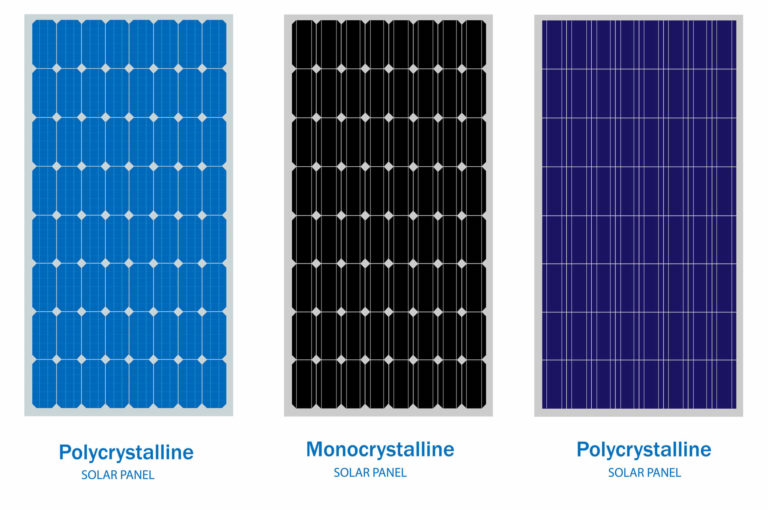
Monocrystalline panels (most common today) are made from single-crystal silicon and achieve 20-22% efficiency. Polycrystalline panels, made from multiple silicon crystals, are slightly less efficient (18-20%). Polycrystalline technology is now largely obsolete due to cost convergence; most UK residential installations use monocrystalline panels as standard.
Can I install solar panels myself?
Whilst DIY solar kits exist for off-grid applications, grid-connected residential systems must be installed by qualified professionals. Electrical connections must meet Building Regulations Part P. G99 grid connection registration is required. Most importantly, professional installation carries workmanship warranty and insurance. Hiring an MCS-approved installer ensures safety and warranty coverage.
Summing Up
Solar panels convert sunlight into electricity through the photovoltaic effect, a process where photons knock electrons loose from silicon atoms, creating an electrical current. This DC electricity is converted to AC by an inverter, powering your home and exporting surplus to the grid via the Smart Export Guarantee.
A typical UK 4kW system generates 3,500-4,500 kWh annually, significantly reducing grid electricity consumption. Battery storage improves self-consumption from 30% to 70% and accelerates financial returns, though solar is financially attractive without storage too. Modern panels achieve 20-22% efficiency, last 25-30 years with minimal degradation, and work on all days with daylight. The economics make solar one of the most reliable home investments available to UK homeowners in 2026.
If you’re considering solar and want a detailed assessment of potential output, savings, and payback for your specific property, our experienced installers can advise on system size, inverter type, and whether battery storage makes sense for your usage patterns.
Updated