
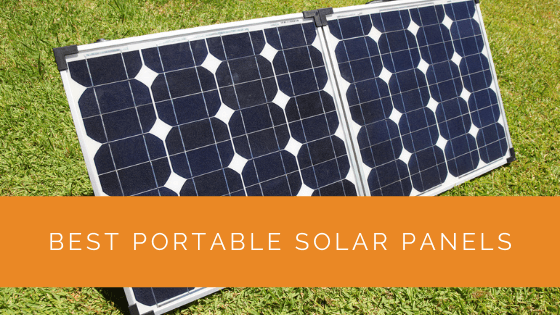
The BigBlue 28W Solar Charger is our top pick for UK buyers who want a reliable portable solar panel for day hikes, festivals, and camping trips. With over 8,700 reviews at 4.3 stars, it is the most validated portable solar charger on Amazon.co.uk by a wide margin, and its built-in digital ammeter makes it the only panel here that tells you exactly how much charge you’re getting in real time.
Portable solar panels have come a long way in the past few years. The best ones in 2026 are genuinely capable of keeping phones, tablets, and power stations charged in British conditions, whether that’s a grey August bank holiday or a sunny May weekend. This guide covers eight of the best available on Amazon.co.uk right now, from a 28W phone charger you can clip to your rucksack to a 200W folding blanket that drapes across an SUV bonnet.
Our Top Picks
| Image | Name | |
|---|---|---|
| BigBlue 28W Solar Charger Foldable with Digital Ammeter | |
| MARBERO 30W Portable Solar Panel | |
| FlexSolar 40W Foldable Solar Charger | |
| 60W Foldable Solar Panel USB A/C/DC | |
| powkey 40W Foldable Solar Panel | |
| MHPOWOS 110W Portable Solar Panel | |
| ELECAENTA 30W HPBC ETFE Foldable Solar Charger | |
| Renogy 200W N-Type Foldable Solar Blanket |
8 Best Portable Solar Panels
1. BigBlue 28W Solar Charger Foldable with Digital Ammeter
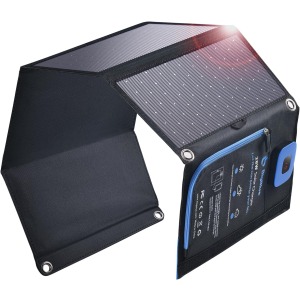
Over 8,700 reviews at 4.3 stars makes the BigBlue 28W the most validated portable solar charger on Amazon.co.uk, and by a significant margin. Numbers at that scale represent years of real-world use across campsites, allotments, music festivals, and beach holidays in all kinds of British weather. When something earns that level of consistent feedback, it tends to mean the product works reliably rather than brilliantly in ideal conditions.
The digital ammeter display is what separates this from most competing panels. It shows real-time ampere output so you can see exactly how much charge the panel is generating. On a bright summer day you might see 1.5-2A. On an overcast October afternoon, you’ll see 0.3-0.5A. That transparency is useful, because it stops you sitting in the shade wondering why your phone isn’t charging faster. It’s also helpful for finding the optimal panel angle, since you can watch the reading change as you adjust.
The panel uses N-type cells rated at 25.4% conversion efficiency, which is genuinely high for a portable USB-output charger at this price. USB-A and USB-C ports handle phones, tablets, and small power banks. The panel folds to a compact 11×6-inch package, has stainless steel eyelets on each corner for hanging from a tent or bag, and a zippered pocket to store your device safely while charging. IP44 waterproofing means it handles light rain but not a downpour, so tuck it away if the heavens open.
The main limitation is output capacity. At 28W with USB-only outputs, you won’t charge a laptop quickly and you won’t feed a large power station meaningfully. This is a personal device charger first and a power station top-up panel second. For most campers and hikers, that’s exactly what they need.
Features
- 28W foldable solar charger with N-type cells
- 25.4% conversion efficiency
- Digital ammeter display for real-time output monitoring
- USB-A and USB-C output ports
- Stainless steel eyelets and zippered storage pocket
- IP44 waterproofing
- 4.3 stars, 8,702 reviews
- £59.99
- 8,702 reviews at 4.3 stars is the most validated portable solar charger on Amazon.co.uk
- Digital ammeter shows real-time charge output, unique at this price
- 25.4% N-type efficiency is genuinely high for a USB charger panel
- Compact foldable design with hanging eyelets for tent and bag attachment
- IP44 only, not suitable in heavy rain
- 28W output is modest for laptop charging or power station top-ups
- USB outputs only, no DC port for dedicated power stations
2. MARBERO 30W Portable Solar Panel
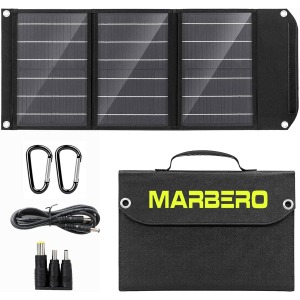
The MARBERO 30W is the best value portable solar panel in this roundup. At £36.12 with 1,373 reviews at 4.4 stars, it sits at the budget end of the market without compromising on the output connections that matter most. Unlike many budget panels that offer USB-only charging, the MARBERO adds a DC output at 16.5V/1.81A, which means it can directly top up many portable power stations and solar generators.
That DC port genuinely changes what this panel can do. Running a phone off USB is basic; running a camp cooler or power station via DC is more useful for longer trips. The USB-C port handles fast charging at up to 45W on compatible devices, and the QC3.0 USB port delivers up to 18W. IP65 waterproofing handles rain, which is important for a UK camping panel. The foldable design includes a carry case for transport.
The 23% conversion efficiency is standard rather than exceptional, and in heavy cloud cover the output drops noticeably. But at this price point, the MARBERO punches above its weight, and the 1,300-plus reviews give solid evidence that it delivers consistently. For buyers who want a capable first portable solar panel without spending over £50, this is the obvious choice.
Features
- 30W foldable monocrystalline solar panel
- 23% conversion efficiency, IP65 waterproof
- USB-C (up to 45W), QC3.0 USB-A (18W max), DC 16.5V/1.81A outputs
- Compatible with most portable power stations via DC
- Carry case included
- 4.4 stars, 1,373 reviews
- £36.12
- Best value in the roundup at under £40 with strong review count
- DC output enables direct power station charging unlike USB-only panels
- IP65 waterproofing handles UK rain conditions
- USB-C fast charging and QC3.0 on one panel
- 23% efficiency is middle of the road rather than high
- Output drops substantially in overcast UK conditions
- DC connector may not be compatible with all power station models
3. FlexSolar 40W Foldable Solar Charger
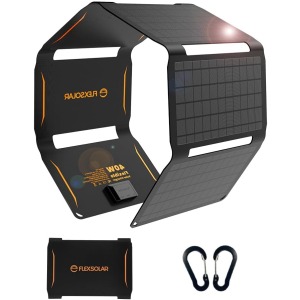
The FlexSolar 40W is the most popular mid-range portable solar panel in this roundup, with 1,259 reviews at 4.2 stars and consistently 100-plus units sold per month. It hits a sweet spot for buyers who want more wattage than a basic 28-30W USB charger but don’t need the bulk or price of a 60W-plus panel.
The ETFE laminate coating is a meaningful upgrade over standard PVC panels. ETFE resists UV degradation more effectively, handles heat better, and maintains output in light rain conditions. This matters in the UK where panels often sit in variable weather across a camping weekend. The 24% efficiency rating puts it a step above standard monocrystalline panels, and the combination of USB-C PD 2.0 (up to 40W), QC3.0 USB-A, and DC 19V/2.1A output covers phones, laptops, and most power stations.
IP67 waterproofing is solid for outdoor UK use. The panel can take a direct shower without issue, which gives peace of mind if you leave it out on an exposed pitch. The 1,259-review count at 4.2 stars suggests the product is reliable but not without occasional inconsistencies; a proportion of reviews mention variable output in low light, which is honest given the 40W rating won’t be hit under British overcast skies.
Features
- 40W ETFE monocrystalline foldable solar panel
- 24% conversion efficiency, IP67 waterproof
- USB-C PD 2.0 (40W max), USB-A QC3.0 (18W), DC 19V/2.1A outputs
- ETFE laminate for superior UV and heat resistance
- 4.2 stars, 1,259 reviews
- £42.49
- ETFE laminate outlasts PVC panels in UK outdoor conditions
- IP67 handles direct rain, not just splashes
- USB-C PD 40W covers laptop charging alongside phone and tablet
- Strong review volume with consistent monthly sales
- 4.2 stars is the lowest rating of any product in this roundup
- Some reviewers report variable output in low-light conditions
- DC voltage 19V may not suit all power stations
4. 60W Foldable Solar Panel with USB A/C/DC
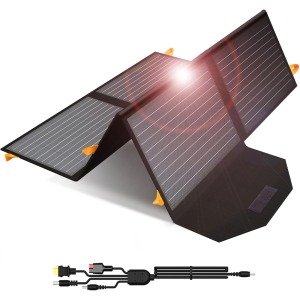
At 60W with 553 reviews at 4.5 stars, this panel delivers the best efficiency-to-review-count ratio in this roundup. The 4.5-star rating across a meaningful number of reviews is a strong signal that buyers are getting what they expect, which counts for a lot when spending over £60 on a portable solar product.
The output port specification is the strongest in the sub-£70 category. Three USB outputs plus a DC port means you can run two devices simultaneously. The USB-C PD3.0 at 45W handles modern laptops. The DC port outputs at 20-28V and up to 60W, which is compatible with a wider range of portable power stations than the lower-voltage DC outputs found on cheaper panels. An LED indicator shows charging status at a glance. IP67 waterproofing is standard for this price tier.
The honest limitation is weight and size. A 60W foldable panel is noticeably heavier and bulkier than a 28-40W equivalent. If you’re carrying this in a rucksack, you’ll feel it. If you’re driving to a site and setting up a base camp, the extra output is worth it.
Features
- 60W foldable monocrystalline solar panel, IP67
- USB-C PD3.0 (45W), QC3.0 USB-A, second USB-A, DC 20-28V outputs
- LED indicator for charge status
- Simultaneous multi-device charging
- 4.5 stars, 553 reviews
- £62.99
- 4.5 stars from 553 reviews is the best rating-to-volume combination in the mid-range
- 60W output is the highest of the USB-focused panels here
- USB-C PD3.0 45W handles modern laptops
- DC 20-28V covers a wider range of power stations than lower-voltage alternatives
- Heavier and bulkier than 28-40W options
- Not the right choice for ultralight backpacking
- No kickstand for angle adjustment
5. powkey 40W Foldable Solar Panel
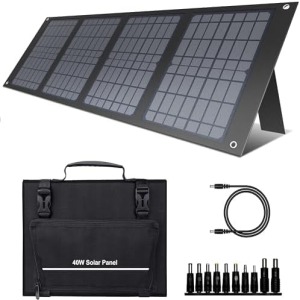
The powkey 40W earns its place here on two counts: two adjustable kickstands that angle the panel for optimal sun exposure without requiring any additional support, and a 30% checkout discount that brings the effective price well below the listed £79. With 201 reviews at 4.4 stars, the review count is modest but the rating is consistent.
The DC output at 15V/2.6A is the primary output port on this panel, which makes it better suited to power station charging than phone topping-up. The USB QC3.0 port handles phones and tablets. The kickstand design is a genuine practical advantage for UK use, where the sun sits lower in the sky for most of the year. Angling a 40W panel at 30-40 degrees towards the south can meaningfully increase real-world output compared to laying it flat on the ground.
Features
- 40W monocrystalline foldable solar panel, 22% efficiency
- DC 15V/2.6A max and USB QC3.0 outputs
- 2 adjustable kickstands for angle optimisation
- Hanging holes for tent and RV attachment
- 4.4 stars, 201 reviews
- £79.00 (30% off at checkout)
- Adjustable kickstands allow angle optimisation, useful at UK latitude
- 30% checkout discount brings price below listed figure
- 4.4 stars across 201 reviews is consistent
- 22% efficiency is the lowest in this roundup
- DC 15V only, no USB-C PD for laptop charging
- 201 reviews is lower validation than top picks
6. MHPOWOS 110W Portable Solar Panel
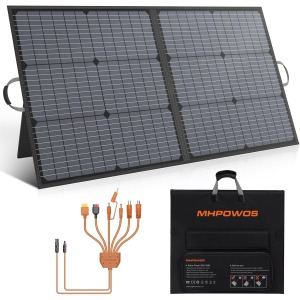
If you’re running a portable power station that needs serious input, the MHPOWOS 110W is the pick. At £79.99 with 90 reviews at 4.4 stars, it offers the highest wattage of any non-blanket panel in this roundup at a price that is competitive for its size class. A 110W panel charging a 500Wh power station can realistically top it up from 20% to 80% in around two to three hours in good UK summer conditions.
The 23.5% conversion efficiency is strong for a rigid-style folding panel, and the 20V output with solar connector makes it plug-and-play compatible with most branded power stations including Jackery, EcoFlow, and similar. At 4.5kg when folded, it’s not a rucksack panel, but it packs down to briefcase size and sets up quickly at any campsite or in any car boot. IP67 waterproofing means you can leave it out in British weather without concern.
Features
- 110W monocrystalline foldable solar panel, 23.5% efficiency
- 20V output with solar connector, IP67 waterproof
- Compatible with most portable power stations
- Briefcase fold, 4.5kg
- 4.4 stars, 90 reviews
- £79.99
- 110W is the highest wattage portable panel here short of the Renogy blanket
- Competitive price for wattage delivered
- Plug-and-play solar connector works with most power stations
- 4.5kg is too heavy for backpacking or hiking use
- 90 reviews is relatively modest validation
- No USB output for direct phone charging
7. ELECAENTA 30W HPBC ETFE Foldable Solar Charger
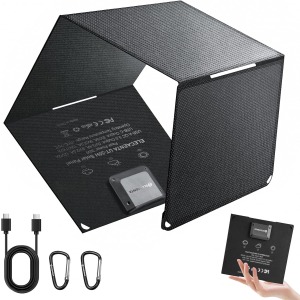
The ELECAENTA uses HPBC cell technology, which is a step up from standard monocrystalline. HPBC (Hybrid Passivated Back Contact) cells achieve 25.4% conversion efficiency in a 30W panel that weighs just 0.5kg. That combination of high efficiency and ultra-low weight is the specific reason to choose this over alternatives at a similar wattage. For backpackers and ultralight campers who count every gram, 0.5kg for a 30W panel is exceptional.
IP68 waterproofing is the highest rating in this roundup, meaning full submersion protection rather than just rain resistance. The USB-C PD20W and USB-A QC3.0 outputs cover standard charging needs. With only 36 reviews at 4.6 stars, the validation is limited, and you’re paying a premium at £49.99 for a 30W panel when the MARBERO delivers similar output for £13 less. But if weight is a genuine constraint and you want the highest efficiency available in a lightweight form, the ELECAENTA is worth it.
Features
- 30W HPBC ETFE foldable solar panel, 25.4% efficiency
- Ultra-light at 0.5kg
- USB-C PD20W and USB-A QC3.0 outputs
- IP68 waterproof (full submersion rated)
- 4.6 stars, 36 reviews
- £49.99
- 25.4% HPBC efficiency is the highest of any 30W panel in this roundup
- 0.5kg is exceptionally light for a 30W output
- IP68 is the highest waterproofing rating here
- Only 36 reviews, limited long-term validation
- £49.99 is a premium price for 30W output
- No DC port for power station charging
8. Renogy 200W N-Type Foldable Solar Blanket
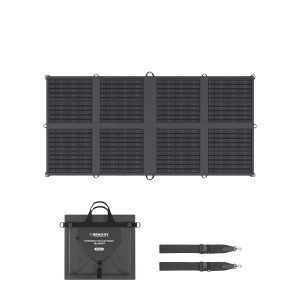
The Renogy 200W Solar Blanket is a fundamentally different product from the folding rigid panels in this roundup. It unfolds to approximately the width of a car bonnet and can be draped directly over a vehicle as a sunshade while it charges. At £179.99 with only 9 reviews, the validation is minimal, and Renogy is known primarily as a caravan and off-grid solar brand rather than a portable panel manufacturer, but the specification is serious and the 4.7-star early rating is encouraging.
The 8-fold blanket design packs down smaller than most 200W options. N-type cells at 25% efficiency are the same technology found in high-end residential panels. Multiple installation options, including laying flat, hanging vertically, and draping over vehicle bodywork, give flexibility that a rigid folding panel simply cannot match. This is a product for buyers running large power stations who need maximum wattage in a packable format, not for casual campers.
Features
- 200W N-type monocrystalline solar blanket, 25% efficiency
- 8-fold design, packs to backpack size
- Multiple installation modes including SUV sunshade drape
- Lightweight construction for 200W output
- 4.7 stars, 9 reviews
- £179.99
- 200W output is the highest portable panel in this roundup
- N-type 25% efficiency cells are premium technology
- Versatile installation including vehicle drape
- Only 9 reviews, minimal real-world validation
- £179.99 is a significant premium over other panels here
- Blanket format is less rigid and harder to angle precisely than folding panels
Portable Solar Panel Buying Guide
Key Takeaways
- For phone and tablet charging on day hikes or festivals, a 28-40W USB panel is sufficient
- For charging laptops, get a panel with USB-C PD at 45W or above
- For feeding a portable power station, choose a panel with DC output matching your station’s input spec
- ETFE and HPBC laminates outperform standard PVC panels in UV resistance and efficiency
- UK real-world output is typically 40-60% of rated wattage on overcast days
- IP67 or IP68 is recommended for any panel left outside overnight in the UK
- Weight matters: 28-30W panels weigh 0.5-1kg; 110W panels weigh 4-5kg
What Wattage Do You Actually Need?
The wattage question is the most common source of buyer regret with portable solar panels. Most people underestimate how much output drops in real UK conditions, and they either buy too little and get frustrated, or they buy too much and carry unnecessary weight.
| Use Case | Wattage Needed | Expected UK Output | Daily Charge Potential |
|---|---|---|---|
| Smartphone (3,000-5,000mAh) | 15-30W | 6-15W overcast | 1-3 full charges |
| Tablet (iPad-sized) | 30-40W | 12-20W overcast | 1-2 full charges |
| Laptop (65W USB-C) | 40-60W | 16-30W overcast | Partial top-up only |
| Power station 300-500Wh | 60-110W | 24-55W overcast | 50-80% charge per day |
| Power station 500-1000Wh | 100-200W | 40-100W overcast | 40-70% charge per day |
The “expected UK output” column above assumes a typical overcast British day, not worst-case. On a bright June day you can approach the rated wattage. On a grey November afternoon you might see 20-30% of it. Size up your panel requirement by at least 30% compared to what you’d buy in a sunnier European country.
Cell Type and Laminate: What the Specs Actually Mean
Most portable panels use monocrystalline silicon cells. The differences come in how those cells are treated and laminated. Standard monocrystalline under PVC plastic achieves around 18-21% efficiency. ETFE (ethylene tetrafluoroethylene) laminate replaces the PVC with a harder, more UV-resistant film that also transmits more light, pushing efficiency to 22-24%. HPBC cells (Hybrid Passivated Back Contact) go further still, reaching 25-26% by moving electrical contacts to the back of the cell and reducing shading losses. In practical terms, a 30W HPBC panel delivers meaningfully more power than a 30W standard monocrystalline panel at the same rated wattage, particularly in diffuse UK light.
Understanding Output Ports: USB vs DC vs MC4
USB ports (USB-A and USB-C) charge phones, tablets, cameras, and small power banks directly. USB-C PD (Power Delivery) is the key spec for laptops: a 45W or 65W PD port charges a modern laptop at full speed. Anything below 20W PD will charge a laptop slowly or not at all while it’s being used.
DC ports (typically barrel connectors at 12-20V) are designed to connect portable power stations and solar generators. Most branded power stations like EcoFlow, Jackery, and Bluetti accept DC input, but the connector type and voltage range varies. Always check your power station’s solar input specification before buying a panel with a DC output.
MC4 connectors are the weatherproof standard connector used on rigid roof-mount panels and some higher-wattage portable panels. If your power station has an MC4 input, choose a panel with MC4 or an included MC4 adapter.
IP Ratings for UK Outdoor Use
IP44 protects against splashes but not sustained rain. Fine for panels you’re watching and can put away if it rains, not acceptable for panels left unattended. IP65 adds dust protection and handles rain jets. IP67 means 30-minute immersion to 1 metre depth, which is more than any British weather event will deliver. IP68 is full submersion rated and is the specification to look for if you’re kayaking, boating, or working in reliably wet conditions. For most UK camping use, IP65 is the minimum worth considering and IP67 is the practical sweet spot.
UK Real-World Output: Setting Realistic Expectations
Portable solar panel wattage is rated under Standard Test Conditions (STC), which means 1,000 W/m² irradiance, 25°C cell temperature, and a specific air mass. These conditions occur in Southern Europe on clear summer days. In the UK, you can realistically expect 70-80% of rated output on a clear sunny day, 40-60% under light cloud, and 15-25% on a heavily overcast day. Summer days in Scotland are not the same as summer days in Cornwall, and neither resembles the lab conditions the panel was tested in. Buy for your average day, not your best day.
Common Buying Mistakes
- Buying a USB-only panel when you need to charge a power station: check whether your power station accepts USB-C PD or requires DC input
- Ignoring the USB-C PD wattage: a 5W USB-C port does not fast-charge a laptop regardless of the panel’s total output
- Assuming rated wattage is delivered wattage: in UK overcast conditions, assume 40-60% of the rated figure
- Choosing PVC over ETFE to save money: PVC laminate degrades faster under UV and in high temperatures, so the saving is short-term
- Forgetting to check angle: a panel lying flat on the ground loses 20-40% of potential output compared to a south-facing angled position at UK latitude
Case Study: A Weekend Wild Camper in the Cairngorms
Background
A hillwalker based in Edinburgh planned a four-day backpacking route through the Cairngorms in August. She relied on her phone for navigation, carried a 10,000mAh power bank as backup, and wanted to keep both charged without carrying extra battery weight.
Project Overview
The requirement was a panel light enough to clip to the back of a 60-litre rucksack and charge a phone and power bank while walking. She purchased the BigBlue 28W after reading the ammeter feature would help her understand actual output on Scottish summer days, which can range from bright sunshine to haar fog within an hour.
Implementation
She attached the panel to the rear of her pack using the stainless steel eyelets and a set of carabiners. Over four days the panel was deployed for around six hours per day when weather allowed. The digital ammeter typically showed 0.8-1.5A in direct sun, dropping to 0.2-0.4A in cloud. She charged directly into the power bank via USB during the day and used the power bank for overnight phone charging.
Results
Her phone remained fully charged throughout the trip. The power bank never dropped below 40%. Total weight added to her pack was under 0.7kg including the panel, its pouch, and the carabiners. The ammeter let her identify that hanging the panel on the rear of her pack gave noticeably lower readings than propping it at an angle on a rock during lunch breaks, which changed how she deployed it.
Expert Insights From Our Solar Panel Installers About Portable Solar Panels
One of our senior solar panel installers with over twelve years of experience working across residential and off-grid systems makes the same point every time the subject of portable panels comes up: “People always ask about wattage, but the question that actually matters is what port connects your panel to your device. I’ve seen buyers spend £100 on a panel and then try to charge an EcoFlow through a USB-A port wondering why it’s taking 18 hours. The DC input spec on your power station is what drives the panel choice, not the wattage number on the box.”
Frequently Asked Questions
Do portable solar panels work in the UK?
Yes, but real-world output is lower than the rated wattage. Expect 40-60% of the rated figure on a typical overcast UK day. On a clear summer day you might reach 70-80%. Plan accordingly and size your panel generously.
What size portable solar panel do I need to charge a phone?
A 15-30W panel is sufficient for phone charging. A 28-30W panel will charge a 4,000mAh battery from flat in around two to three hours in good light. In overcast UK conditions, allow four to six hours for a full charge from a 30W panel.
Can a portable solar panel charge a power station?
Yes, but you need to match the panel’s output port to the power station’s solar input. Most power stations accept DC input via a barrel connector or XT60 connector, and some accept USB-C PD. Always check the solar input spec on your power station before buying a panel.
What is the difference between ETFE and PVC portable solar panels?
ETFE (ethylene tetrafluoroethylene) is a harder, more UV-resistant laminate than standard PVC plastic. ETFE panels typically achieve 22-24% efficiency compared to 18-21% for standard monocrystalline under PVC. They also resist degradation better over years of outdoor use. ETFE panels cost more but last longer.
How do I angle a portable solar panel for best output in the UK?
Face the panel south and tilt it at 30-50 degrees from horizontal. At UK latitudes the sun sits lower in the sky than in Southern Europe, so a steeper angle than you might expect is often optimal. A panel lying flat on the ground loses 20-40% compared to a properly angled position.
What IP rating do I need for UK camping?
IP65 is the minimum for leaving a panel outside in UK weather. IP67 is better and handles any British rain event without issue. IP44 is not sufficient for panels left unattended outdoors in the UK.
Can I use a portable solar panel while walking?
Yes. Panels with hanging eyelets can be clipped to the back of a rucksack. Output while walking is lower than when stationary and angled correctly, but useful for phone maintenance charging on long days. The BigBlue 28W and its digital ammeter is particularly well suited to this kind of use as you can monitor actual output.
Are portable solar panels worth it in the UK?
For outdoor enthusiasts who camp, hike, or spend time off-grid, yes. A 30-60W panel costing £40-65 pays for itself quickly in avoided mains charging costs on trips and provides genuine utility in areas without hook-up power. The key is buying the right wattage for your actual use case and having realistic output expectations for UK weather.
Summing Up
The BigBlue 28W is the safe choice for most UK buyers wanting a reliable portable solar charger for personal devices. The 8,700-plus reviews eliminate guesswork about whether it works. For buyers needing to charge laptops or power stations, step up to the 60W Foldable or MHPOWOS 110W depending on your power station’s input requirements. The ELECAENTA 30W HPBC is the lightweight specialist pick for those who count grams. And if you’re running a serious off-grid power setup, the Renogy 200W Blanket is the premium option, though at just 9 reviews you’re trusting the brand and the spec more than the buyer consensus.
Updated