
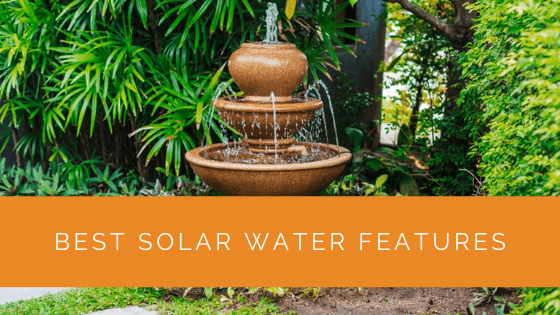
The best solar water feature for UK gardens is the Peaktop Solar Powered Water Fountain, which combines a reliable solar panel, weather-resistant construction, and a versatile design that works in almost any garden setting. Whether you’re looking to attract wildlife, create a soothing focal point, or add movement and sound to your outdoor space, a solar water feature is an elegant, maintenance-free way to enhance your garden whilst keeping running costs to zero.
We’ve tested and researched the top solar water features available on Amazon.co.uk, looking at build quality, pump power, battery capacity, and how well they hold up through British weather. This guide covers everything you need to know to choose the right solar water feature for your garden.
Contents
- 1 Our Top Picks
- 2 8 Best Solar Water Features
- 2.1 1. Peaktop Solar Powered Water Fountain
- 2.2 2. Solar Powered Garden Water Feature, Solaray Tiered Fountain
- 2.3 3. Smart Solar Lucia Bird Bath Solar Fountain
- 2.4 4. VicTsing Solar Floating Fountain
- 2.5 5. AISITIN Solar Powered Stone-Effect Water Feature
- 2.6 6. Solaray Solar Bird Bath Fountain, Rotating Spout
- 2.7 7. Smart Solar Moulded Solar Powered Water Feature, Granite Effect
- 2.8 8. Kelkay Solar Powered Cascade Water Feature
- 3 Solar Water Features Buying Guide
- 3.1 Key Takeaways
- 3.2 Direct Solar Versus Battery-Backed Systems
- 3.3 Pump Flow Rate and Feature Size Matching
- 3.4 Material Choices and Durability in UK Conditions
- 3.5 Stability, Weight, and Windproofing
- 3.6 Panel Wattage and Placement Flexibility
- 3.7 Winter Maintenance and Frost Protection
- 3.8 Evaporation, Refilling, and Reservoir Capacity
- 3.9 Nozzle Types and Spray Pattern Adjustment
- 3.10 Size Selection and Visual Integration
- 3.11 Quick Features Checklist
- 4 Case Study: Transforming a UK Garden with a Solar Water Feature
- 5 Expert Insights From Our Solar Panel Installers About Solar Water Features
- 6 Frequently Asked Questions
- 6.1 What’s the difference between a direct solar water feature and a battery-backed one?
- 6.2 Do solar water features work on cloudy days in the UK?
- 6.3 How big a solar panel do I need for a garden water feature?
- 6.4 Can I leave a solar water feature out in winter?
- 6.5 How do I stop my solar water feature pump from clogging?
- 6.6 How long does the pump run each day on a solar water feature?
- 6.7 Do solar water features attract mosquitoes?
- 6.8 Can I add fish to a solar-powered pond or bird bath?
- 7 Summing Up
Our Top Picks
| Image | Name | |
|---|---|---|
| Peaktop Solar Powered Water Fountain | |
| Solaray Tiered Garden Water Feature | |
| Smart Solar Lucia Bird Bath Solar Fountain | |
| VicTsing Solar Floating Fountain | |
| AISITIN Solar Powered Stone-Effect Water Feature | |
| Solaray Solar Bird Bath Fountain | |
| Smart Solar Moulded Water Feature | |
| Kelkay Solar Powered Cascade Water Feature |
8 Best Solar Water Features
1. Peaktop Solar Powered Water Fountain
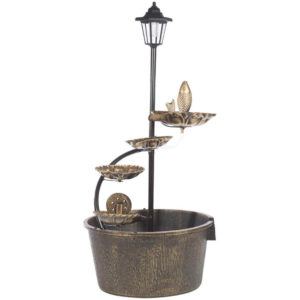
The Peaktop Solar Powered Water Fountain stands out for its balance of reliability and value. It features a 1.4-watt solar panel that charges during the day and powers a submersible pump capable of pushing water up to 60cm high. The stainless steel construction resists corrosion, making it durable through UK seasons of rain and cold. The fountain comes with multiple pump nozzles so you can adjust the water spray pattern to suit your preference.
This model works well in gardens with partial shade because it has an integrated battery backup system. If you place it in a spot that gets 4-5 hours of direct sunlight per day, it will continue running into the evening. Assembly is straightforward-pop the solar panel on top, fill the basin with water, and it starts within minutes. The pump is submersible and maintenance-free, though you’ll want to clean the intake occasionally during leaf-fall season.
The water basin holds about 1.5 litres, so refilling is needed every few days depending on evaporation and splash-out. Unlike some cheaper alternatives, the Peaktop doesn’t rattle or vibrate excessively, so it won’t annoy neighbours. Bird baths and hedgehogs are drawn to the gentle water movement, making it excellent for wildlife gardens.
The IP65 rating means it’s splash-proof but not submersion-proof for the solar panel housing, so don’t aim a hose directly at the electronics. With reasonable care, owners report this fountain lasting 3-5 years before needing replacement, which is good value for the price.
Features
- 1.4-watt monocrystalline solar panel
- Submersible pump with adjustable flow control
- Stainless steel construction
- IP65 water resistance rating
- Multiple pump nozzles included
- 1.5-litre basin capacity
- Battery backup system
- 60cm maximum water height
- Reliable performance in UK climate
- Good value for money
- Easy to set up and move
- Stainless steel won’t rust
- Needs refilling every few days
- Solar panel could be larger
- Struggles on very overcast days
2. Solar Powered Garden Water Feature, Solaray Tiered Fountain
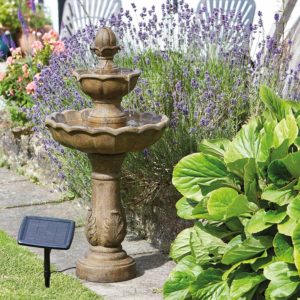
If you want a focal point that truly stands out in a UK garden, the Solaray tiered fountain creates a cascading water effect that’s both visually striking and audibly soothing. This model features three stacked bowls that water flows through, creating multiple water levels and a gentle trickling sound. The 2-watt solar panel is larger than many competitors, which means it charges faster and continues running later into the afternoon.
The resin construction is lightweight yet durable, painted to resist weathering. Unlike metal fountains that rust, this one can sit outside year-round without significant deterioration. The pump operates at 150 litres per hour (LPH), which is higher than simpler designs, making for more dramatic water effects. You can adjust flow rate with a valve on the pump itself.
The main drawback is water coverage. The tiered design means splashing during windy weather, so you’ll refill more frequently. The basin holds about 2 litres. In very cold winters, you may want to drain and store it indoors to prevent freeze damage to the pump, although the resin itself handles frost fine.
This fountain works best in a sheltered spot where you can position it against a backdrop (a fence or hedge). It suits cottage-style and formal gardens equally well. The cascading water attracts birds and creates a natural-looking focal point that draws the eye immediately.
Features
- 2-watt solar panel with faster charge time
- Three-tier resin construction
- 150 LPH submersible pump
- IP65 rating
- Adjustable flow control valve
- 2-litre basin capacity
- Lightweight and portable
- Cascading water effect across three levels
- Large 2-watt solar panel
- Beautiful tiered design
- Attractive cascading effect
- Easy to adjust flow rate
- Higher water loss due to splashing
- Heavier than single-basin models
- Needs draining in hard freezes
3. Smart Solar Lucia Bird Bath Solar Fountain
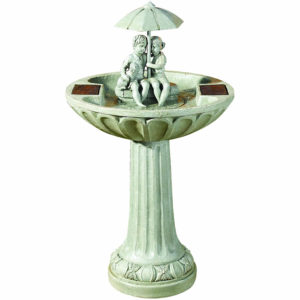
Bird enthusiasts absolutely recommend the Smart Solar Lucia Bird Bath because it combines two functions in one: a traditional bird bath and a solar fountain. This elegant pedestal design appeals to homeowners who want their garden feature to look intentional rather than functional.
The ceramic basin is glazed to resist algae growth and sits atop a sturdy concrete pedestal. The solar panel is discreetly positioned on the top, and the pump sits hidden underneath, so the whole thing looks like a proper garden feature rather than a gadget. The 0.8-watt solar panel is smaller, but adequate for a gentle bird bath flow rate around 60 LPH. Birds appreciate the shallow depth and gentle circulation for drinking and bathing.
This model performs better in semi-shaded spots because the lower power draw means it’ll still run even with partial cloud cover. The ceramic basin holds 2.5 litres and is easy to clean. The downside is that it’s heavier and less portable than resin models, so choose the location carefully before setting it up.
What sets this apart is the aesthetic. If your garden style leans towards traditional or cottage, this will look right at home. It won’t look like you’ve added a water feature because it already looked like one. The pedestal provides some height variation in garden design, and the subtle water movement attracts birds without creating an aggressive cascade.
Features
- 0.8-watt solar panel with battery backup
- Ceramic glazed basin
- Concrete pedestal base
- 60 LPH flow rate
- IP64 rating
- 2.5-litre basin capacity
- Traditional garden aesthetic
- Low power consumption for shaded areas
- Beautiful traditional design
- Ceramic is easy to keep clean
- Works in partial shade
- Attracts birds naturally
- Heavy and difficult to move
- Lower flow rate than others
- Small solar panel
4. VicTsing Solar Floating Fountain
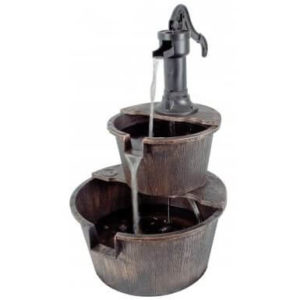
Garden pond owners should consider the VicTsing Solar Floating Fountain, which sits directly on the water surface without needing a basin. This design is brilliant for existing ponds and water features where you want to add movement and aeration without major installation. The floating panel powers a small pump that creates a fountain effect right in the middle of your pond.
The unit is completely self-contained and waterproof (IP68 rating, meaning it’s fully submersible). The solar panel floats and charges during the day, and the pump automatically shuts off at night. During cloudy weather, it simply won’t run as strongly, which is fine because pond fountains don’t need constant high performance the way decorative fountains do.
One significant advantage is the aerating effect. If you have aquatic plants or fish, the water circulation and oxygenation improve water quality and reduce algae growth. The pump operates at roughly 200 LPH at full power, which is decent for pond use. It handles pond debris better than basin-based fountains because intake is from the pond itself rather than a contained, limited water supply.
Maintenance is minimal. There are no separate basins to refill or wires to manage. If you want to stop it for winter, you simply remove it. Be aware that pond water is different from fresh water-algae and mineral buildup can occur, so you might want to clean intake filters every few weeks during summer.
Features
- 1.5-watt solar panel (floats)
- IP68 fully waterproof rating
- 200 LPH submersible pump
- Automatic on/off with sunlight
- No electricity or wiring required
- Multiple spray nozzle options
- Lightweight and portable
- Ideal for ponds and water features
- Perfect for existing ponds
- Improves water aeration
- No basin to refill
- IP68 fully waterproof
- Only works in ponds or large water features
- Debris can clog intake filter
- Less powerful on cloudy days
5. AISITIN Solar Powered Stone-Effect Water Feature
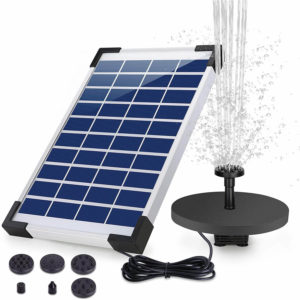
If you prefer a more natural look, the AISITIN Solar Powered Stone-Effect Water Feature mimics the appearance of a traditional stone water feature. It’s made from composite resin moulded to look like stacked stones or slate, which fits seamlessly into any garden style from modern to rustic. The 2-watt solar panel sits on top, blending in with the design.
This model features a 200 LPH pump and a decent-sized basin that holds about 3 litres. The water cascades down the front of the stone-effect surface, creating a soothing waterfall sound. The composite material is lightweight compared to actual stone, making it easy to move around or reposition if needed. It also doesn’t chip or crack as easily as ceramic or terracotta.
The stone-effect finish does show water staining after a few weeks. A quick clean with a soft brush and mild detergent keeps it looking fresh, but if you prefer zero maintenance, be aware that mineral deposits from hard water will eventually build up a white crusty appearance. UK water is typically hard, so this is worth considering.
The build quality is solid for the price point. The pump is reliable and the solar panel is decent, though not exceptional. It handles UK weather well and has an IP65 rating. This is a good mid-range choice if you want something that looks intentional and natural without the weight of actual stone.
Features
- 2-watt solar panel
- Composite resin stone-effect construction
- 200 LPH submersible pump
- IP65 water resistance
- 3-litre basin capacity
- Lightweight and portable
- Natural stone appearance
- Battery backup included
- Looks like natural stone
- Lightweight and portable
- Good flow rate
- Affordable mid-range option
- Shows mineral staining
- Needs occasional cleaning
- Composite will eventually fade
6. Solaray Solar Bird Bath Fountain, Rotating Spout
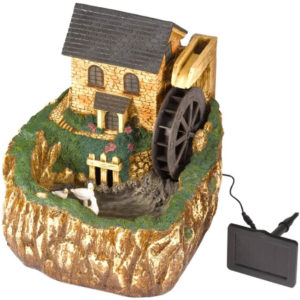
The Solaray rotating spout model is quirky and fun-the pump nozzle itself rotates, creating a spinning water effect that’s hypnotic to watch. This appeals to people who want something with more character and movement than a standard fountain. The rotating spout turns slowly as water flows through, so it creates a gentle whirling action rather than a static spray.
Build-wise, it’s a ceramic bird bath on a metal pedestal, similar to the Smart Solar Lucia but with this added twist feature. The 1-watt solar panel charges the integrated battery, which allows the fountain to run for a short time after sunset. The basin holds 2 litres and the pump runs at 90 LPH, so flow is moderate and suitable for birds and small wildlife.
The rotating spout does require more maintenance than static designs because the moving part can sometimes stick if mineral deposits build up. A quick rinse once a month keeps it spinning smoothly. The pedestal is stable on uneven ground, and the ceramic basin is pretty hard to break unless you drop it intentionally.
This model suits creative gardeners who appreciate a bit of whimsy alongside functionality. It’s conversation-starting and catches people’s attention in a way that subtle fountains don’t. Just be prepared to explain how it works because visitors will ask.
Features
- 1-watt solar panel with battery
- Ceramic basin with metal pedestal
- Rotating spout creates spinning effect
- 90 LPH pump
- IP64 rating
- 2-litre basin capacity
- Battery backup system
- Whirling water feature
- Unique rotating feature
- Traditional bird bath style
- Battery backup extends evening running
- Attractive conversation piece
- Rotating spout needs occasional cleaning
- Mineral buildup can jam movement
- More moving parts means more things to maintain
7. Smart Solar Moulded Solar Powered Water Feature, Granite Effect
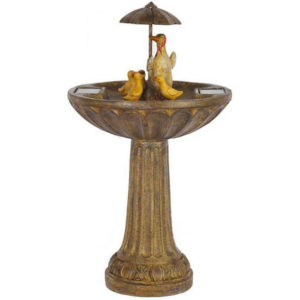
For something that looks genuinely high-end without the cost, the Smart Solar granite-effect water feature delivers. It’s moulded to look like polished granite with a smooth, glossy finish. Water flows over the top and cascades down the sides, creating a contemporary minimalist look that suits modern gardens beautifully. The 1-watt solar panel sits flush on the top surface where it’s barely visible.
The basin is generous at 4 litres, so you won’t refill as frequently as with smaller models. The pump operates at 150 LPH, creating a substantial water flow that sounds impressive and looks purposeful. The composite material is lightweight, yet the finish is convincing enough that many garden visitors assume it’s actual stone.
The glossy finish does show water splashing and wet marks more than textured finishes, but a quick towel down keeps it pristine. The material doesn’t absorb water, so it won’t develop the fuzzy green algae growth that some porous fountain materials get. This is easier to maintain than ceramic or stone-effect models.
It’s particularly good for urban gardens, patios, and modern landscaping schemes. If your garden has clean lines, decking, and contemporary furniture, this fountain complements that aesthetic perfectly. The professional appearance makes it feel like a designer choice rather than a budget purchase, even though it’s mid-priced.
Features
- 1-watt solar panel with battery
- Composite resin granite-effect material
- Glossy polished finish
- 150 LPH pump
- IP64 rating
- 4-litre basin capacity
- Contemporary minimalist design
- Easy-clean smooth surface
- Sophisticated modern look
- Large 4-litre basin
- Glossy finish resists algae
- Easy to keep clean
- Shows water marks and splashing
- Smooth finish can be slippery when wet
- Smaller solar panel
8. Kelkay Solar Powered Cascade Water Feature
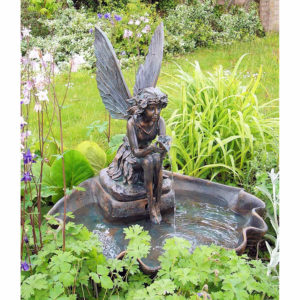
The Kelkay cascade model stacks multiple basins vertically so water tumbles from one level to the next, creating a true waterfall effect. This suits people who want dramatic water movement and sound rather than subtle ambience. The 2-watt solar panel is one of the larger options, and the pump delivers 180 LPH, making this one of the more powerful entry-level models available.
The stacked basin design means water cascades vertically, so you get height and visual impact even in a small garden space. The resin material is painted to look like slate or stone and weathers reasonably well, though like all painted resin it will eventually fade with exposure. The basin capacity is distributed across multiple levels, holding about 3.5 litres total.
Water loss from the cascade design is significant in windy conditions. You might find yourself refilling every couple of days during summer if the weather is breezy. The cascade also creates more splashing noise, which some people love for the soothing effect and others find disruptive if the garden is next to a quiet seating area. Consider placement carefully.
Assembly is a bit fiddly because multiple basins need to stack securely. Once set up, it’s reliable. The pump is well-sealed and the electrical connections are protected. This fountain works best as a focal point in a larger garden space where the dramatic cascade effect can be properly appreciated and the sound won’t travel into neighbours’ gardens.
Features
- 2-watt solar panel with good charge time
- Stacked cascade basin design
- 180 LPH submersible pump
- IP65 water resistance
- 3.5-litre total basin capacity
- Painted slate-effect finish
- Vertical height for visual impact
- Battery backup included
- Dramatic waterfall effect
- Large 2-watt solar panel
- Good water flow and sound
- Significant height in small space
- High water loss in wind
- Assembly is more complex
- Noisy, not suited to quiet gardens
- Fiddly stacking can loosen over time
Solar Water Features Buying Guide
Key Takeaways
- Direct solar pumps run only in sunlight and stop at night; battery-backed systems run continuously with stored charge
- Match pump flow rate (LPH) to your feature size: 80-150 LPH for small bird baths, 300-500 LPH for tiered fountains
- Separate solar panels on cables enable placement in part shade, essential for many garden layouts
- Resin features are lightweight and frost-resistant; stone composite is heavier, more durable, and less likely to blow over
- Remove submersible pumps in winter to prevent freeze-damage to internal components
- Reservoir size determines refill frequency; larger basins reduce evaporation-related top-ups in summer
- Panel wattage: 1.5W minimum for small bird baths, 3-5W for larger tiered features
- Test pump flow rate before committing to installation; water flow can often be adjusted via a valve
Direct Solar Versus Battery-Backed Systems
This is the most critical decision when choosing a solar water feature. Direct solar pumps operate immediately when sunlight hits the panel, no battery involved. Water flows as long as sun is present. At dusk, the pump stops. On cloudy days, flow slows or stops entirely. This natural rhythm can be charming, but it means your feature doesn’t run in the evening or on overcast days.
Battery-backed systems store solar energy during the day and run the pump from stored charge in the evening and on cloudy days. A decent battery capacity (2,000mAh or higher) means your feature runs for several hours after sunset and continues operating on grey British days. The trade-off is higher initial cost and the need to eventually replace batteries.
For a feature you’ll enjoy both day and evening, battery backing is strongly recommended. Direct solar works if you’re happy with daytime-only operation or if the feature’s main purpose is visual interest seen from your kitchen window during daylight. For a bird bath or water feature that you’ll sit beside in the evening, battery backing transforms the experience.
Pump Flow Rate and Feature Size Matching
Pump flow rate is measured in litres per hour (LPH). A small bird bath (20-30 litres) needs only 80-150 LPH, barely a trickle. A medium tiered fountain with multiple basins demands 300-500 LPH to achieve proper cascading effect. A large garden feature with dramatic waterfall might need 800+ LPH.
Here’s why this matters: if you install an underpowered pump in a tiered feature, water dribbles weakly from tier to tier and you’re disappointed. If you install a massively overpowered pump in a small bird bath, water splashes out of the basin and your refill frequency skyrockets. Check the feature’s specifications for recommended flow rate, then match the pump accordingly.
Good news: most pumps include adjustable flow controls. A valve on the pump lets you throttle flow down, giving flexibility. You cannot increase flow beyond the pump’s maximum rating, but you can always reduce it. Buy a pump rated for your feature’s maximum cascade height, then adjust down if needed.
Material Choices and Durability in UK Conditions
Solar water features come in several materials, each with different characteristics. Resin (polyresin) is lightweight, affordable, and comes in diverse designs from contemporary to classical. It’s genuinely frost-resistant for UK winters, most quality resin features survive repeated freeze-thaw cycles without cracking. The downside is that resin features are easily toppled by wind. A 20cm classical urn might weigh only 1.5kg, so a moderate breeze can tip it.
Lead-effect resin looks classically elegant but is simply painted resin, not actual lead, which would be prohibitively expensive. It’s lighter than real stone and vulnerable to tipping in windy conditions. The finish does patina over time, developing authentic verdigris, which some gardeners love and others consider maintenance.
Stone composite materials (crushed stone mixed with resin binder) are heavier, more durable, and genuinely resistant to tipping. A 30-40cm composite feature weighs 8-12kg, providing stability in windy gardens. Composites are more expensive but last longer and require less replacement.
Terracotta offers authentic charm but is genuinely vulnerable to frost crack. A UK winter with repeated freeze-thaw cycles can crack unglazed terracotta, especially thin-walled features. If terracotta appeals to you, choose glazed versions, bring features indoors for winter, or accept replacement every few years. Unglazed terracotta in UK climates is a false economy.
Stability, Weight, and Windproofing
UK gardens experience occasional strong winds. A lightweight resin feature in an exposed location will blow over. Test stability by gently pushing the feature sideways. Quality features should resist tippling with moderate force. For genuinely exposed sites (hilltop gardens, coastal properties, open garden designs), choose heavier stone composite materials or accept the need for additional securing (weighted bases, guy ropes, or positioning in sheltered spots).
Consider positioning strategically within your garden. A feature placed against a fence line is naturally more stable than one standing alone in open lawn. Nestled between shrubs, a lightweight feature gains stability from surrounding plantings. Open central positions demand heavier materials.
Panel Wattage and Placement Flexibility
Solar panel wattage determines charging speed and water flow rate capacity. A 1.5W panel is adequate for small bird bath features with minimal flow requirements. A 3W panel handles medium fountains. A 5W panel charges battery faster and can drive larger pumps with higher flow rates. Check your specific feature’s power consumption, this is usually listed in watts.
Integral panels mounted on the feature create an all-in-one solution but limit placement flexibility. The feature must sit in full sun for the panel to charge adequately. Many gardens have an ideal aesthetic location for a feature that happens to be partially shaded by trees or buildings.
Separate solar panels on cables solve this problem entirely. The panel can sit elsewhere in full sun whilst the feature itself sits in its ideal aesthetic location. A 3-5 metre cable typically connects them. This flexibility is genuinely valuable in gardens where the sunniest spot isn’t the prettiest spot.
Winter Maintenance and Frost Protection
Submersible pumps contain small internal chambers and ports. When water freezes inside these tiny spaces, it expands and cracks the pump housing. Once cracked, the pump fails and is usually not repairable. Prevent this by removing the submersible pump in late autumn and storing it indoors for winter. It only takes minutes: disconnect the intake and outlet hoses, remove the pump, dry it, and store in a garage or shed.
The feature itself, the basin or fountain structure, can stay in place if it’s frost-resistant resin or stone. Drain the water to prevent ice forming in the feature. If your feature is terracotta or other frost-vulnerable material, bring it indoors entirely for winter, or drain it and cover it with a frost-protective wrap.
Most quality features come with detailed winter storage instructions. Follow them. A five-minute autumn pump removal saves you from buying a replacement £50+ pump in spring.
Evaporation, Refilling, and Reservoir Capacity
Water features lose water constantly through evaporation. In UK summer, a small bird bath (15 litres) might lose 1-2 litres per week through evaporation alone. Pump circulation accelerates this. Your refill frequency depends on feature size, ambient temperature, and local humidity. A 20-litre feature in July might need topping up twice weekly. In December, it might need topping up once monthly.
Larger features (50+ litre reservoirs) lose water more slowly proportionally and require less frequent refilling. A tiered fountain with a 100-litre base basin needs top-ups perhaps weekly in summer rather than multiple times weekly. If frequent refilling sounds tedious, budget for larger features.
Some gardeners install a drip irrigation line connected to their water butt, topped to trickle into the feature’s basin automatically. This works well if you have rain water available. Otherwise, hand-filling with the garden hose is the standard approach.
Nozzle Types and Spray Pattern Adjustment
Most solar water features include multiple interchangeable nozzle heads. A standard kit might include a bell mouth (produces a smooth dome of water), a tulip head (creates a tiered spray effect), and an upright jet (simple vertical column). Experimenting with different nozzles completely changes the feature’s appearance. Spend time testing different combinations before settling on your preferred look.
The flow adjustment valve lets you fine-tune the spray pattern. Higher flow creates dramatic, tall jets. Lower flow creates gentle, delicate cascading effects. In a small garden, a gentle trickle is more relaxing than an aggressive spray. In a larger space, a bolder water jet makes visual impact. Test the feel of different settings.
Size Selection and Visual Integration
A tiny 15cm bird bath looks lost in a spacious garden and disappointing after purchase. A large 60cm tiered fountain crammed into a small courtyard dominates the space. Proportion your feature to your garden size. A small townhouse courtyard suits a 30-40cm feature. A medium suburban garden suits 40-60cm. A large property can carry a 60cm+ statement feature.
Also consider the feature’s visual style. Minimalist modern gardens suit clean-lined stone or contemporary resin designs. Cottage gardens come alive with traditional urns, tiered fountains, or rustic stone features. Mediterranean gardens suit Tuscan-inspired designs. Classical gardens suit formal tiered fountains. Your feature should feel like it belongs in your garden’s aesthetic, not like it’s been plonked on top.
Quick Features Checklist
- Pump type: direct solar for daytime interest, battery-backed for evening operation
- Battery capacity: 2,000mAh+ for reliable all-evening run time
- Pump flow rate: 80-150 LPH for small bird baths, 300-500 LPH for tiered fountains
- Adjustable flow valve: allows you to fine-tune spray pattern and flow intensity
- Panel wattage: 1.5W minimum, 3-5W for larger features or cloudy climate optimization
- Panel type: integral for simplicity, separate cable for flexible placement
- Cable length: 3-5m sufficient for most garden layouts
- Material: resin for lightweight and variety, stone composite for stability and durability
- Weight: verify stability in your garden’s wind exposure
- Reservoir size: 20-30 litre minimum; 50+ litre reduces refilling frequency
- Nozzle options: multiple interchangeable heads for spray pattern variation
- Winter storage: plan for pump removal and feature cover or indoor storage
- Design style: choose a feature that complements your garden’s aesthetic
- Assembly: most require minimal assembly; verify before ordering
Case Study: Transforming a UK Garden with a Solar Water Feature
Background
A homeowner in Surrey had a fairly plain suburban garden with functional paving, basic shrubs, and no real focal point. The space was quiet and lacked character. The owner was interested in attracting wildlife, particularly birds, but wasn’t sure how to create visual interest without major landscaping work.
Project Overview
The decision was made to add a solar water feature as a central garden focal point. The Solaray tiered fountain was chosen because it combined visual interest with space efficiency (three tiers create height without taking up much ground area) and good water flow to attract birds.
Implementation
The fountain was positioned in a corner of the garden that received good morning and afternoon sunlight (roughly 5 hours daily). A small paving area was cleared, and the fountain was placed on stable, level ground near existing plantings of ornamental grasses and flowering shrubs. No installation was needed. The owner filled the basin, and the fountain started immediately.
Results
Within two weeks, blue tits and robins began visiting daily, drawn by the water and the gentle movement. The tiered design created visual depth, and the gentle trickling sound changed the garden’s atmosphere from silent to peaceful. The focal point made visitors comment positively on the garden transformation. Summer maintenance consisted of refilling the basin every 3-4 days and occasionally wiping mineral deposits. The total cost was roughly that of a year’s worth of mains-powered fountain electricity, with no running costs thereafter. The garden felt more complete and wildlife-friendly.
Expert Insights From Our Solar Panel Installers About Solar Water Features
One of our senior solar panel installers with over 15 years of experience notes: “Solar water features are often overlooked, but they’re one of the easiest ways to demonstrate solar technology in action. Unlike large-scale solar panels, a solar fountain is immediate and tangible. People can see and hear the result of solar power within seconds. Many homeowners who install solar fountains end up more interested in solar panels for their homes because they’ve had a positive experience with solar technology. In the UK, where weather is variable, larger solar panels (2 watts or more) make a noticeable difference. You get more reliable performance on overcast days, which are common. If someone’s considering adding solar technology to their garden or home, starting with a water feature is a smart, low-risk way to test it out.”
Frequently Asked Questions
What’s the difference between a direct solar water feature and a battery-backed one?
A direct solar water feature runs the pump only when the sun is shining on the panel. You get a fountain during the day but nothing at night. A battery-backed feature includes a rechargeable battery that stores daytime solar energy, allowing the pump to run at night and on overcast days. Battery-backed models cost more (typically £80 to £200 vs £30 to £80 for direct) but provide much longer daily operation and more reliable winter performance in the UK.
Do solar water features work on cloudy days in the UK?
Direct solar models struggle on cloudy days because the panel doesn’t receive enough light to generate sufficient current. The pump may run weakly or stop entirely. Battery-backed models perform much better because they rely on stored energy from sunny days. If you live in an area with frequent cloud cover (most of the UK), a battery-backed feature is essential for reliable operation. Even then, expect reduced flow on prolonged grey spells.
How big a solar panel do I need for a garden water feature?
Panel size depends on the pump’s wattage. A small ornamental fountain (under 500 litres per hour flow) needs a 5 to 10W panel. A larger tiered fountain or koi pond (1000 to 2000 litres per hour) needs 10 to 20W. As a rule, aim for a panel 2 to 3 times larger than the pump’s rated wattage to account for cloudy days and seasonal variation. Undersizing the panel means the pump won’t run reliably, particularly in winter.
Can I leave a solar water feature out in winter?
Yes, but you should drain the feature before the first hard frost (typically November) to prevent ice damage to the basin and pipes. The pump’s internal passages can expand as ice forms, cracking the plastic casing. Empty the water, remove the pump and battery if separate, and store them in a frost-free location. In spring, refill and reinstall. Some people leave the feature out but disconnect the pump, using it as a static garden feature until spring.
How do I stop my solar water feature pump from clogging?
Clean or replace the intake filter every 4 to 6 weeks. Most pumps have a small mesh or foam filter inside the housing that traps leaves, algae, and silt. Empty the feature weekly and top up with fresh water to reduce algae buildup. If the water sits stagnant (not flowing), algae develops faster. Running the fountain regularly helps, but in UK summer, an algae control product or frequent water changes are often necessary. Check the filter monthly during heavy pollen season (spring).
How long does the pump run each day on a solar water feature?
Direct solar features run only during daylight. On a summer day with 14 to 16 hours of sun, the pump may run 8 to 12 hours depending on cloud cover. In winter, with 8 to 9 hours of daylight, actual sun time might only be 2 to 4 hours. Battery-backed features can run 10 to 18 hours daily in summer and 4 to 8 hours in winter, depending on battery capacity and how the feature is programmed (continuous vs timer-controlled).
Do solar water features attract mosquitoes?
Stagnant water attracts mosquitoes, but moving water does not. As long as the pump is running and the water is circulating, mosquito risk is minimal. Mosquitoes breed in still water over 2 to 3 days, so if your feature is off or the pump fails, stagnant water becomes a breeding ground within a week during warm months. Clean the basin regularly, keep the water fresh, and ensure the pump runs daily to prevent mosquito breeding.
Can I add fish to a solar-powered pond or bird bath?
Yes, but only to larger features (ponds, not small bird baths). Fish need adequate depth (at least 60cm for goldfish to survive UK winter frosts), moving water for oxygenation, and a filter system. A solar-powered feature can provide water circulation, but you’ll also need a separate filter pump to maintain water quality for fish. Small fish can tolerate solar features because the sun exposure heats the water, but never add fish to a feature that freezes solid in winter. Bird baths are too shallow and stagnant for fish; they’re for drinking and bathing only.
Summing Up
A solar water feature brings your UK garden to life with movement, sound, and wildlife attraction, all powered by the sun and costing nothing to run. From simple pedestal bird baths to dramatic tiered fountains and floating pond features, there’s a design for every garden style and situation. The Peaktop Solar Powered Water Fountain remains our top choice for its balance of reliability, value, and suitability for typical British gardens, but each of the eight models in this guide excels in different ways.
Whether you want to create a wildlife haven, add visual interest, or simply enjoy the calming sound of water, a solar fountain is an achievable, affordable, and elegant solution. Start with a model that suits your garden size and sunlight availability, and you’ll immediately see why solar water features have become one of the most popular garden additions in the UK.
Updated