
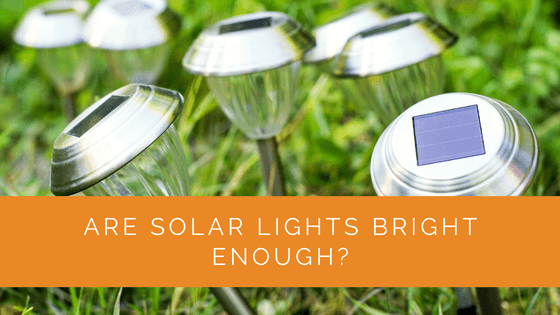
The biggest complaint about solar lights isn’t that they don’t work – it’s that they’re not bright enough. A solar path light glowing faintly at ground level feels underwhelming compared to a mains floodlight blazing 1000 lumens across a garden.
But brightness is relative. A 10-lumen path light marking a border is doing its job perfectly. A 1500-lumen security light that only runs for 3 hours in winter might not be bright enough when you need it most. The question isn’t whether solar lights are “bright enough” in absolute terms – it’s whether they’re appropriate for your specific task.
Contents
- 1 Key Takeaways
- 2 Understanding Lumens
- 3 Lumen Categories for Different Light Types
- 4 Brightness vs Runtime Trade-Off
- 5 UK Seasonal Impact on Perceived Brightness
- 6 Practical Brightness Guidelines
- 7 When Solar Lights Aren’t Bright Enough
- 8 Summer vs Winter Brightness Expectations
- 9 Case Study: Choosing Appropriate Brightness for a Garden
- 10 Expert Insights From Our Solar Panel Installers About Solar Light Brightness
- 11 Frequently Asked Questions
- 11.1 How many lumens do I need for outdoor entertaining?
- 11.2 Can I use solar lights for security?
- 11.3 Are 10-lumen path lights bright enough?
- 11.4 Why do bright solar lights not last all night?
- 11.5 Do expensive solar lights look brighter?
- 11.6 How does winter affect solar light brightness?
- 11.7 Can multiple dim solar lights replace one bright one?
- 11.8 Should I buy the brightest solar light available?
- 12 Summing Up
Key Takeaways
- Lumens measure light brightness – higher lumens mean brighter light, but also faster battery drain and shorter runtime
- Path lights (5-20 lumens) mark routes and edges effectively but don’t illuminate reading or detailed work
- Garden lights (20-80 lumens) provide ambiance and can illuminate small sitting areas in summer
- Security lights (400-1500 lumens) deter intruders and are genuinely useful, though winter performance is reduced
- Flood lights (1000-3000 lumens) illuminate larger areas but require substantial batteries and clear charging conditions
- A traditional 60-watt incandescent bulb produces about 800 lumens for reference
- UK winter reduces effective brightness as shorter charging days mean lower battery capacity and dimmer output
- The “brightness you need” depends entirely on your purpose – marking pathways needs far less than entertaining on a patio
- Bright solar lights perform well in summer but often disappoint in winter due to reduced charging time
- For tasks requiring consistent bright light (reading, cooking outside), mains lights are still the better choice
Understanding Lumens
A lumen is a unit of visible light. A candle produces about 12 lumens. A smartphone flashlight produces 200-400 lumens. A car headlight produces 1000-2000 lumens. A traditional 100-watt incandescent bulb produces about 1600 lumens.
The key insight: lumens aren’t absolute brightness. They measure light intensity, and human perception of brightness is subjective. A 50-lumen light in a dark room feels bright. The same 50-lumen light in daylight is invisible.
For solar lights, lumens matter for two reasons. First, they determine how bright the light is – you need enough lumens for your purpose. Second, higher lumens consume more battery power per hour, meaning the light runs for shorter periods. A 100-lumen path light might run for 8 hours on a full charge, while a 20-lumen version runs for 16 hours.
Lumen Categories for Different Light Types
Path and Border Lights: 5-20 Lumens
These are the most common solar lights sold in the UK. 10 lumens is bright enough to see your feet on a path and mark garden edges for night-time navigation. You won’t read a book by this light, and it won’t illuminate details, but it clearly marks the route.
In summer, a 10-lumen path light creates a pool of amber or white light that’s quite visible in darkness. In winter, the same light seems dimmer because batteries don’t charge to full capacity in shorter daylight, producing maybe 60-70% of summer brightness.
Path lights excel at safety and aesthetics. They’re perfect for marking the route to a garden seat, the edge of a patio, or steps. They’re not suitable for lighting an area where you’ll do detailed work or entertain.
Garden Accent Lights: 20-80 Lumens
These provide enough light for basic outdoor tasks and small gathering spaces. A 50-lumen solar light illuminates a small seating area well in summer, creating an inviting spot to sit outdoors. You can see each other’s faces clearly and navigate comfortably.
In winter, 50 lumens of full charge drops to maybe 30-35 lumens as the battery doesn’t fill completely. Still useful, but less impressive.
Garden ornament lights and some wall lights fall in this category. They’re good for creating atmosphere and basic function.
Security Lights: 400-1500 Lumens
Now we’re into genuinely bright territory. A 1000-lumen security light illuminates a large area clearly – driveway, front garden, property perimeter. This brightness discourages intruders and allows you to see approaching visitors from inside the house.
The challenge: battery drain. A 1000-lumen light consuming 10 watts will deplete a modest battery (2000mAh) in about 4 hours at summer full charge. In winter, when the battery doesn’t charge fully, you might get only 2-3 hours of run time.
For UK use, security lights are best thought of as summer-reliable, winter-marginal. They work excellently in summer for hours at full brightness. In winter, expect 2-4 hours of reliable brightness before dimming or depleting.
Flood Lights: 1000-3000 Lumens
These are the brightest solar lights available. A 2000-lumen flood light creates daylight-level brightness and can illuminate a whole garden. They require large solar panels (10-15W) and substantial batteries (3000-5000mAh) to be practical.
Trade-off: even with a big battery, a 2000-lumen light runs for 3-5 hours in summer, less in winter. They’re useful for occasional peak brightness (hosting an evening gathering) rather than continuous nightly use.
Flood lights are best used for occasional peak brightness (hosting an evening gathering) rather than continuous nightly illumination.
Brightness vs Runtime Trade-Off
Every solar light involves a trade-off between brightness and how long it runs. Here’s the mathematics:
A 2000mAh battery provides 2000 milliamp-hours of charge. A 10-lumen light consuming 0.5 watts draws roughly 0.05 amps continuously. That battery would run the light for about 40 hours. A 100-lumen light consuming 2.5 watts draws 0.25 amps, running for only 8 hours on the same battery.
So you can have either a dim light that runs all night, or a bright light that runs for a few hours. Solar light manufacturers choose different balances: budget path lights prioritise runtime (very dim, very long), security lights prioritise brightness (very bright, shorter duration).
This is why brightness expectations vary. Some solar lights feel “bright enough” because they’re designed around realistic expectations. Others feel disappointing because they promise brightness without acknowledging that brightness requires battery power.
UK Seasonal Impact on Perceived Brightness
The UK’s seasonal light variation makes this worse. In June, a solar light charges to full capacity and maintains full brightness all night. In December, the same light charges to maybe 70% capacity and dims noticeably after 3-4 hours as the battery depletes.
This creates the illusion that the light is degrading or failing in winter, when actually it’s simply reflecting the reality of charging in short winter daylight.
A 1000-lumen security light rated for “10+ hours of runtime” is measuring summer performance. In December, expect 2-4 hours. This is expected and normal, not a defect.
Practical Brightness Guidelines
For marking pathways and borders: 10-20 lumens is sufficient. Choose between comfort (bright path light) and extended runtime (dimmer light for 12+ hours).
For garden ambiance and small seating areas: 30-80 lumens. Summer use gets you reliable all-night light. Winter use is dimmer but still functional.
For security perimeters and driveway safety: 400-800 lumens. Summer is excellent. Winter is 2-4 hours of good brightness. If you need all-night security light in winter, add a second light or choose a motion-sensor model that only activates when triggered, extending battery life.
For entertainment and patio use: 1000+ lumens. Realistic for occasional summer use (4-6 hours of bright light). Winter expectation should be 2-3 hours maximum. If you entertain outdoors year-round, mains lights are the better choice.
When Solar Lights Aren’t Bright Enough
Solar lights are genuinely unsuitable for some tasks:
Reading or detailed work outdoors: A book requires 300-500 lumens of light. No practical solar light (one that runs all night) provides this. Mains lights are necessary.
Cooking or food preparation outside: Similarly, 300-500 lumens minimum. Solar won’t cut it.
All-night security lighting in winter: If you need 400+ lumens of light all night in December, a solar light will disappoint. The battery simply won’t hold that much charge in short winter daylight. Mains security lights or a hybrid system (solar plus mains backup) is better.
Large garden illumination (bigger than 200 square metres): Multiple high-lumen solar lights are needed, and each one drains its battery quickly at high brightness. Mains floodlights are more practical.
The honest assessment: solar lights excel at ambient and accent lighting. They’re brilliant for marking routes, adding atmosphere, and perimeter security. They struggle with tasks requiring sustained bright light or coverage of large areas.
Summer vs Winter Brightness Expectations
Set expectations based on season:
Summer (June-August): Solar lights perform at their rated specs. A 1000-lumen security light produces 1000 lumens of bright light for 10+ hours. A 30-lumen path light glows all night. Brightness rarely feels inadequate.
Spring/Autumn (April-May, September-October): Performance is between summer and winter. Expect 70-80% of rated brightness and 60-70% of rated runtime.
Winter (November-February): Expect 50-70% of rated brightness and 40-60% of rated runtime. A 1000-lumen light might feel like 600 lumens and run for only 4 hours. A 30-lumen light might produce 20 lumens and run for 8-10 hours instead of 12+. This is normal and expected, not a failure.
Planning around this seasonal variation prevents disappointment. Use summer solar lights confidently, accept reduced winter performance as normal, and have backup mains lights for winter entertaining or security.
Case Study: Choosing Appropriate Brightness for a Garden
Background
A property owner in the Midlands wanted to improve garden lighting without mains installation costs. The garden had a pathway to a seating area, and the owner sometimes entertained in summer. They wanted to feel secure at night year-round.
Project Overview
The team assessed the owner’s actual needs: pathway marking for safety (not reading), summer entertaining light (not all-night brightness), and security perimeter lighting (deter intruders). Rather than one bright light, multiple appropriately-bright lights were recommended.
Implementation
Eight 15-lumen path lights marked the pathway – sufficient for safe navigation. Two 60-lumen garden accent lights were placed near the seating area – perfect for summer evening entertaining. One 1000-lumen motion-sensor security light was mounted at the property corner, providing deterrent brightness when motion was detected rather than all-night drain. Total cost: £280.
Results
Summer: all lights performed brilliantly, and the patio was adequately bright for socialising. Winter: pathways remained safe, the seating area was dimmer (acceptable since entertaining was rare), and the security light provided 2-3 hours of full brightness after detection, sufficient for deterrent purposes. The owner reported satisfaction because expectations matched reality – lights were bright enough for their actual needs.
Expert Insights From Our Solar Panel Installers About Solar Light Brightness
One of our solar installers with 12 years of experience in residential renewable energy commented: “The biggest misconception is that solar lights should match mains lights in brightness. They’re a different technology with different trade-offs. A 50-lumen solar garden light is perfectly bright for its purpose – marking a border or providing ambiance. Don’t compare it to a 500-lumen mains light and expect it to compete. Choose solar lights for tasks suited to them, and choose mains for everything else. That’s how you get good results.”
Frequently Asked Questions
How many lumens do I need for outdoor entertaining?
For comfortable outdoor dining or socialising, aim for 300-500 lumens total brightness over the seating area. No single practical solar light provides this for all night. Instead, use multiple 50-80 lumen solar lights positioned around the space, or choose mains lights for consistent brightness. Solar works well for summer entertaining (2-4 hours of bright light) but not winter all-evening use.
Can I use solar lights for security?
Yes, solar security lights (400-1500 lumens with motion sensors) are genuinely effective. They illuminate approaching intruders and deter crime. However, expect reduced performance in winter (2-4 hours of full brightness instead of 8-10). Motion-sensor models are more practical than constant-on models since they extend battery life. For all-night winter security, supplement with mains lights or accept seasonal variation.
Are 10-lumen path lights bright enough?
Yes, for their intended purpose. A 10-lumen path light clearly marks a route and prevents trips in darkness. You’ll see your feet, the path ahead, and nearby features. You won’t read a book or do detailed work by this light. For pathway safety, 10-20 lumens is completely adequate and allows extended runtime (8-12+ hours nightly).
Why do bright solar lights not last all night?
Brightness requires power. A high-lumen light draws significant current from the battery. A 1000-lumen light might consume 10 watts, drawing down even a large battery in 4-5 hours. If you want all-night illumination, you need either lower brightness (which uses less power) or an impractically large battery. This is a physics constraint, not a product defect. Choose brightness suited to how long you need light.
Do expensive solar lights look brighter?
Not necessarily brighter in absolute lumens, but often better quality. Expensive solar lights typically have larger batteries (longer runtime), better optics (light distribution), and superior weatherproofing. A £40 solar light and a £15 solar light rated at 100 lumens might both produce 100 lumens initially, but the expensive one will maintain that brightness longer as its battery depletes more slowly. Price often reflects durability and reliability, not peak brightness.
How does winter affect solar light brightness?
Winter reduces perceived brightness for two reasons. First, shorter daylight means batteries don’t charge to full capacity. Second, dimmer UK winter sun means even full-capacity batteries deliver less energy. A light rated at 1000 lumens might produce only 600-700 lumens in winter after a full charge. Additionally, as the battery depletes through the night, brightness drops further. This is normal and expected, not a malfunction.
Can multiple dim solar lights replace one bright one?
Yes, effectively. Three 50-lumen lights positioned around a space can create equivalent total brightness to one 150-lumen light, but with better light distribution (no harsh shadows). Multiple lights also provide redundancy – if one fails, others still provide light. For large areas, multiple appropriately-placed solar lights often work better than a single bright model.
Should I buy the brightest solar light available?
No. Brightest doesn’t mean best. Match brightness to your actual task. Buying a 2000-lumen solar flood light for pathway marking wastes money and battery capacity. A 15-lumen path light does the job perfectly and runs 12+ hours. Choose appropriate brightness for your purpose – it’s more reliable, uses less battery, and costs less than oversized high-brightness alternatives.

Summing Up
Solar lights are bright enough for marking pathways, adding garden ambiance, and perimeter security in the UK – which is what they’re designed for. They’re not bright enough for reading, cooking, entertaining large groups all night, or replacing primary outdoor lighting in winter. Choose solar lights based on realistic needs rather than comparing them to mains lights. A 20-lumen path light is perfectly bright for its purpose. A 1000-lumen security light is genuinely useful despite 2-4 hour winter runtime. Set expectations by task, not by absolute brightness, and you’ll find solar lights more than adequate.
Updated