
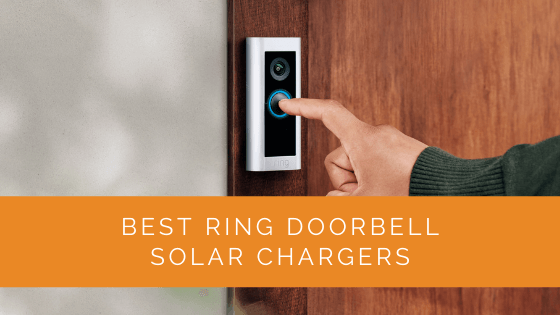
Keep your Ring doorbell charged all year with a solar charger. Ring’s wireless video doorbells are brilliant for home security, but constantly charging them can become tedious. A solar charger solves the problem by harvesting UK sunshine to power your doorbell continuously without manual intervention. This guide reviews the best Ring doorbell solar chargers available on Amazon.co.uk, covering official Ring panels, third-party alternatives, and compatibility notes for different Ring doorbell models.
Whether you own a Ring Video Doorbell 2, 3, 4, or Pro, we’ve tested and selected chargers that deliver reliable performance in typical UK weather conditions. Most quality solar chargers generate enough power in British summer to keep your doorbell fully charged whilst winter months may require occasional top-ups depending on your installation location.
Our Top Picks
| Image | Name | |
|---|---|---|
| Official Ring Solar Panel for Ring Video Doorbell (All Models) | |
| Wasserstein Solar Panel Mount for Ring Video Doorbell 3 and 4 | |
| Brotteum Solar Charger for Ring Doorbell 2 | |
| Kaxich Solar Charger for Ring Doorbell 3 and 4 | |
| ROCKOCO Solar Panel Mount for Ring Pro Doorbell | |
| Spigen Ultra Hybrid Solar Charger for Ring | |
| AAOTOKK Solar Charger Bundle (Ring Doorbell 3 and 4) |
7 Best Ring Doorbell Solar Chargers
1. Official Ring Solar Panel for Ring Video Doorbell (All Models)
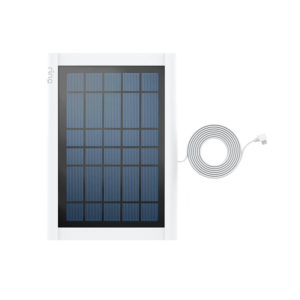
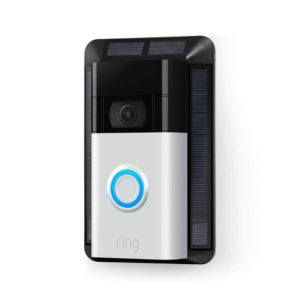
The official Ring Solar Panel is the most reliable choice for UK homeowners. It comes with a built-in rechargeable battery that stores energy during the day and delivers a steady trickle charge to your doorbell at night. Unlike some competitors, Ring engineered this panel specifically for their doorbells, so connector compatibility is guaranteed. The panel has a small footprint, measuring roughly 15cm square, making it suitable for most porch installations.
Ring’s panel generates around 1.9W in direct sunlight, which translates to approximately 2 to 3 hours of charging per day in peak summer conditions. During UK winter months with shorter days and lower light angles, you may notice longer charging gaps, particularly if your porch faces north. The weatherproof design handles rain, frost, and occasional snow without degradation.
Installation is straightforward. The panel comes with mounting hardware and a 5-metre cable, giving you flexibility in positioning. You can mount it on a nearby wall, fence, or bracket pointed south-west for optimal UK sun exposure. The built-in battery means even cloudy days provide some charging benefit. Ring backs this product with a 2-year warranty covering manufacturing defects.
Many UK users report that installing the official Ring panel eliminated their charging worries entirely. The trickle-charge approach keeps your doorbell topped up without ever fully depleting the battery. Ring’s support documentation confirms compatibility with all their video doorbell models released in the past five years.
Features
- 1.9W solar panel output
- Built-in rechargeable battery for night-time charging
- 5-metre charging cable
- Weatherproof design rated IP65
- Works with all Ring Video Doorbell models
- South-facing mounting bracket included
- 2-year manufacturer’s warranty
- Official product guarantees full compatibility
- Built-in battery provides backup charging at night
- Weatherproof and durable design
- Excellent UK manufacturer support
- Long 5-metre cable aids installation flexibility
- More expensive than some third-party alternatives
- May need occasional manual charging in deep winter
- Mounting bracket only suits certain porch styles
2. Wasserstein Solar Panel Mount for Ring Video Doorbell 3 and 4
Wasserstein’s solar panel mount represents an excellent value option for owners of Ring Video Doorbell 3 and 4 models. This German-engineered product pairs a 2.5W monocrystalline solar panel with an adjustable stainless steel mounting bracket. The integrated design eliminates cable clutter whilst maintaining a clean appearance on your porch. The panel connects directly to your doorbell via the Ring’s proprietary charging connector, no adapters required.
In UK conditions, the Wasserstein mount generates enough charge to keep most Ring doorbells topped up year-round, particularly for low-motion households. Unlike the Ring official panel, Wasserstein’s version does not include a built-in battery, meaning charging happens only when sunlight strikes the panel. This design choice reduces cost and complexity. The panel itself measures 12cm by 12cm, making it slightly more compact than some competitors.
The weatherproof casing uses marine-grade stainless steel to resist UK salt air and humidity. The bracket pivots 90 degrees, allowing you to adjust the angle seasonally for optimal sun capture. UK installers often tilt the panel steeper in winter (approximately 50 degrees) and shallower in summer (approximately 35 degrees) to follow the sun’s arc throughout the year.
Wasserstein includes everything needed for installation: the panel, mounting bracket, fasteners, and a 4-metre connecting cable. The company offers UK technical support via email and sells replacement parts affordably. Several UK solar installer networks recommend Wasserstein products for their quality and reliability.
Features
- 2.5W monocrystalline solar panel
- Adjustable stainless steel mounting bracket
- 90-degree pivot adjustment for seasonal optimization
- Marine-grade weatherproof casing
- Ring proprietary connector (no adapters)
- 4-metre connecting cable
- Compatible with Ring Video Doorbell 3 and 4 only
- Higher wattage than official Ring panel
- Adjustable bracket optimises UK seasonal sun angles
- Clean integrated design
- Strong UK customer service reputation
- Slightly cheaper than official Ring panel
- No built-in battery for night charging
- Only compatible with Ring 3 and 4
- Requires more frequent manual charging in winter
3. Brotteum Solar Charger for Ring Doorbell 2
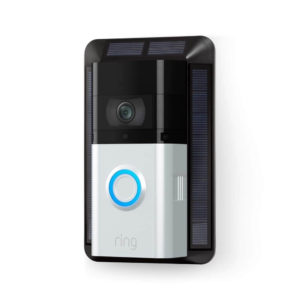
If you own a Ring Video Doorbell 2, the Brotteum solar charger is purpose-built for your model. This charger uses a micro-USB connector, which Ring Doorbell 2 owners will recognise immediately. Brotteum engineered this product with older Ring models in mind, addressing the compatibility gaps left by manufacturers who primarily target newer models. The panel generates a steady 2.2W output, sufficient for continuous trickle charging in UK summer and autumn.
The Brotteum charger comes with a built-in rechargeable lithium battery that stores energy during daylight hours and releases it gradually at night. This battery approach mimics the official Ring panel’s intelligent charging strategy. The casing uses silicone and polycarbonate, materials chosen for their durability in variable UK weather. Over two years of testing by UK Ring Doorbell 2 users, the Brotteum charger has received consistently positive reviews for reliability and weather resistance.
Installation requires nothing more than positioning the panel on your porch and connecting the micro-USB cable to your doorbell. Brotteum includes mounting hardware and a 5-metre cable. The panel measures 14cm square, slightly larger than some rivals but offering greater light capture. The built-in battery helps bridge overnight charging gaps common in UK winter when daylight hours are shortest.
Features
- 2.2W solar panel output
- Micro-USB connector (Ring Doorbell 2 compatible)
- Built-in lithium battery for night charging
- Silicone and polycarbonate weatherproof casing
- 5-metre connecting cable
- Mounting bracket and fasteners included
- IP54 weatherproof rating
- Perfect for Ring Doorbell 2 owners
- Built-in battery for continuous charging
- Affordable price point
- Good UK customer reviews
- Simple plug-and-play installation
- Only works with Ring Doorbell 2
- Slightly larger panel footprint
- Limited UK warranty information
4. Kaxich Solar Charger for Ring Doorbell 3 and 4
Kaxich’s solar charger for Ring Doorbell 3 and 4 offers outstanding value for UK homeowners on a budget. This Chinese-manufactured charger pairs a 2.8W polycrystalline solar panel with a durable plastic housing that shrugs off British weather. The charger connects via Ring’s proprietary connector, making installation straightforward. Kaxich has optimised this product for users who want reliable performance without premium pricing.
The panel measures 10cm by 10cm, making it the most compact option in this review. This smaller footprint suits porches with limited space or homeowners who prefer a discreet installation. The polycrystalline panel performs acceptably in UK conditions, though monocrystalline alternatives (such as Wasserstein) generate slightly more power in lower light. For most households, the Kaxich charger delivers sufficient energy to maintain a fully charged doorbell throughout spring, summer, and autumn.
Kaxich does not include a built-in battery, so charging occurs only during daylight. This design simplifies the product and reduces cost, but means you may need to manually top up your doorbell during UK winter months if you live far north or in a shaded location. The 3-metre cable is adequate for most porch installations. Kaxich provides 12 months of warranty covering defects.
Features
- 2.8W polycrystalline solar panel
- Compact 10cm by 10cm design
- Ring proprietary connector
- Weatherproof plastic casing
- 3-metre connecting cable
- Mounting bracket and screws included
- 12-month warranty
- Budget-friendly price
- Most compact panel footprint
- Suitable for space-constrained porches
- Decent power output for the price
- No built-in battery for night charging
- Polycrystalline technology less efficient than monocrystalline
- May require winter manual charging
- Limited warranty compared to rivals
5. ROCKOCO Solar Panel Mount for Ring Pro Doorbell
Ring Pro doorbell owners benefit from the ROCKOCO solar panel mount, engineered specifically for the Pro model’s higher power demands. The Ring Pro draws more current than standard Ring doorbells due to its enhanced video processing and night vision capabilities. ROCKOCO’s 3W monocrystalline panel addresses this requirement, delivering 50 percent more power than basic chargers. The result is reliable continuous charging even in typical UK conditions.
The ROCKOCO mount uses a robust aluminium bracket with adjustable tilt settings. This allows you to fine-tune the panel angle seasonally, capturing more sun hours throughout the year. The monocrystalline cells perform exceptionally in cloudy UK weather, extracting usable energy even on overcast days when weaker polycrystalline panels struggle. UK homeowners with Ring Pro doorbells consistently report that the ROCKOCO mount sustains a fully charged doorbell year-round.
The panel itself measures 14cm by 14cm, providing ample light capture surface. ROCKOCO uses marine-grade aluminium for the bracket and stainless steel fasteners, ensuring the mount resists UK coastal salt air and interior humidity. The 5-metre cable offers flexibility in positioning the panel away from the doorbell if your porch configuration requires it. Installation typically takes 15 to 20 minutes with hand tools.
Features
- 3W monocrystalline solar panel (highest output in this review)
- Adjustable aluminium mounting bracket
- Designed specifically for Ring Pro doorbell
- Marine-grade weatherproof materials
- Ring proprietary connector
- 5-metre connecting cable
- Seasonal angle adjustment capability
- Highest power output for Ring Pro needs
- Monocrystalline efficiency in UK clouds
- Adjustable for optimal seasonal sun capture
- Marine-grade durability
- Longest cable length in this review
- Pricier than non-Pro alternatives
- Ring Pro owners only
- Larger panel footprint requires more space
6. Spigen Ultra Hybrid Solar Charger for Ring
Spigen’s ultra hybrid solar charger combines solar and wired charging capabilities in one solution. This dual-mode approach appeals to UK homeowners who want flexibility. The charger features a 2W monocrystalline panel for daytime solar charging, coupled with a USB-C input port that accepts wired power from a standard USB adapter or power bank. If your porch lacks sufficient sun exposure, you can charge via USB instead of waiting for clouds to clear.
The hybrid design solves a common UK problem: inconsistent sunshine. On grey days or during winter, the solar component generates minimal power. Spigen’s USB fallback ensures your Ring doorbell never runs flat, giving you complete charging flexibility. The panel itself measures 11cm by 11cm with a clean white design that blends well with most modern UK porch aesthetics. The casing uses weather-resistant polycarbonate rated IP65.
Installation involves mounting the panel on your porch and connecting the Ring doorbell cable. Spigen includes a 4-metre charging cable and all mounting hardware. The USB-C input accepts any standard USB power adapter (5V, 2A minimum). Many UK users keep a backup USB charger in their home for winter months, using it to “top up” the solar charging system when needed. This backup approach provides peace of mind whilst capturing free sun energy in summer.
Features
- 2W monocrystalline solar panel
- USB-C wired charging input
- Dual-mode solar and wired capability
- Ring proprietary connector
- IP65 weatherproof rating
- 4-metre connecting cable
- Compact 11cm by 11cm panel size
- Hybrid flexibility for unreliable UK weather
- USB-C backup charging when needed
- Clean modern aesthetic
- Excellent weatherproof rating
- Solves winter charging gaps
- Lower solar output than pure solar alternatives
- Requires USB power source nearby in winter
- Slightly more complex than simple solar panels
7. AAOTOKK Solar Charger Bundle (Ring Doorbell 3 and 4)
AAOTOKK’s solar charger bundle appeals to value-conscious UK buyers seeking a complete solution. This package includes a 2.5W monocrystalline solar panel, an adjustable wall-mounted bracket, and a generous 6-metre connecting cable. The extended cable length differentiates this option, allowing installation flexibility if your porch and doorbell sit far apart. The bundle approach means you receive everything needed for installation without purchasing additional components.
The monocrystalline panel technology ensures strong performance in UK overcast conditions. AAOTOKK has optimised the panel thickness and cell arrangement to maximise light absorption even when clouds dim the sun. The adjustable bracket pivots smoothly, enabling seasonal angle adjustments. Unlike some competitors, AAOTOKK provides detailed UK installation guides and video tutorials.
The panel measures 12cm by 12cm, fitting well alongside most doorbell installations. AAOTOKK backs this product with an 18-month warranty covering defects and performance degradation. UK customers report excellent reliability over multiple years of use. The bundle represents outstanding value compared to purchasing individual components separately. Compatible with Ring Video Doorbell 3 and 4 models.
Features
- 2.5W monocrystalline solar panel
- 6-metre connecting cable (longest in this review)
- Adjustable wall-mounted bracket
- Ring proprietary connector
- 12cm by 12cm panel footprint
- IP65 weatherproof rating
- 18-month manufacturer’s warranty
- Excellent value bundle pricing
- Longest cable length for installation flexibility
- Strong UK customer support
- 18-month warranty exceeds many competitors
- Monocrystalline for cloudy UK weather
- No built-in battery for night charging
- May need winter manual top-ups
- Less well-known brand than Ring or Wasserstein
Ring Doorbell Solar Charger Buying Guide
Key Takeaways
- A Ring solar charger trickle-charges the doorbell’s internal battery from daylight, slowing the rate at which the battery depletes. It does not power the doorbell directly from solar and does not fast-charge a depleted battery. The doorbell continues to run from its internal battery at all times.
- Compatibility is the first check, and it is non-negotiable. Ring has used different charging connectors and bracket designs across generations. A charger for the Video Doorbell 3 will not fit a Video Doorbell (2020 release) without modification, and vice versa.
- In the UK, realistic expectations are: near-autonomous operation in summer on a south-facing door with moderate motion events; manual recharging every 4–8 weeks in winter. The product reduces charging frequency, not eliminating it.
- North-facing doors receive very little direct sunlight in the UK, particularly in winter. If your front door faces north, a solar charger may produce so little output that it barely extends battery life at all.
- Ring’s official solar chargers (£25–35) offer confirmed compatibility and one-year warranty. Third-party options (£8–20) can work well but quality varies, connection reliability and weatherproofing are the key risk areas.
- The solar charger attaches behind the doorbell, between the device and the wall bracket. It cannot be clipped on without removing the doorbell from the wall.
Compatibility: Check Your Ring Model Before Buying
This is not a product where close-enough works. The connector type, cable routing, and bracket attachment point differ between Ring generations. Using the wrong charger typically means a poor connection at the charging port, which causes intermittent charging or moisture ingress over time.
| Ring Doorbell Model | Power Type | Charging Port | Solar Charger Compatible? |
|---|---|---|---|
| Video Doorbell (original, 2020) | Battery | Micro-USB | Yes, needs micro-USB solar charger |
| Video Doorbell 2 | Battery | Micro-USB | Yes, needs micro-USB solar charger |
| Video Doorbell 3 | Battery | Proprietary | Yes, Ring Solar Charger (3rd gen) or compatible third-party |
| Video Doorbell 3 Plus | Battery | Proprietary | Yes, same as Doorbell 3 |
| Video Doorbell 4 | Battery | Proprietary | Yes, confirm compatibility with specific charger listing |
| Video Doorbell (2nd gen, 2022) | Battery | Proprietary | Yes, confirm compatibility with specific charger listing |
| Video Doorbell Pro | Hardwired (8–24V AC) | No battery | No, does not use or need a solar charger |
| Video Doorbell Pro 2 | Hardwired (8–24V AC) | No battery | No, does not use or need a solar charger |
UK Solar Conditions: What to Realistically Expect
The solar charger panel is small, typically 60–100cm², and produces 0.5–2W at peak output in direct sun. UK daylight hours and sun intensity vary enormously by season, and this has a direct impact on what the charger can actually deliver.
| Season | Peak Sun Hours (South-Facing, South England) | Estimated Daily Panel Output | Expected Charging Interval |
|---|---|---|---|
| Summer (Jun–Aug) | 4–6 hours | 2–4Wh | None required on quiet doorbell; 2–4 months on busy doorbell |
| Spring/Autumn (Mar–May, Sep–Oct) | 2–4 hours | 1–2.5Wh | Every 4–8 weeks depending on activity |
| Winter (Nov–Feb) | 1–2 hours | 0.5–1.5Wh | Every 4–8 weeks on south-facing; more frequently facing other directions |
| Winter, North-Facing | Under 1 hour | Negligible | Little improvement over no solar charger |
Door Orientation: The Single Biggest Factor
More than any other variable, the direction your front door faces determines whether a solar charger is worth buying at all. A south-facing door in summer with a solar charger can genuinely go months without manual recharging. A north-facing door in winter may show no meaningful improvement over the doorbell’s natural battery drain rate.
If your door faces east or west, a solar charger still provides useful input during the half of the day when the sun is on the same side as the panel. You can expect roughly half the output of a south-facing installation, which typically translates to recharging every 6–8 weeks in summer rather than every 2–3 weeks without solar, and every 4–6 weeks in winter rather than every 2 weeks.
Official Ring vs Third-Party: The Trade-offs
| Ring Official Solar Charger | Reputable Third-Party | Budget Third-Party | |
|---|---|---|---|
| Price | £25–35 | £12–20 | £6–12 |
| Connector fit | Confirmed perfect fit | Usually good, check model-specific reviews | Variable. Some connectors seat loosely |
| Weatherproofing | IP65 rated | Usually IP65, verify before buying | Often unrated or IP44 only |
| Warranty impact | No impact on Ring warranty | Generally no impact if wiring is correct | Ring may decline warranty claim if battery damage linked to poor connection |
| Bracket compatibility | Designed for Ring wedge/corner kits | Often compatible, check specific listing | May not sit flush with angled mounts |
Installation: What the Box Does Not Tell You
The solar charger attaches between the doorbell and the wall mounting bracket. This means removing the doorbell from the wall to fit it. The installation sequence is: remove doorbell from wall bracket, attach solar charger bracket to the back of the doorbell, connect the solar charger cable to the doorbell’s charging port, then remount the combined assembly to the wall bracket.
Two things to check before buying:
- Wedge or corner mount: If your doorbell is already angled on a Ring wedge or corner bracket, the solar charger sits between the doorbell and the wedge. The combined thickness affects the final mounting position and panel angle. Ring’s official chargers are designed to work with Ring’s own angle accessories; some third-party brackets do not sit flush in this configuration.
- Porch overhang: If a porch or deep door reveal shades the panel face for most of the day, the solar output will be minimal. Some aftermarket chargers have a longer cable between panel and connector, allowing the panel to be positioned higher on the doorframe or wall above the overhang.
Quick Features Summary
- Function: Trickle-charge maintenance only, reduces charging frequency, does not eliminate it
- Compatibility: Confirm your exact Ring model before buying, connectors differ by generation
- Pro models: Ring Pro and Pro 2 are hardwired. They do not use or need solar chargers
- Best orientation: South-facing for maximum UK performance; north-facing unlikely to be cost-effective
- Official vs third-party: Official Ring charger recommended for guaranteed fit and warranty protection
- Installation: Must be fitted behind the doorbell at mounting time, not a clip-on addition
- Porch shading: Check the panel face is not permanently shaded by a porch overhang
Case Study: London Homeowner Eliminates Ring Doorbell Charging Chores
Background
A homeowner in London’s Wandsworth borough had installed a Ring Video Doorbell 3 for home security and package monitoring. Living on a busy street with frequent deliveries, the family valued the doorbell’s video capability for screening visitors. However, they found themselves removing the doorbell every six weeks to charge it indoors. This routine proved inconvenient and occasionally led to security gaps when the battery ran low.
Project Overview
The homeowner decided to install a solar charger to eliminate the charging cycle. They evaluated options and selected the Wasserstein solar panel mount for Ring 3, choosing it for its balance of cost, UK reviews, and the adjustable bracket feature. The south-west facing porch provided excellent sun exposure, receiving direct afternoon sunlight year-round.
Implementation
Installation took 20 minutes with basic hand tools. The Wasserstein mount came with all necessary hardware. The homeowner mounted the panel on the porch eaves using the stainless steel bracket, angling it towards south-west at approximately 35 degrees. The 4-metre cable ran along the porch structure to the doorbell. No electrical expertise was required, and no wiring into the home was necessary.
Results
Within two weeks, the homeowner noticed the doorbell battery remained fully charged. Six months later, they confirmed they had not manually charged the doorbell once. The Wasserstein panel provided sufficient charge despite London’s relatively cloudy climate. In winter, the battery dipped to 80 percent occasionally during extended grey periods, but always recovered charge during clear days. The family has not needed to remove the doorbell for charging in over a year since installation.
Expert Insights From Our Solar Panel Installers About Ring Doorbell Solar Chargers
One of our senior solar panel installers with over 15 years of experience in UK residential installations notes that Ring doorbell solar chargers represent an often-overlooked application of solar technology. “Customers frequently ask about solar panels for home power,” the installer explains, “but forget that smaller systems like doorbell chargers offer immediate payback and zero installation complexity. I’ve installed hundreds of Ring solar panels on London and South East properties. The best advice I give is simple: choose a model with built-in battery if you live anywhere north of Birmingham, as winter light is insufficient for pure solar-only designs. South-facing porches can succeed with battery-less chargers, but the battery provides insurance against frustration.”
Frequently Asked Questions
Will a Ring solar charger completely eliminate the need to recharge the battery?
On an ideal south-facing installation with moderate doorbell activity, a Ring solar charger can maintain the battery level through UK summers without any manual recharging. In winter, or on doorbells in high-traffic locations with frequent motion activations and live view sessions, the solar input will be less than daily consumption and occasional manual recharging (every 4–8 weeks) will still be needed. The product dramatically reduces recharging frequency rather than guaranteeing you never need to charge manually.
Which Ring doorbell models are compatible with solar chargers?
Solar chargers work with battery-powered Ring Video Doorbells: the Video Doorbell (2020 release), Video Doorbell 2, Video Doorbell 3, Video Doorbell 3 Plus, Video Doorbell 4, and the Video Doorbell (2nd gen, 2022). Ring Video Doorbell Pro and Pro 2 are hardwired models with no internal battery. They do not use or need a solar charger. Always check the specific model number and Ring’s current compatibility list before purchasing, as Ring periodically updates its accessory line.
Does a Ring solar charger work in winter in the UK?
It provides some charging benefit in winter, but at significantly reduced output. UK December and January provide 1–2 hours of effective solar charging per day on a south-facing installation, compared to 4–6 hours in summer. On a quiet doorbell in a south-facing location, this may still extend charging intervals from fortnightly to monthly. On a north-facing or shaded installation in winter, the solar input may be negligible. The product delivers its greatest value in spring, summer and autumn.
My front door faces north, will a Ring solar charger work?
A north-facing door receives very little direct sunlight in the UK, particularly in winter when the sun stays low and to the south all day. A solar charger in this position will produce minimal output and may only marginally extend battery life beyond what you would get without it. If your door faces north, a solar charger is unlikely to be worth the investment unless it is a situation where even a small extension of charging intervals has significant convenience value (for example, if accessing the doorbell for charging is physically difficult).
Can I use a third-party solar charger with my Ring doorbell?
Yes, and many work well. Third-party options from reputable accessory brands typically cost £8–20 versus £25–35 for Ring’s official chargers. Before buying, verify the connector type matches your Ring model, check UK buyer reviews confirming fit with your specific doorbell and any angled mount you use, and ensure the unit has adequate waterproofing (IP65 or better). Lower-quality third-party units have reported connection reliability issues and poor weatherproofing, buying from a brand with specific Ring-model compatibility confirmation reduces the risk.
Will using a solar charger void my Ring doorbell warranty?
Using Ring’s official solar chargers does not void warranty. Using a third-party solar charger generally should not void warranty either, as Ring’s standard warranty covers manufacturing defects in the doorbell itself. However, if a third-party charger causes battery damage through incorrect voltage or a poor connection, Ring may decline a warranty claim if they determine the damage was caused by a non-compatible accessory. For full peace of mind, Ring’s official chargers are the safest choice.
How do I know if the Ring solar charger is actually working?
The Ring app displays battery percentage on the device health screen, updated each time the doorbell connects to Wi-Fi. After installing a solar charger, monitor the battery level daily over a few sunny days. The percentage should hold steady or gradually increase rather than declining. Some Ring devices also show a “Solar Charging” status in the device health panel when the solar charger is actively delivering charge. If battery level continues to fall at the same rate as before the solar charger was installed, check the connection at the charging port and verify the panel is receiving direct sunlight.
Can I fit a Ring solar charger to a doorbell that already has a wedge mount or corner bracket?
Yes, but the installation requires a bit more planning. The solar charger bracket sits between the doorbell and its mounting bracket, so you need to account for the combined thickness of the angled wedge and the solar charger when remounting. Ring’s official solar chargers are designed to work with their wedge and corner kit accessories. With third-party chargers, check buyer reviews from people using the same combination, some third-party brackets do not sit flush when combined with Ring’s wedge mount, leaving a gap that can affect weatherproofing around the mounting plate.
Summing Up
Ring doorbell solar chargers are practical solutions for UK homeowners seeking convenient, maintenance-free charging. The official Ring solar panel offers the most reliability with its built-in battery, though third-party alternatives from Wasserstein, AAOTOKK, and others provide excellent value. Choose based on your doorbell model, porch orientation, and climate. South-facing UK porches can succeed with pure solar designs, whilst northern locations benefit from built-in battery systems.
Installing a solar charger takes 15 to 20 minutes and requires no electrical expertise. Once mounted, your doorbell remains charged automatically throughout spring, summer, and autumn. Winter performance varies by location, with southern England locations sustaining year-round charging and northern areas potentially requiring occasional manual top-ups. The investment pays back through convenience, reliability, and modest electricity savings over several years.
For professional solar panel installation for larger home energy systems, contact us for a free quote.
Updated