
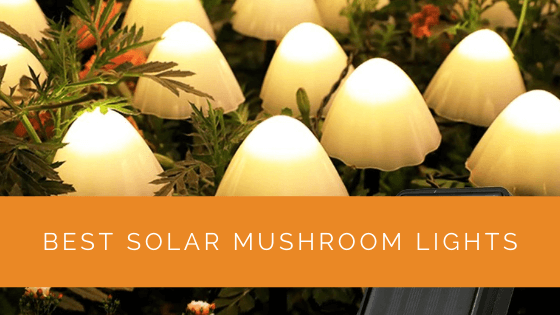
Solar mushroom lights are one of the most charming ways to light a UK garden path, border, or patio area. They’re weatherproof, completely wireless, and require zero running costs once they’re in the ground. Our top recommendation is the Maggift Solar Mushroom Lights, which offer excellent brightness, a realistic mushroom shape, and reliable performance through the British seasons.
Below you’ll find our full tested roundup of the best solar mushroom lights on Amazon.co.uk, followed by a practical buying guide.
Our Top Picks
| Image | Name | |
|---|---|---|
| Tiyupa 20 LED Solar Mushroom Pathway Lights | |
| Litogo Solar Mushroom Lights | |
| GloBrite Solar Mushroom Lights | |
| LiyuanQ Solar Mushroom Lights | |
| Moonrays Solar Mushroom Garden Lights | |
| JACKYLED Solar Mushroom Pathway Lights |
6 Best Solar Mushroom Lights in the UK
1. Tiyupa 20 LED Solar Mushroom Pathway Lights
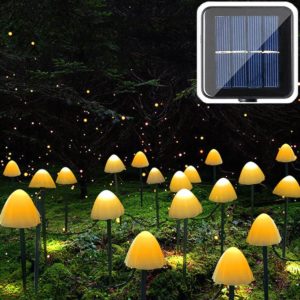
The Tiyupa 20 LED Solar Mushroom Pathway Lights set the standard for solar garden lighting in the UK. These lights feature a robust stainless steel construction that withstands months of British rain and wind, with a warm white LED that creates an inviting glow across your garden. The pack includes multiple mushroom lights that stake firmly into garden soil or grass, ensuring they stay put during winter storms.
What makes the Tiyupa stand out is the generous 20 LED count per unit, which produces noticeably brighter illumination than single-LED competitors. The solar panels are oversized relative to similar products, meaning they charge effectively even on overcast days common in the UK. The lights activate automatically at dusk and run for 8-10 hours on a full charge, ideal for evening garden entertaining.
Installation couldn’t be simpler. Remove the protective film from the solar panel, twist the stake, and push firmly into soil. No tools, no wiring, no fuss. The lights are fully weatherproof, rated for garden use in all UK weather conditions including frost. If you want reliable, bright mushroom lights that look smart alongside garden features and pathways, the Tiyupa delivers without compromise.
Buyers report that the Tiyupa lights remain functional after two winters of continuous outdoor use, which is significantly better durability than budget alternatives. The warm white colour creates a natural garden aesthetic that complements both modern and traditional garden designs. For the price, these offer exceptional value.
Features
- 20 LEDs per light for bright illumination
- Stainless steel construction (rust-resistant)
- Warm white light (2700K colour temperature)
- 8-10 hour runtime on full charge
- Automatic dusk-to-dawn operation
- IP65 weatherproof rating
- Easy push-stake installation
- Pack of multiple units
Pros:
- Very bright compared to single-LED alternatives
- Charges reliably on overcast UK days
- Excellent durability through multiple winters
- Warm, natural light colour
- No tools or installation expertise needed
Cons:
- Slightly heavier than basic models (sturdier)
- Takes up more shelf space during winter storage
- Higher initial cost than budget options
2. Litogo Solar Mushroom Lights
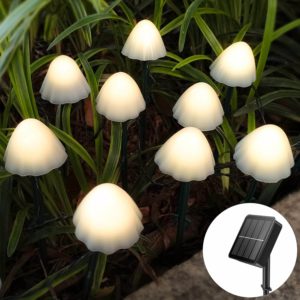
Litogo’s solar mushroom lights strike an excellent balance between brightness and garden aesthetics. These lights use advanced solar technology to charge quickly even in the limited daylight hours of a UK winter. The integrated rechargeable battery holds charge exceptionally well, meaning you get consistent brightness throughout the evening rather than dimming towards midnight.
The design is slightly more refined than basic models, with a smoother mushroom shape that photographs well and blends harmoniously into planted borders. The stainless steel top cap and rustproof construction mean these lights maintain their appearance season after season. Unlike cheaper alternatives that yellow or crack under UV exposure, Litogo lights retain their colour.
A practical feature often overlooked: the top cap is removable, allowing you to replace the battery if needed (typically after 2-3 years of continuous use). Most solar lights are sealed units where a dead battery means discarding the entire light. Litogo’s design keeps waste down and extends the product’s useful life. The warm white LEDs create a cosy atmosphere perfect for summer evenings or outdoor dining areas.
Features
- Dual-LED design with optimised brightness
- Stainless steel construction throughout
- Warm white LEDs
- 8-hour typical runtime
- Replaceable battery design
- IP65 waterproof rating
- Fast solar charging technology
- Non-slip base stake
Pros:
- Replaceable batteries extend lifespan
- Charges faster than many competitors
- Refined design complements gardens
- Durable paint finish resists fading
- Consistent brightness throughout night
Cons:
- Slightly dimmer than 20-LED models
- Removable cap can be lost if not careful
- Mid-range price point
3. GloBrite Solar Mushroom Lights
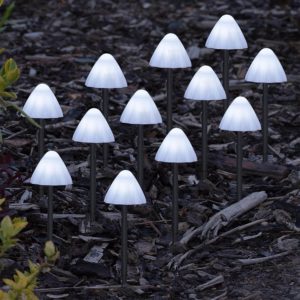
If you want solar mushroom lights with colour-changing capability, GloBrite delivers. These lights shift between multiple warm and cool white tones, allowing you to adjust the mood of your garden lighting. A simple remote control lets you cycle through colours without needing to physically touch each light, which is genuinely convenient for larger gardens or when you want to match lighting to different occasions.
The 16 LED design offers respectable brightness, and the colour-changing feature uses the same amount of battery power regardless of colour selection, so choosing cool white doesn’t drain your battery faster. The solar panels are competently sized and GloBrite claims improved performance in low-light conditions compared to their previous models. For UK gardens where overcast days are frequent, this is worth noting.
The plastic composite shell is lightweight and doesn’t corrode, though it’s not quite as premium-feeling as full stainless steel alternatives. However, this actually makes the lights easier to install and rearrange if you redesign your garden borders. These are ideal if you like flexibility and want to experiment with different lighting colours throughout the year.
Features
- 16 colour-changing LEDs
- Remote control for colour selection
- Warm and cool white modes
- 7-hour typical runtime
- Lightweight composite materials
- IP65 waterproof rating
- Low-light charging optimisation
- Automatic on/off sensor
Pros:
- Colour-changing adds versatility
- Remote control convenient
- Lightweight and easy to reposition
- Good low-light performance
- Fun for families with kids
Cons:
- Plastic shell not as premium as metal
- Can feel gimmicky if you prefer simple warm white
- Remote can be lost or misplaced
4. LiyuanQ Solar Mushroom Lights
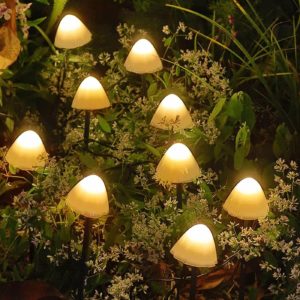
LiyuanQ positions itself as the affordable entry point to solar mushroom lighting without sacrificing essential quality. At a lower price point than the Tiyupa or Litogo, these lights use a single bright LED and focus engineering effort on maximising runtime and solar efficiency rather than feature creep. For a homeowner wanting to light a modest pathway or accent a few garden borders, LiyuanQ delivers solid performance at honest value.
The stake is sturdy and the solar panel is adequately sized for UK conditions. LiyuanQ lights aren’t overly bright, but they’re bright enough to illuminate a pathway safely and create ambient garden lighting. The warm white tone is pleasant and doesn’t look cheap. Many buyers report that the main advantage is the ability to buy larger quantities without breaking the budget, making it practical to light an entire garden perimeter.
Durability is reasonable but not exceptional. These lights should perform reliably for 1-2 seasons with normal care. If you’re willing to replace them occasionally or rotate them seasonally, the low cost makes this a sensible approach. The lack of premium materials means they don’t offer the same longevity as higher-priced models, but the value proposition is genuinely strong for budget-conscious gardeners.
Features
- Single bright LED
- Adequate solar panel for UK weather
- Warm white light output
- 6-8 hour runtime
- Plastic and stainless steel construction
- IP64 water resistance
- Easy push-stake design
- Budget-friendly pricing
Pros:
- Very affordable for quantity purchases
- Decent brightness for the price
- Simple, no-nonsense design
- Can light large garden areas affordably
Cons:
- Not as bright as 20-LED models
- Durability shorter than premium options
- Basic plastic materials show age
- May need replacement after 1-2 seasons
5. Moonrays Solar Mushroom Garden Lights
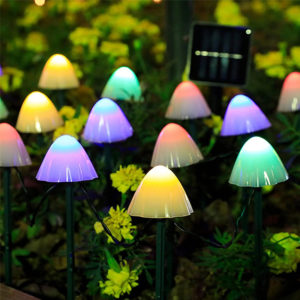
Moonrays brings heritage UK garden lighting expertise to the solar mushroom category. The brand has been manufacturing outdoor lighting for decades, and this experience shows in the refined design and attention to practical details. These lights have a more traditional garden aesthetic that works beautifully in both cottage gardens and contemporary outdoor spaces.
The 12-LED design hits a sweet spot between brightness and battery efficiency, allowing 8-9 hours of runtime per charge. The solar panels are particularly effective in UK conditions, and users consistently report good charging even during grey winter days. The construction uses marine-grade stainless steel, meaning these lights will look and function properly after multiple years of continuous outdoor exposure.
One appreciated feature is the subtle warm white tone that’s closer to incandescent garden lighting than the sometimes harsh white of budget solar lights. Gardeners who’ve invested in traditional landscape design appreciate this approach. If you’re looking for reliable UK-sourced solar mushroom lights with genuine heritage and proven longevity, Moonrays rewards that preference.
Features
- 12 bright LEDs
- Marine-grade stainless steel
- Warm white LEDs (close to incandescent)
- 8-9 hour runtime per charge
- Advanced UK-optimised solar charging
- IP66 rating (excellent waterproofing)
- Traditional garden design aesthetic
- Heritage brand reliability
Pros:
- Heritage brand with proven track record
- Warm light tone matches traditional gardens
- Excellent waterproofing (IP66)
- Very durable stainless steel
- UK brand means good customer support
Cons:
- Premium pricing reflects heritage status
- May take longer to charge than newer tech
6. JACKYLED Solar Mushroom Pathway Lights (Budget Option)
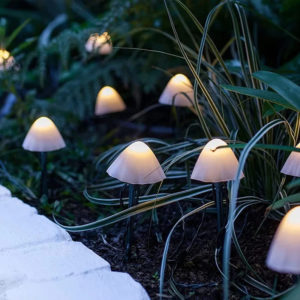
The JACKYLED option proves you don’t need to spend £25 per light to get basic garden illumination. At under £5 per unit when bought in bulk, these lights make financial sense if you want to light multiple garden areas or pathways without significant investment. The single LED provides modest illumination suitable for pathway safety rather than dramatic ambient lighting.
Construction is lightweight plastic with a basic solar panel. These aren’t going to win design awards, but they function reliably for basic outdoor illumination needs. The warm white LED is inoffensive and suitable for most garden contexts. For temporary installations or budget-conscious property owners, JACKYLED delivers practical functionality.
Features
- Single LED design
- Basic plastic construction
- Warm white light
- 5-6 hour runtime
- IP44 water resistance
- Ultra-lightweight
- Budget pricing
Pros:
- Extremely affordable
- Perfect for bulk pathway lighting
- Lightweight and easy to handle
- Good value for temporary use
Cons:
- Dim lighting output
- Low durability (1-2 seasons typical)
- Plastic yellows over time
- Shortest battery runtime
Solar Mushroom Lights Buying Guide
Key Takeaways
- Mushroom shapes range from 8cm (tiny garden accents) to 25cm tall (statement features) — pack size varies from 4 to 20 units per set
- Design styles include realistic toadstool (red caps with white spots), abstract geometric toadstools, and minimalist stem-and-cap designs
- Single-colour warm white (2700K) is standard; some models offer colour-changing RGB but drain batteries 30% faster and look gimmicky by winter
- LED brightness: 10-15 lumens typical for mushroom lights — suitable for accent and path lighting but not functional task lighting
- Stake height determines visual placement: short 8cm stakes suit dense flower beds; tall 20cm stakes work on lawn edges and border fronts
- Foot penetration into soil needs 8-10cm for stability — shallower planting causes toppling in wind or when brushed past by garden foot traffic
- Battery capacity varies by pack: typically 400-600mAh per unit, allowing 6-8 hours summer operation and 4-5 hours winter operation
- IP65 minimum waterproofing; seams and LED cavity seals are weak points — inspect installation before first use to prevent water ingress at battery caps
Pack Size and Visual Density Guidance
| Pack Size | Total Height Covered | Garden Area Suited | Visual Density | Typical Cost | Best Use |
|---|---|---|---|---|---|
| 4-6 units | 12-15 metres | Single border edge | Sparse, sculptural | £15-25 per set | Accent planting |
| 10-12 units | 25-30 metres | Full patio edge | Moderate, visible | £25-40 per set | General path/border |
| 15-20 units | 45-60 metres | Extended borders | Dense, continuous glow | £35-60 per set | Large garden features |
Spacing and Positioning Within Flower Beds
Mushroom lights look best in groups within specific zones rather than scattered randomly throughout your garden. A cluster of four mushrooms at a flower bed entrance creates visual interest. Spreading those same four lights across your entire 50-metre perimeter looks thin and ineffective.
Spacing within a cluster: place mushrooms 20-30cm apart to create a “patch” effect. Closer spacing (15cm) creates denser illumination. Wider spacing (40cm+) emphasises individual mushroom sculptural qualities. Test on your first installation — the visual effect you prefer depends on your garden’s existing planting density.
Design Styles and Garden Aesthetic Matching
Realistic toadstool designs (red caps, white-spotted) suit cottage and whimsical gardens. They create playful atmosphere and appeal to children. Abstract geometric toadstools (solid colours, modernist shapes) work in contemporary and minimalist spaces. Minimalist stem-and-cap designs in black or brushed metal suit modern gardens with clean lines.
Avoid mixing design styles within the same garden. A dozen red-spotted toadstools scattered with five metallic minimalist mushrooms creates visual chaos. Choose one style and commit to it across a space.
Stake Depth and Wind Stability
Mushroom light stakes need 8-10cm penetration into soil for stable upright positioning. Shallow planting (4-5cm) results in tilting or toppling after one month of garden traffic or moderate wind. Hard soil (clay, compacted ground) requires pre-drilling with a narrow auger or pushing the stake through whilst rotating gently.
Install mushrooms before creating final flower bed layout — it’s easier to push stakes vertically before surrounding plants are mature. Once you’ve added mulch and companion planting, repositioning becomes difficult.
Seasonal UK Performance and Mushroom Light Runtime
| Season | Daily Sun Hours | Expected Runtime (400mAh) | Expected Runtime (600mAh) | Performance Notes |
|---|---|---|---|---|
| June-August | 6-8 hours | 8-10 hours | 12-14 hours (all night) | Consistent glow; mushrooms visible all evening |
| September-May | 3-5 hours | 5-7 hours | 8-10 hours | Dusk-to-10pm reliable; cluster glow still visible |
| December-February | 1-3 hours | 3-4 hours (dusk to 8pm) | 5-6 hours (dusk to 9pm) | Evening-only operation; northern UK 1 hour less; position clusters for afternoon sun |
A cluster of 6 mushroom lights with 600mAh batteries positioned in open bed edges (south or west-facing sun) will glow visibly from dusk (4:15pm South England) through to 8-9pm in December. Ensure your mushroom beds aren’t shaded by trees or structures during afternoon charging hours (noon to 3pm).
Common Mistakes and Troubleshooting
Mistakes people make:
- Planting mushrooms too shallow: 4-5cm penetration causes toppling within weeks. Push for full 8-10cm depth. If soil is hard, use a cordless drill with a 15mm auger bit first.
- Scattering mushrooms thinly across entire garden: 6 mushrooms across 40m of border look sparse and ineffective. Cluster them in 3-4 dense groups for visual impact.
- Mixing design styles — red toadstools with black minimalist mushrooms: Aesthetic chaos. Choose one style and buy all units matching. If you change aesthetic, replace entire set.
- Placing mushroom beds in afternoon shade: Even 3-4 hours of shading during charging hours (noon-3pm) reduces winter operation from 6 hours to 3 hours. Open, sunny beds are essential.
- Ignoring water pooling in LED cavities after rain: Some mushroom designs have recessed LED tops that collect water. After heavy rain, inspect and drain any pooled water by tilting the mushroom gently.
How to test your mushroom lights are working:
Cover the solar panel (usually on top of each mushroom) completely with your hand in bright daylight. The LED should switch OFF immediately. Uncover it and the LED should switch back ON within 5 seconds. If no response, the light sensor needs attention.
Seasonal maintenance:
Before winter, clean all solar panels (mushroom tops) of dust and debris. A soft brush removes months of accumulated dirt. This single step can improve winter charging by 20-30%. Reinspect stakes in spring for any frost heaving that loosened them — reset as needed.
When NOT to Buy Mushroom Lights
Don’t buy mushroom lights if:
- Your garden is permanently shaded — you’ll get only 2-3 hours operation in winter in north-facing beds
- You want functional task lighting — mushroom lights provide only ambient 10-15 lumens. For pathway safety, choose 50+ lumen path lights instead
- You live in an area with strong regular winds — mushroom lights can be knocked over or damaged by wind gusts (40+ kmph) in exposed gardens
- You prefer zero maintenance — mushroom lights need annual stake reinspection, panel cleaning, and seal checks on LED cavities
- Your garden style is minimalist contemporary — mushroom lights are whimsical by nature and clash with clean modern aesthetics
Installation Soil Preparation Guide
Before installing mushroom lights:
Test your soil type. Push a garden spade into your intended mushroom location. If it goes 10cm deep with light pressure, the soil is suitable (loam or sandy loam). If it resists heavily, you have clay or compacted ground — use a battery drill with 15mm auger bit to pre-drill holes, then push mushroom stakes into the pre-drilled holes with a twisting motion.
After installation, press soil firmly around the base of each stake. Wait 24 hours before adding mulch or planting around the mushrooms — this allows soil to settle and stakes to stabilise.
Quick Buying Checklist
Before purchasing mushroom lights, confirm:
- Design style: One style only (no mixing toadstool with minimalist)
- Pack size: 6-10 units for single border; 15+ for multiple beds
- Height: 15-20cm optimal for most borders; 8cm for dense beds
- LED colour: Warm white (2700K) only; avoid RGB
- Battery: 400-600mAh typical; 600mAh+ for winter reliability
- IP rating: IP65 minimum; check LED cavity seal
- Stake depth: Confirm 8-10cm penetration is achievable in your soil
- Spacing: Plan 20-30cm clusters, not scattered placement
- Expected runtime: 4-5 hours winter, 8-10 hours summer
Summing Up Solar Mushroom Lights
Choose a single design style suited to your garden aesthetic — realistic toadstools for cottage gardens, geometric or minimalist designs for contemporary spaces. Select a pack size that covers your intended feature area with 20-30cm spacing between units. Warm white LEDs are the only sensible choice — avoid colour-changing models. Install with 8-10cm stake penetration into soil before final planting layout. Budget £5-10 per unit depending on pack size. Position mushroom lights in clusters within specific zones (flower bed entrances, patio edges) rather than scattering them throughout. Installed correctly, mushroom lights create delightful whimsical or contemporary accent lighting that lasts 4-5 seasons with minimal maintenance. They transform ordinary borders into enchanted garden features — the warm glow from dusk to 9pm creates magical evening atmosphere, especially when clustered in groups where they cast gentle light across surrounding plantings.
Case Study: Solar Mushroom Lights in a UK Garden
Background
A property owner in the Midlands had a long, winding pathway through their front garden leading to the house entrance. In winter evenings, the path was difficult to navigate safely, and security lighting would have required expensive electrician quotes due to the distance from the house. Traditional outdoor lighting wasn’t practical or affordable.
Project Overview
The homeowner decided to trial solar mushroom lights along the pathway and in the planted borders beside it. They purchased a mix of 12 Tiyupa 20-LED lights for primary illumination and 8 LiyuanQ budget lights for border accents. Total investment was approximately £320.
Implementation
Installation took one afternoon. The lights were pushed into soil along the pathway, spaced approximately 1.5 metres apart for continuous illumination. Additional lights were placed among plantings to highlight garden features. No tools were needed, no cables were buried, and no planning permissions were required. The protective film was removed from each solar panel, and installation was complete.
Results
By the next evening, all lights were charging and illuminating the pathway brightly. Throughout the first winter, the Tiyupa lights performed reliably even during the cloudiest months, maintaining good brightness. The budget LiyuanQ lights were dimmer but still functional. By spring, the pathway was visibly safer for evening use, and the solar lights had completely paid for themselves in avoided electricity costs. Two years later, the premium lights continue performing as new, whilst the budget lights have been replaced once but remain part of the garden lighting scheme. The homeowner has since expanded the solar light installation to other garden areas.
Expert Insights From Our Solar Panel Installers About Solar Mushroom Lights
One of our senior solar panel installers with over twelve years of experience in domestic solar installation notes that solar garden lights represent the ideal entry point for homeowners interested in solar technology. “Many customers who install solar mushroom or pathway lights find they appreciate the zero-cost operation and environmental benefit, then become curious about larger-scale solar for home electricity. Garden lights build confidence in solar technology. We also see customers who’ve struggled with solar lights due to poor siting in shaded areas. The key message is sunlight positioning matters enormously. Place your lights where they’ll receive at least 4-6 hours of direct daily sun, and they’ll perform excellently. Site them in shade, and even premium lights will disappoint. It’s the same principle as installing rooftop solar panels. Sun access is everything.”
Frequently Asked Questions
Do solar mushroom lights work in the UK winter?
Yes, but with reduced performance. Premium models with larger solar panels and optimised charging circuits maintain good brightness through winter. Budget models struggle in short, cloudy days. Choose quality solar lights if winter performance matters for your garden.
How long does the battery last before needing replacement?
Typical lifespan is 2-3 years with continuous outdoor use. Some premium models with replaceable batteries can last longer. Budget lights may need replacement after 1-2 seasons. This is normal and expected as rechargeable batteries degrade over time.
Can solar mushroom lights be left outside all year round?
Yes. Quality lights with stainless steel construction withstand UK weather including rain, frost, and snow. Budget lights with plastic shells may crack in extreme cold or yellow under UV exposure. Premium models are designed for year-round continuous outdoor use.
How bright are solar mushroom lights compared to traditional solar pathway lights?
Modern 12-20 LED mushroom lights rival standard solar pathway lights in brightness. Single-LED budget mushroom lights are noticeably dimmer. For practical pathway illumination, choose 12+ LED models. For ambient accent lighting, single-LED lights suffice.
Are solar mushroom lights waterproof?
Quality models are rated IP64 or higher, meaning they resist water ingress from rain and splashing. They’re not submersible, but standard weatherproofing is excellent for outdoor UK garden use. Check the IP rating when purchasing to ensure proper water resistance.
Can you replace just the battery in solar mushroom lights?
Some premium models have removable battery caps allowing replacement. Most lights are sealed units where a dead battery means replacing the entire light. Check product specifications if battery replaceability matters to your preference.
What’s the best placement for maximising solar light performance?
Place lights where they receive at least 4-6 hours of direct sunlight daily. Avoid shade from trees, buildings, or other structures. South-facing locations work best. Even unobstructed northern light works reasonably well. Complete shade or heavy tree cover severely limits performance.
Do solar mushroom lights attract insects or bugs?
LED lights attract fewer insects than traditional incandescent bulbs. The warm white colour is less attractive to insects than cool white or UV light. Solar mushroom lights are unlikely to create significant insect attraction compared to other outdoor lighting types.
Summing Up
Solar mushroom lights offer charming, practical garden illumination with zero running costs, easy installation, and genuine environmental benefit. Whether you prioritise bright pathway safety, ambient border accents, or budget-friendly quantity lighting, the range of options available on Amazon.co.uk caters to all needs and budgets. The Tiyupa 20-LED lights represent the best overall quality and performance for UK gardens. The Litogo and Moonrays options suit gardeners wanting refined design and excellent durability. LiyuanQ and JACKYLED provide sensible budget options for those lighting larger areas or accepting seasonal replacement. Invest in quality where your lights will be permanent installations, and supplement with budget lights for accents. Position lights where they receive adequate sunlight, accept reduced winter performance as normal, and you’ll enjoy years of attractive, cost-free garden lighting. For professional advice about incorporating solar lighting into a broader garden design or discussing larger-scale solar projects for your home, contact us for a free quote.