
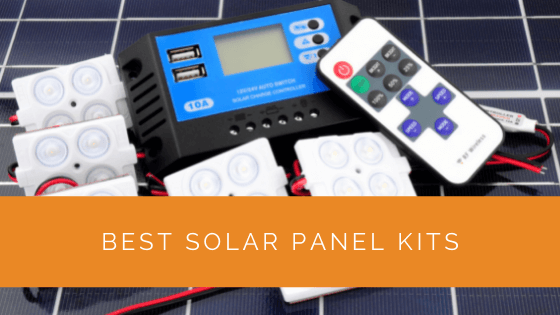
The DOKIO 100W 18V Foldable Solar Panel Kit is our top pick for UK buyers who want a complete, portable solar kit backed by real-world validation. With over 1,300 reviews at 4.4 stars and a self-contained foldable design that includes a controller and USB outputs, it covers the full range of scenarios from caravan weekends to off-grid shed power.
Solar panel kits have become the sensible entry point for anyone moving beyond a single panel purchase. The best kits bundle everything you actually need: panels, charge controller, cabling, and mounting hardware, so you’re not sourcing components separately and hoping they’re compatible. This guide covers six of the best available on Amazon.co.uk right now, from compact 100W foldable options under £80 to 390W bifacial N-Type systems for serious caravans and motorhomes.
Our Top Picks
| Image | Name | |
|---|---|---|
| DOKIO 100W 18V Foldable Solar Panel Kit | |
| Voltset 100W 12V Solar Panel Kit | |
| ECO-WORTHY 240W Mono Caravan Kit | |
| Topsolar 200W 12V/24V Solar Panel Kit | |
| ECO-WORTHY 390W Bifacial Motorhome Kit | |
| EF ECOFLOW 2PCS 100W Rigid Solar Panels |
6 Best Solar Panel Kits
1. DOKIO 100W 18V Foldable Solar Panel Kit

Over 1,300 reviews at 4.4 stars is unusually strong validation for a portable solar panel kit at this price point, and it earns the DOKIO the top position in this roundup by a clear margin. This is not a product you’re buying on spec-sheet faith; it’s a kit that has been used on UK campsites, in caravans, on narrowboats, and at allotments by a large body of real buyers who have reported back on how it performs in practice.
The foldable format is the defining feature. The panels fold together like a suitcase, which makes transport and storage straightforward. Unlike rigid panels that need roof-mounting with brackets and sealant, the DOKIO sets up in minutes on any flat surface with the fold-out stand, and packs down just as quickly. For seasonal or portable use, that flexibility is worth more than marginal efficiency gains you’d get from a fixed rigid panel.
The included PWM charge controller handles 12V battery charging across all standard battery chemistries: sealed lead-acid, gel, AGM, and flooded. Two USB outputs let you charge phones or small devices directly without needing a separate inverter. At £79.99 it is the most accessible complete kit in this roundup, and the review volume gives confidence that the quality is consistent rather than variable.
Features
- 100W monocrystalline foldable solar panel
- Included PWM charge controller with 2 USB outputs
- Compatible with sealed, gel, AGM, flooded 12V batteries
- Fold-out stand for angled positioning without brackets
- 4.4 stars, 1,307 reviews
- £79.99
- 1,307 reviews at 4.4 stars is the most validated kit in this roundup by a wide margin
- Foldable format is portable and requires no permanent installation
- Fold-out stand allows angle adjustment for optimal charging in any location
- USB outputs charge phones and devices without a separate inverter
- PWM controller is less efficient than MPPT in UK overcast conditions
- 100W output is modest for anything beyond basic 12V battery maintenance
- Foldable panels are less durable than rigid glass alternatives for permanent installation
2. Voltset 100W 12V Solar Panel Kit with 20A PWM

The Voltset is the best rigid 100W kit in this roundup. At 4.6 stars from 116 reviews, it has the highest per-unit rating of any product here outside Topsolar, and the 20A PWM controller is more capable than the basic controllers bundled with many budget kits. IP67 waterproofing on the panel is a genuine specification difference from most competing products, which carry IP65. IP67 means full immersion protection, which matters for any installation exposed to pooling water or coastal spray.
The kit includes a monocrystalline panel, 20A PWM charge controller, mounting brackets, and cabling. The 20A controller capacity means it can handle expansion if you add a second 100W panel later without needing a controller upgrade. That headroom makes it the sensible choice for a buyer who might want to grow the system over time. At £99.99 with a voucher discount often available, the all-in cost is competitive for a rigid panel kit at this specification.
Features
- 100W monocrystalline solar panel, IP67 waterproof
- 20A PWM charge controller
- Mounting hardware and cabling included
- 12V system, expandable to 200W with second panel
- 4.6 stars, 116 reviews
- £99.99
- 4.6-star rating is one of the highest in this roundup
- IP67 waterproofing exceeds the IP65 standard of most competing panels
- 20A controller has capacity for a second 100W panel without upgrade
- Good value at under £100 for a complete rigid panel kit
- PWM controller rather than more efficient MPPT
- 116 reviews is moderate validation compared to the DOKIO’s 1,307
- Rigid panel requires permanent bracket mounting, not suited to portable use
3. ECO-WORTHY 240W Mono Solar Panel Kit for Caravan

The ECO-WORTHY 240W kit is the best mid-range option for caravan and motorhome owners who need more than a trickle charge. Two 120W monocrystalline panels generating a combined 1kWh per day under good UK conditions is enough to keep a leisure battery topped up for standard caravan use: lights, a 12V fridge, phone charging, and a water pump. It won’t run an electric kettle, but it covers the realistic 12V load for a well-equipped touring caravan.
The 30A PWM charge controller, Z-brackets, and extension cables are all included. The Z-bracket mounting hardware is specific to caravan and motorhome roof profiles, which means you don’t need to source compatible fixings separately. This is a 100+ bought per month kit, which indicates it is moving in volume and earning consistent buyer confidence. At £149.99, reduced from £179.99, it sits at a realistic price point for a first serious roof-mount kit.
ECO-WORTHY has a wider product range and longer UK selling history than newer brands, which adds some confidence in parts availability and seller support if issues arise after installation.
Features
- 2x 120W monocrystalline panels, 240W combined
- 30A PWM charge controller
- Z-mounting brackets for caravan/motorhome roofs
- 1kWh per day output in good conditions
- 4.6 stars, 76 reviews
- £149.99
- 1kWh/day covers standard 12V caravan loads including a fridge
- Z-brackets included for direct caravan and motorhome roof mounting
- 4.6-star rating with 100+ monthly sales gives strong market confidence
- 30A controller has headroom for adding further panels
- PWM controller loses 15-25% efficiency vs MPPT in UK overcast conditions
- 76 reviews is moderate for long-term durability confidence
- Two-panel setup adds installation complexity over a single-panel kit
4. Topsolar 200W 12V/24V Solar Panel Kit

The Topsolar 200W kit earns the highest rating in this roundup at 4.7 stars. The single 200W high-efficiency monocrystalline panel generates 800Wh to 1kWh per day in UK summer conditions, and the 30A PWM charge controller supports both 12V and 24V systems. That dual-voltage capability makes it the most flexible kit here for buyers running 24V systems in larger motorhomes or on boats with 24V battery banks.
At 33 reviews the validation is lower than the more established kits in this roundup, but the 4.7-star rating is consistent across those reviews and suggests a well-made product. The single-panel format is simpler to install than a twin-panel kit: one mounting point, one cable run, one roof penetration. For a shed or small motorhome where a single 200W panel covers the load, this is the tidier solution than buying two 120W panels and combining them.
Features
- 200W high-efficiency monocrystalline panel
- 30A PWM charge controller, 12V/24V compatible
- Mounting hardware and cabling included
- 4.7 stars, 33 reviews
- £149.99
- 4.7 stars is the highest rating in this roundup
- 12V/24V dual-voltage support covers standard and larger system configurations
- Single 200W panel is simpler to install than a twin-panel 240W kit
- 33 reviews is the lowest validation count in this roundup
- PWM controller rather than MPPT
- Single 200W panel delivers similar output to the 240W twin-panel kit for the same price
5. ECO-WORTHY 390W Bifacial Solar Panel Kit for Motorhome

The ECO-WORTHY 390W bifacial kit is the premium option in this roundup. Two 195W N-Type bifacial panels with 18BB half-cut cell technology generate up to 1.56kWh per day in good conditions. Bifacial panels produce power from both front and rear surfaces, gaining 5 to 15% extra output in reflective environments. N-Type cells also have lower degradation rates than standard P-Type monocrystalline, which matters for a permanent motorhome installation you want performing well in five years as much as today.
The 18BB half-cut cell design improves shading tolerance compared to conventional full-cell panels. When part of a panel is in shadow from a roof vent or aerial, half-cut cells minimise the power loss to the shaded section rather than pulling down the entire string. For a motorhome roof with obstructions, that is a practical advantage. The motorhome mounting brackets are included and specific to the roof profile. At 102 reviews and 4.5 stars with 50+ monthly sales, it carries solid validation for a premium kit in the UK market.
Features
- 2x 195W N-Type bifacial panels, 390W combined
- 18BB half-cut cells for improved shade tolerance
- 30A PWM charge controller
- Motorhome-specific mounting brackets included
- 1.56kWh/day output in good conditions
- 4.5 stars, 102 reviews
- £199.99
- Bifacial N-Type cells provide 5-15% extra output and lower long-term degradation
- 18BB half-cut design improves shading tolerance on cluttered motorhome roofs
- 50+ monthly sales at 4.5 stars gives strong market confidence
- Motorhome-specific brackets included, so no separate sourcing required
- PWM controller despite the premium panel specification; MPPT would extract more output
- Most expensive kit in this roundup at £199.99
- 390W output requires adequate battery capacity to store the daily generation
6. EF ECOFLOW 2PCS 100W Rigid Solar Panels

The EF ECOFLOW 2-pack is designed for use with the ECOFLOW ecosystem: the Power Kits and portable power stations that are the brand’s core product. If you already own an ECOFLOW power station, these panels are the natural pairing because the connectors, compatibility, and charging optimisation are built around the ECOFLOW system. Buying generic panels with an ECOFLOW station often means dealing with adapters and compromised charging rates. With the branded panels you get plug-and-play integration from the start.
As standalone panels, the IP68 waterproofing exceeds the IP65 specification of most competing products. Two 100W rigid panels give 200W combined output. At £160.28 the per-watt cost is not exceptional compared to alternatives in this roundup, but the ECOFLOW-specific optimisation justifies the premium for existing ECOFLOW users. For buyers who don’t own ECOFLOW equipment, the ECO-WORTHY 240W kit at £149.99 delivers more wattage per pound.
Features
- 2x 100W rigid monocrystalline panels, 200W combined
- IP68 waterproofing
- Designed for EF ECOFLOW Power Kits and power stations
- 241 reviews
- £160.28
- IP68 waterproofing exceeds the IP65 standard of most competing panels
- Plug-and-play integration with ECOFLOW ecosystem power stations
- 241 reviews provides reasonable confidence in real-world performance
- Best value only for existing ECOFLOW users; generic buyers get more wattage per pound elsewhere
- No charge controller included for standalone 12V battery charging
- 4.2-star rating is the lowest in this roundup
Solar Panel Kits Buying Guide
Key Takeaways
- Always check what the kit actually includes. Some listings sell panels only; a complete kit includes a charge controller, cabling, and mounting hardware.
- PWM controllers work fine for simple 12V systems in direct sun. MPPT extracts 15 to 25% more power in UK overcast conditions and is worth the upgrade cost for year-round use.
- Foldable kits suit portable and seasonal use. Rigid kits are better for permanent installation where maximum durability and weather resistance matter.
- System voltage needs to match your battery bank. Most small caravans and sheds run 12V; larger motorhomes and narrowboats often use 24V.
- In UK conditions, plan for 0.5kWh per day from a 100W panel as a realistic annual average. Summer peaks around 0.5kWh; December dips to 0.1-0.15kWh.
- N-Type bifacial panels have lower degradation rates and better low-light performance than standard PERC cells, justifying the premium for permanent installations.
- Controller amperage should be sized at 125% of the panel’s short-circuit current. A 100W 12V panel typically has an Isc of around 6A, so a 10A controller is the minimum safe rating.
What the Kit Should Include and What’s Often Missing
Solar panel kit listings vary enormously in what they actually contain. Some kits include only the panel and a basic controller. A properly specified kit should include: the panel or panels, a charge controller sized for the panel wattage, MC4 or SAE connecting cables, and mounting hardware. The mounting hardware detail is most often omitted. Whether brackets, Z-clips, roof penetration glands, or fold stands, the correct type depends on the installation and is not always in the box.
| Kit component | Why it matters | What to look for |
|---|---|---|
| Charge controller | Prevents battery overcharge and over-discharge damage | MPPT for efficiency; PWM adequate for basic use. Amperage to match panel wattage |
| MC4 cables | Connects panels to controller and battery | Minimum 4mm² cable for runs over 3 metres to avoid voltage drop |
| Mounting hardware | Fixes panels securely to the installation surface | Z-brackets for caravans; tilt frames for sheds; fold stands for portable kits |
| Battery connectors | Connects controller output to the battery terminals | Ring terminals for permanent install; alligator clips for temporary connections |
PWM vs MPPT: The Right Controller for UK Conditions
All six kits in this roundup use PWM charge controllers. PWM is the older, simpler technology: it connects the panel directly to the battery and reduces charge current as the battery fills. It works well when panel and battery voltages are closely matched and irradiance is high. In the diffuse, low-irradiance light that characterises most UK days from October through March, MPPT can recover 15 to 25% more energy than PWM. For a 200W kit running through a British winter, that difference is meaningful in practice.
If winter performance matters for your setup, consider purchasing a quality MPPT controller separately and substituting it for the PWM unit supplied. A 20A MPPT controller from a reputable brand costs £30 to £60 and will pay back the difference through better charging efficiency within a season or two of UK winter use.
Wattage Sizing for Real UK Loads
UK annual average irradiance provides around 2.5 to 3 peak sun hours per day across the year, with 5 to 6 hours in summer and 1 to 1.5 hours in December. A 100W panel generates an average of 250 to 300Wh per day across the full year. In summer expect 400 to 600Wh on a clear day. In midwinter expect 100 to 150Wh on a typical overcast day.
| System size | Annual average daily output | UK summer daily | UK winter daily | Suitable for |
|---|---|---|---|---|
| 100W | 250-300Wh | 400-600Wh | 100-150Wh | Phone/device charging, LED lights, 12V battery maintenance |
| 200W | 500-600Wh | 800-1,000Wh | 200-300Wh | Small 12V fridge, water pump, lights, device charging |
| 390-400W | 975-1,200Wh | 1,600-2,000Wh | 400-600Wh | Full touring caravan 12V load, larger fridge, extended device use |
Foldable vs Rigid: Which Format for Your Use Case?
Foldable panels sacrifice around 1 to 2 percentage points of efficiency compared to rigid glass alternatives, and their laminate construction is more vulnerable to UV degradation and physical damage over years of outdoor exposure. Most rigid glass panels carry 25-year performance warranties; most foldable panels carry 1 to 3 year product warranties. If you’re building a permanent system and won’t be moving the panels, rigid is the better long-term investment.
But for a buyer who brings panels to a different site each weekend, foldable is the obvious answer. The fold-out stand allows angle optimisation without any fixings or tools. The packed size fits in a car boot. And if the panel gets damaged during transport, the replacement cost is much lower than a rigid glass panel with bracket hardware. Match the format to how you actually plan to use the kit.
Common Buying Mistakes
- Buying a panel kit without checking battery chemistry compatibility. Most kit controllers are designed for lead-acid, gel, and AGM batteries. LiFePO4 requires a specific charge profile that budget PWM controllers often don’t support correctly.
- Treating the wattage rating as a constant output figure. A 100W panel produces 100W under standard test conditions. UK average irradiance is 30 to 40% of those test conditions. Divide the wattage figure by 3 to 4 for a realistic daily UK average output estimate.
- Ignoring cable length in the kit. Short cables force the battery close to the panel. For a shed or boat installation with any distance between panel and battery bank, check whether additional cable is needed before ordering.
- Choosing a single 100W kit and expecting it to cover a 12V fridge. A 12V fridge draws 40 to 60W and runs 24 hours a day. A 100W panel does not generate enough daily energy to cover this load in UK conditions, especially in winter. You need at least 200W for this use case.
- Not accounting for the MPPT vs PWM difference in winter. A kit rated at 200W with a PWM controller in UK winter might effectively deliver 15 to 25% less energy than the same panel with an MPPT controller.
Quick Buyer Checklist
- Does the listing include a charge controller, cabling, and mounting hardware, or just the panel?
- Is the system voltage 12V or 24V, and does it match your battery bank?
- Is this for portable use (foldable) or permanent installation (rigid)?
- Is the controller PWM or MPPT, and does that matter for your UK winter use case?
- What battery chemistry do you have: lead-acid, gel, AGM, or LiFePO4?
- Is the controller amperage adequate? (Panel Isc in amps × 1.25 = minimum controller rating)
Case Study: A Yorkshire Shed Gets Off-Grid Solar Power
Background
A homeowner in North Yorkshire wanted to add lighting and basic power to a timber workshop shed at the bottom of a garden with no mains cable run. The shed is used most weekends and needs enough power for LED work lights, phone charging, and a small 12V inverter for running a laptop.
Project Overview
The homeowner chose the DOKIO 100W foldable kit as a starting point: low upfront cost, no permanent installation required, and the fold-out stand allowed positioning the panel at an optimal angle outside the shed during use. A separate 100Ah AGM leisure battery was purchased as the storage element and kept inside the shed.
Implementation
The panel was set up outside the shed each session and connected through a small window aperture via the supplied extension cable. The PWM controller was mounted on the shed wall next to the battery. Two 12V LED strip lights were wired directly to the battery via a fused connection, and a 300W pure-sine inverter was added for phone and laptop charging. Total installation: one afternoon, no planning permission, no electrician, no cable trenching.
Results
The setup met the weekend load comfortably from March through October. In December and January, the limited winter output required rationing inverter use to avoid depleting the battery before the next weekend charge. By the following spring the homeowner added a second 100W DOKIO panel connected in parallel and upgraded to a 20A MPPT controller, roughly doubling winter performance and covering the load year-round without rationing.
Expert Insights From Our Solar Panel Installers About Solar Panel Kits
One of our senior solar panel installers with over 16 years of experience in UK domestic and commercial solar shared this advice:
“The question I get asked most often about panel kits is whether the controller in the kit is any good. The honest answer is that most kit controllers are adequate for straightforward 12V battery charging, but they’re sized conservatively and built to a price. If you’re spending £200 on a 390W bifacial panel kit, the supplied PWM controller is the weakest component in the box. For that wattage and those panel specs, you’d recover the cost of a quality MPPT controller upgrade within a season or two in better UK winter charging performance. Don’t let the included controller be the ceiling on what the panels can deliver.”
Frequently Asked Questions
What is included in a solar panel kit?
A complete solar panel kit should include: the solar panel or panels, a charge controller to regulate charging and protect the battery, connecting cables with MC4 or SAE connectors, and mounting hardware. Some kits also include a battery or inverter, though most at the price points in this guide do not. Always check the listing contents carefully before buying. Some listings sell just the panel and controller without cables or brackets, which leaves you sourcing additional hardware separately.
What is the difference between a PWM and MPPT charge controller?
PWM (Pulse Width Modulation) controllers are simpler and cheaper. They work well in direct sun when panel voltage closely matches battery voltage. MPPT (Maximum Power Point Tracking) controllers continuously adjust to extract maximum power regardless of conditions. In the low-irradiance diffuse light common in UK winters, MPPT recovers 15 to 25% more energy than PWM. For summer-only or portable use, PWM is adequate. For year-round UK use where winter performance matters, MPPT makes a meaningful difference worth the additional cost.
How much does a 100W solar panel generate in the UK?
In the UK, a 100W panel generates an average of 250 to 300Wh per day across the full year. In summer (June to August) expect 400 to 600Wh on a clear day. In midwinter (December to January) expect 80 to 150Wh on a typical overcast day. These figures assume south or south-west facing installation with no shading. A 100W kit suits battery maintenance, LED lighting, and phone charging, but won’t support a 12V fridge or sustained appliance use without additional panels.
Do I need planning permission for solar panels on a shed or caravan?
For a shed in a domestic garden, solar panels generally fall within permitted development rights in England and Wales, provided the shed is not in a conservation area and the panels don’t protrude beyond the roof slope. On a caravan or motorhome, no planning permission is required. Scotland and Wales have their own variations to permitted development rules. If your property is listed or in a conservation area, check with your local planning authority before installing panels on any structure.
Can I connect a solar panel kit to a LiFePO4 battery?
Yes, but the charge controller must explicitly support LiFePO4 chemistry. Many budget PWM controllers are designed for lead-acid, gel, and AGM batteries only and will not correctly charge a LiFePO4 cell, which requires a different charge profile with a higher absorption voltage. If you have or plan to add a LiFePO4 battery, check that the controller in your chosen kit lists LiFePO4 as a supported battery type, or budget for a compatible MPPT controller separately.
What size solar panel kit do I need for a caravan?
For a typical touring caravan with LED lighting, a water pump, and phone charging, a 100 to 150W kit covers weekend use in UK summer. For a 12V fridge, 200W is the practical minimum. For full-time or extended touring across UK seasons including autumn and spring, 300 to 400W gives enough margin to keep a 100Ah leisure battery adequately charged even through extended overcast periods. The ECO-WORTHY 390W bifacial kit in this roundup is sized for exactly this scenario.
Are bifacial solar panels worth the extra cost?
Bifacial panels generate power from both front and rear surfaces, gaining 5 to 15% additional output from reflected light in environments such as white roof membranes, gravel, snow, or water surfaces. They also use N-Type silicon cells, which degrade more slowly over time than standard P-Type cells. For a permanent motorhome or boat installation where you want the system performing well for 10 or more years, the premium for bifacial N-Type panels is generally worthwhile. For short-term portable use, the premium is harder to justify.
Can I add more panels to a solar panel kit later?
Yes, provided the charge controller has enough capacity. Most controllers are rated by their maximum input current in amps. A 20A controller handles approximately 240 to 260W of panels on a 12V system. A 30A controller handles approximately 360 to 390W. If you want to expand beyond the controller’s capacity, you’ll need to either upgrade the controller or add a second controller for the additional panels. Always check the controller’s maximum input wattage specification before purchasing additional panels to expand the system.
Summing Up
The best solar panel kit for most UK buyers is the DOKIO 100W Foldable: the review volume and consistent rating give confidence that the portable design and included controller deliver real-world performance that matches what it says on the box. For caravan and motorhome owners who need serious 12V charging capacity, the ECO-WORTHY 390W bifacial kit with N-Type panels and motorhome brackets justifies the step up to £199.99. And for buyers already invested in the ECOFLOW ecosystem, the 2-pack is the plug-and-play complement to their existing power stations.
If you’re thinking about a rooftop solar installation for your home rather than an off-grid kit, contact us for a free quote and we’ll advise on the right system size for your property.
Updated