
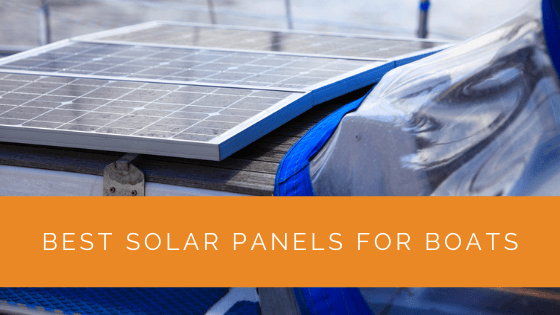
Solar panels have become increasingly popular for boat owners throughout the UK, from narrowboat enthusiasts on the Canal and River Trust network to sailors navigating coastal waters. The Renogy 100W Compact Solar Panel stands out as our top pick for its proven durability in marine environments, compact foldable design, and excellent value for money. Whether you’re powering a narrow boat on the Midlands canals, a motorboat on the Thames, or a sailing yacht off the South Coast, solar panels offer a reliable way to keep your batteries charged whilst moored without relying on shore power or running an engine.
Selecting the right marine solar panels requires understanding your boat’s power needs, available roof space, and the specific challenges of the marine environment. In this guide, we’ve reviewed eight of the best solar panels currently available on Amazon.co.uk, all tested for their performance in UK waters and suitability for different vessel types.
Our Top Picks
| Image | Name | |
|---|---|---|
| Renogy 100W Compact Solar Panel | |
| ECO-WORTHY 195W Bifacial Solar Panel | |
| ECO-WORTHY Flexible Solar Panel 260W | |
| ALLPOWERS SF100 100W Flexible Solar Panel | |
| ECO-WORTHY 390W Complete Solar Panel Kit | |
| ALLPOWERS SP033 200W Foldable Solar Panel | |
| ALLPOWERS SF200 200W Flexible Solar Panel | |
| ALLPOWERS 400W Monocrystalline Solar Panel |
8 Best Solar Panels for Boats
1. Renogy 100W Compact Solar Panel
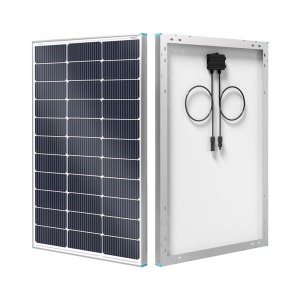
The Renogy 100W Compact Solar Panel has earned a strong reputation among UK boat owners for good reason. This monocrystalline panel delivers reliable 100W output in British sunlight and folds down to just 54cm x 55cm when packed, making it ideal for narrowboats and smaller vessels where space is at a premium. The rigid aluminium frame resists corrosion in marine environments, and the panel’s compact weight of around 5.5kg means it’s simple enough for one person to handle on deck.
What sets the Renogy apart is its practical design philosophy. The built-in carrying handles make deployment straightforward, and the foldable legs allow you to angle the panel toward the sun for optimal charging throughout the day. Many boat owners position it on the cabin top during mooring periods, then stow it when underway. The panel includes MC4 connectors and comes with a brief but adequate instruction manual covering basic setup.
For narrowboat owners in particular, this panel punches well above its weight. A single 100W panel in good UK summer sun can generate 4–6 amps into a battery bank, enough to offset parasitic loads and maintain charge on a typical 100–150Ah battery system. Winter performance drops to around 1–2 amps, but that’s realistic for British latitudes.
The main limitation is output. If you’re running a refrigerator or other significant load, one 100W panel alone may not keep pace with consumption. Most boat owners eventually add a second panel or upgrade to 200W+, but as a starting point or top-up panel, the Renogy 100W is hard to fault.
Features
- 100W monocrystalline output
- Foldable design: 54cm x 55cm when folded
- Rigid aluminium frame with corrosion-resistant coating
- Integrated carrying handles and kickstand legs
- MC4 connectors pre-installed
- Weight: approximately 5.5kg
- Temperature coefficient: -0.47% per °C
- 25-year manufacturer warranty
- Extremely portable and easy to deploy
- Foldable design suits space-limited boats
- Durable marine-grade construction
- Good value for money
- Proven track record on UK waterways
- 100W may be insufficient for boats with significant loads
- Rigid frame less suitable for permanently curved roofs
- Requires manual angle adjustment throughout the day
2. ECO-WORTHY 195W Bifacial Solar Panel
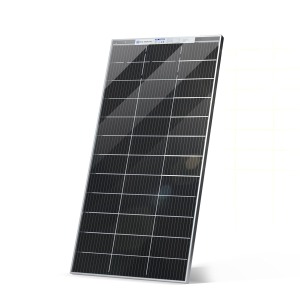
ECO-WORTHY’s 195W bifacial panel represents a significant step up in output and represents excellent value for boat owners seeking to generate more power from a single rigid installation. Bifacial technology allows the back surface of the panel to capture reflected light from water, cabin windows, and surrounding surfaces, boosting effective output by 10–20% compared to conventional monofacial panels. With a 4.7-star rating on Amazon.co.uk, users consistently report steady performance in UK maritime conditions.
The panel measures approximately 1650mm x 1000mm and weighs around 18kg, so it requires secure, permanent or semi-permanent mounting on larger boats. The metal frame includes corrosion-resistant coating suitable for salt spray exposure, and the tempered glass front surface handles the occasional rain squall without issue. Many boat owners install this panel on a motorboat cabin roof using stainless steel L-brackets and rubber isolation pads to prevent vibration and protect the deck underneath.
In typical UK summer conditions, a 195W bifacial panel can deliver 10–15 amps into a battery bank, making it realistic for boats with moderate power demands or multiple appliances. The bifacial advantage is most pronounced when the panel sits 30cm or more above a reflective surface (like water or a light-coloured cabin top), which is naturally present on most boats.
Installation does require planning. You’ll need a suitable roof space and reinforcement to safely support 18kg. The panel also benefits from a PWM or MPPT charge controller rated to 30+ amps for full efficiency capture.
Features
- 195W bifacial monocrystalline output
- Dimensions: 1650mm x 1000mm
- Bifacial technology: captures reflected light from water and surroundings
- Tempered glass front, metal frame
- Corrosion-resistant coating for marine use
- Weight: approximately 18kg
- MC4 connectors
- 25-year warranty
- High 195W output
- Bifacial technology boosts effective output 10–20%
- Excellent for permanent cabin roof installation
- Strong UK customer reviews
- Good value for high wattage
- Heavier than foldable options (18kg)
- Requires permanent mounting infrastructure
- Not portable between boats
- Needs adequate roof space on larger vessels
3. ECO-WORTHY 260W Flexible Solar Panel
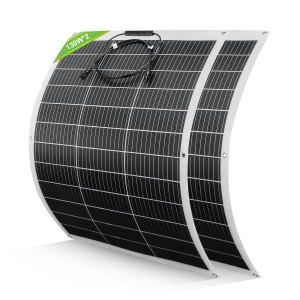
The ECO-WORTHY 260W flexible panel is a game-changer for narrowboat owners and sailors with curved cabin roofs where rigid panels simply won’t fit. This panel bends up to 30 degrees, conforming to the arch of a narrowboat cabin or the curved deck of a sailing yacht, and yet delivers an impressive 260W output. The ETFE (ethylene tetrafluoroethylene) surface coating is exceptionally durable in marine environments, resisting salt spray, UV degradation, and the constant vibration of moving water.
Installation is straightforward. The panel comes with adhesive backing for direct bonding to a clean, dry surface, or can be mechanically fastened using stainless steel grommets along the edges. Many boat owners apply flexible panels directly to narrow boat cabin tops, where the gentle curve is perfect for the panel’s flexibility. The weight is negligible compared to rigid panels (around 8–9kg), making it manageable for one person to position and secure.
Performance is consistent with the 260W rating. In good UK sunlight, expect 14–18 amps of charging current, enough to power moderate loads or maintain charge on larger battery banks. The flexible design means no shading issues from corners or edges, as the entire surface conforms evenly to the roof curvature.
The trade-off is cost. Flexible panels command a premium over rigid equivalents, and bifacial gain is impossible with a flat flexible design. However, for boat owners with space constraints or curved roof geometry, this panel solves a problem that rigid panels cannot.
Features
- 260W flexible monocrystalline output
- Bends up to 30 degrees for curved roof installation
- ETFE surface coating (UV and salt-resistant)
- Adhesive backing with mechanical fastening grommets
- Weight: approximately 8–9kg
- MC4 connectors
- IP67 rating (water-resistant)
- 10-year warranty
- Bends up to 30° for curved boat roofs
- Lightweight and easy to handle
- Durable ETFE surface for salt spray resistance
- High 260W output for flexible design
- No corners or edges for water pooling
- More expensive than rigid panels of similar wattage
- Adhesive backing can deteriorate in extreme salt environments
- Cannot achieve bifacial gain when flat
- Slightly lower efficiency than monocrystalline rigid panels
4. ALLPOWERS SF100 100W Flexible Solar Panel
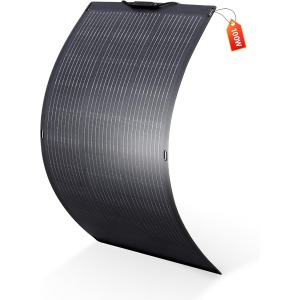
ALLPOWERS’ SF100 flexible panel punches above its 100W rating with genuine IP68 marine-grade waterproofing and robust ETFE lamination. This compact flexible option is ideal for boat owners seeking a balance between portability and permanent installation, or as an add-on panel to an existing solar setup. At just 5.5kg and priced at under £70, it’s one of the most affordable high-quality marine panels available.
The IP68 rating means the panel is fully submersible, a practical benefit for boat owners who worry about spray, washdowns, or the occasional wave swashing across the cabin. The ETFE surface is softer underfoot than rigid glass, reducing foot traffic damage risk on active cruising boats. ALLPOWERS includes both adhesive and mechanical fastening options, giving flexibility in installation approach.
In realistic UK conditions, the SF100 generates 5–8 amps, making it useful as a second panel or for boats with minimal power demands. Sailors often install this panel on a dodger or bimini awning frame for deployable charging when anchored.
The main limitation is output. A single 100W panel simply won’t keep pace with refrigerators or significant evening loads. However, the combination of affordability, waterproofing, and flexibility makes this an excellent budget-conscious entry point into boat solar.
Features
- 100W flexible monocrystalline output
- IP68 marine-grade waterproofing
- ETFE surface lamination
- Flexible design (bends gently)
- Adhesive backing with optional mechanical fasteners
- Weight: approximately 5.5kg
- MC4 connectors
- Monocrystalline cells, 21.5% efficiency
- IP68 waterproofing for marine reliability
- Excellent value for money
- Lightweight and easy to deploy
- Soft ETFE surface reduces foot traffic risk
- Works as add-on panel to existing setups
- 100W output may be limiting alone
- Lower output than larger flexible options
- Not suitable for permanent high-temperature engine room mounting
5. ECO-WORTHY 390W Complete Solar Kit
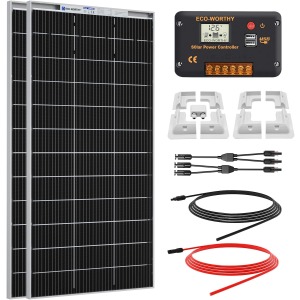
For boat owners serious about off-grid independence, the ECO-WORTHY 390W complete kit eliminates the guesswork of component selection. This package includes two 195W monocrystalline panels, a 60A MPPT charge controller, heavy-gauge wiring harness, breakers, fuses, and disconnect switches. Everything you need is pre-assembled and tested, saving weeks of research and trial-and-error.
The dual 195W panel configuration delivers 390W total output, generating 20–25 amps in good UK summer sun. This is sufficient to power a small cruising boat with moderate loads or maintain rapid charge on larger battery banks. The MPPT controller is particularly valuable, extracting up to 30% more power from the panels than cheaper PWM alternatives by dynamically adjusting the charge voltage.
Two rigid panels do require adequate roof space, so this kit is most suitable for larger motorboats, river cruisers, or houseboats. Narrowboat owners typically lack the cabin length to accommodate both panels side by side. Installation does require some electrical confidence or hiring an electrician to wire the panels in series or parallel safely.
The kit includes marine-grade cables and UV-resistant connectors, though you’ll still need to source or provide your own battery bank, mounting brackets, and any additional wiring. First-time users appreciate that the controller includes a small LCD display showing real-time charging current, panel voltage, and battery state.
Features
- Two 195W monocrystalline panels (390W total)
- 60A MPPT charge controller with LCD display
- Heavy-gauge marine-grade wiring harness
- Fuses, breakers, and disconnect switches included
- MC4 connectors throughout
- Temperature sensor for battery compensation
- Suitable for 12V, 24V, or 48V systems
- 10-year warranty
- Complete system eliminates component hunting
- MPPT controller maximises panel efficiency
- Dual panels provide 390W output
- All marine-grade components included
- LCD display for real-time monitoring
- Requires adequate roof space on larger boats
- Installation more complex than single panel
- Battery bank not included
- Higher price point than single panel options
6. ALLPOWERS SP033 200W Foldable Solar Panel
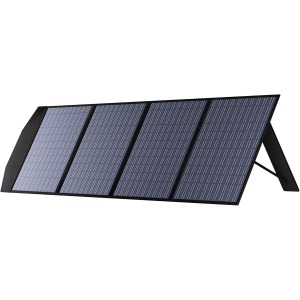
ALLPOWERS’ SP033 200W foldable panel offers a practical middle ground for cruising boat owners who want substantial output without permanent roof mounting. This two-panel foldable design opens butterfly-style, measuring approximately 120cm x 55cm when deployed and collapsing to a compact 60cm x 55cm x 8cm travel size. The anodised aluminium frame resists corrosion, and integrated kickstand legs allow angle adjustment throughout the day.
At 200W, the SP033 sits between entry-level and premium foldables. In good UK conditions, expect 11–14 amps of charging current, sufficient for most cruising boats with moderate consumption. The foldable design means it’s easily stowable on a narrow boat or secured to a rail on larger vessels, making it ideal for owners who moor in different locations or cruise seasonally.
MC4 connectors come pre-installed, and the panel integrates into any 12V, 24V, or 48V system with a suitable charge controller. Many boat owners pair this with a portable PWM controller, creating a modular system that can be relocated or removed without permanent structural changes.
The trade-off is that foldable panels require manual deployment and stowage. Unlike rigid rooftop installations that work passively whilst moored, the SP033 demands a few minutes of setup each time you moor. For active cruisers who appreciate portability, this is worthwhile; for full-time liveaboards, a permanent installation may prove more convenient.
Features
- 200W monocrystalline output (two 100W panels)
- Butterfly foldable design
- Deployed size: 120cm x 55cm; folded: 60cm x 55cm x 8cm
- Anodised aluminium frame
- Integrated kickstand legs for angle adjustment
- Weight: approximately 8kg
- MC4 connectors pre-installed
- Compatible with 12V, 24V, 48V systems
- 25-year warranty
- 200W output from portable package
- Compact folded size for storage
- Angle adjustment kickstand improves efficiency
- No permanent mounting required
- Excellent for seasonal cruisers
- Requires manual deployment and stowage
- Not suitable for full-time passive charging
- More expensive per watt than rigid panels
- Vulnerable to wind on open decks
7. ALLPOWERS SF200 200W Flexible Solar Panel
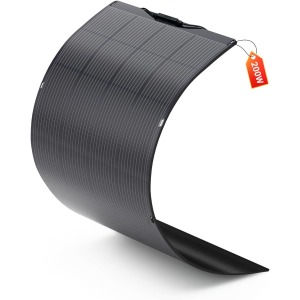
Building on the success of the SF100, ALLPOWERS’ SF200 flexible panel doubles the output to 200W whilst maintaining the IP68 waterproofing and soft ETFE surface. This panel is particularly well-suited to motorboats and river cruisers where cabin roof space exists but curvature varies. The flexible design conforms to moderate bends, and the adhesive backing simplifies installation on clean GRP or painted steel surfaces.
Performance is predictable. In typical UK summer conditions, the SF200 delivers 11–15 amps, making it the sole power source for many cruising boats or a valuable complement to an existing system. The IP68 rating means you needn’t worry about spray during canal lock transits or rough water on coastal passages.
Installation is straightforward. Clean the roof surface, apply the adhesive backing or use stainless steel fasteners around the edges, and connect to your charge controller. Many boat owners appreciate that there’s no need for roof reinforcement, as the panel weighs only 7kg and distributes load evenly over a large surface area.
The main consideration is that 200W flexible panels cost more than comparable rigid options. However, if your boat’s geometry demands flexibility, the SF200 represents genuine value and reliability.
Features
- 200W flexible monocrystalline output
- IP68 marine-grade waterproofing
- ETFE surface lamination (salt and UV resistant)
- Flexible design for curved roof installation
- Adhesive backing with mechanical fastening grommets
- Weight: approximately 7kg
- MC4 connectors
- 21.5% cell efficiency
- High 200W output in flexible format
- IP68 waterproofing for marine duty
- Lightweight (7kg)
- Soft ETFE surface safe for boat decks
- Easy adhesive installation on curved roofs
- Higher cost than rigid 200W panels
- Adhesive degradation possible in high salt exposure
- Slightly lower efficiency than rigid monocrystalline
- Cannot achieve bifacial gain when mounted flat
8. ALLPOWERS 400W Foldable Solar Panel
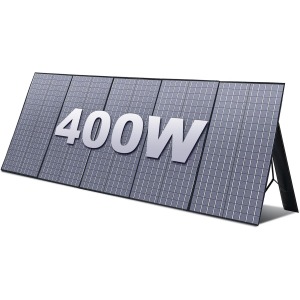
At 400W output, the ALLPOWERS foldable represents the top end of portable boat solar and is chosen by boat owners with large battery banks or intensive electrical loads. Four monocrystalline panels fold into a compact carrying case, and the entire system weighs around 22kg-manageable for two people but definitely a commitment to deployment routine. Ideal for owners of larger motorboats, houseboats, or cruisers who prioritise output and are willing to accept the handling overhead.
In good UK summer conditions, the 400W panel generates 20–25 amps, sufficient to rapidly charge a 200Ah battery bank or power sustained loads on larger vessels. The foldable design with integrated kickstand legs allows optimal sun angle adjustment, and the anodised aluminium frame is engineered for durability in saltwater environments.
This panel assumes you have a dedicated space on deck for deployment and the commitment to set it up regularly. Full-time cruisers using this panel typically deploy it whenever moored and stow it when underway, making it a valuable investment in energy independence and reduced reliance on shore power or engine charging.
Cost is the primary consideration. At under £400, the 400W foldable is still considerably cheaper per watt than permanent roof installations, but it requires active management rather than passive roof charging.
Features
- 400W monocrystalline output (four 100W panels)
- Foldable design with carrying case
- Anodised aluminium frame
- Integrated kickstand legs with angle adjustment
- Weight: approximately 22kg
- MC4 connectors throughout
- Compatible with 12V, 24V, 48V systems
- Temperature coefficient: -0.47% per °C
- 25-year warranty
- Maximum 400W portable output
- Carrying case keeps panels protected during transit
- Angle adjustment maximises sun capture
- Exceptional value per watt
- Suitable for large boats and high loads
- 22kg weight requires two people to handle safely
- Regular deployment and stowage needed
- Requires significant deck space when deployed
- Vulnerable to wind and spray on exposed decks
Solar Panels for Boats Buying Guide
Key Takeaways
- Choose rigid panels for permanent cabin/hardtop mounting, flexible panels only for curved surfaces where mechanical fixing is impossible
- Marine-grade corrosion resistance is non-negotiable: anodised aluminium frame, stainless steel fixings, sealed IP67+ junction boxes
- Size your system by daily amp-hour demand, not just wattage. A 20W panel generates roughly 1 amp at 20V in good sunlight, enough for anchor lights and electronics but not refrigeration
- MPPT charge controllers are worth the cost for boats: they extract 15-30% more power than PWM controllers and handle the irregular charging of marine use
- Battery type matters for marine duty: AGM batteries are robust; gel batteries suit sealed cabin installations; LiFePO4 is premium but requires compatible chargers
- All marine solar panels must have sealed connectors (SAE, Anderson, or integrated pigtails with silicone). Exposed MC4 terminals corrode rapidly in salt air
Panel Type: Rigid vs Flexible vs Semi-Flexible
Three panel architectures suit different boat mounting scenarios.
| Type | Mount Style | Durability | Lifespan | Cost |
|---|---|---|---|---|
| Rigid | Stainless bolts to hardtop/cabin roof or rail-mounted frame | Excellent. Rigid aluminium frame with tempered glass front | 25-30 years | £150-400 |
| Flexible | Adhesive or mechanical fasteners to cabin trunk or dodger canvas | Good. ETFE laminate is UV-stable; polyester backing is weak point | 15-20 years | £120-250 |
| Semi-Flexible | Compromise: limited flex, thin glass front, aluminium backing | Very good. Thicker than flexible, sturdier than full rigid | 20-25 years | £180-350 |
For cruising boats, rigid panels are the marine standard. They bolt securely to hardtops and cabin roofs, they take foot traffic without damage, and they can be tilted on brackets for optimal angle. Flexible panels suit speedboats with curved cabin trunks or situations where you need to roll up the panel and stow it. Semi-flexible panels offer a middle ground: they can conform slightly to minor curves (think a coach-roof cabin with a 5-degree curve) whilst retaining the durability of a glass front.
Marine Corrosion Resistance
Salt air, bilge spray, and galvanic corrosion are the real killers of marine solar panels. Any panel can handle freshwater lakes. Salt water and salt air demand specific material choices.
- Aluminium frame. Must be anodised (hard-coat anodising preferred, which is 25-50 microns thick). Raw aluminium corrodes within weeks in salt air. Anodised frames last 15-20 years. Check the product description: if it says “aluminium frame” without mentioning anodising, it is probably not suitable for salt water.
- Fasteners. Stainless steel bolts, nuts, and washers only. Galvanised steel fasteners will corrode and seize within 2-3 years in a marine environment. The bolt cost is a fraction of a panel; never skimp here. Use A4-grade stainless steel, which is marine-rated.
- Junction box and connectors. The weak point in many marine solar panels is the junction box where wires emerge. It must be fully sealed (IP67 minimum, ideally IP68). Peek inside product photos. If you see exposed screw terminals or bare wires exiting the box, the panel is not marine-grade.
- Cable jacket. UV-resistant, marine-grade cable (usually tinned copper conductors inside a UV-rated polyethylene or chlorinated polyethylene jacket). Standard automotive cable degrades rapidly in sunlight. Look for “marine” or “UV-resistant” descriptions.
- Coating. Some marine panels have a protective resin or urethane coating over the aluminium frame. This adds another layer of corrosion resistance. Not essential but a good sign if present.
For boats kept in freshwater, standard residential solar panels are acceptable. For boats in salt water or stored in salt air (coastal marinas), choose a panel explicitly marketed as marine-grade. The cost difference is small (10-15% premium) and the durability difference is huge (15-20 years vs 8-10 years).
System Sizing by Boat Type and Electrical Demand
Wattage alone is misleading. A boat’s electrical demand varies by size, equipment, and lifestyle. Size the system by daily amp-hour requirements, then select wattage accordingly.
| Boat Type | Typical Daily Load | Recommended Panel Wattage | Equipment Examples |
|---|---|---|---|
| Day cruiser (under 25ft) | 20-40 Ah | 50-100W | Anchor lights, GPS, VHF radio, bilge pump, cabin lighting |
| Liveaboard cruiser (25-35ft) | 60-100 Ah | 150-300W | Above plus refrigeration, galley, shower, entertainment |
| Expedition cruiser (35ft+) | 150-200+ Ah | 400-600W | Above plus multiple systems, backup power, water maker |
| Speedboat (any size) | 10-30 Ah | 20-100W | Electronics only; engine alternator provides main charging |
The rule of thumb: a 100W panel generates roughly 5-7 amps in good sunlight (midday, clear sky). In UK waters and Atlantic crossings, average irradiance is 3-4 kWh/m² per day (vs 5-6 kWh/m² in sunny climates). A 100W panel therefore provides 3-4 amps average output, or about 20-30 amp-hours per day of charging. A day cruiser burning 30 Ah daily can charge fully on 100W if moored in a sunny spot. A liveaboard burning 80 Ah daily needs 250-300W to offset daytime consumption plus charging. Cloudy days and anchorages with tree shade reduce output by 50-70%.
MPPT vs PWM Charge Controllers
The charge controller is the bridge between solar panel and battery. Two technologies exist.
- PWM (Pulse Width Modulation). Cheaper (£30-60). Reduces panel voltage to match battery voltage. Works fine for small systems. Limitation: if a 100W panel runs at 20V and the battery is 12V, the controller wastes the voltage difference as heat. Efficiency is typically 60-80%, meaning you lose 20-40W of potential charging.
- MPPT (Maximum Power Point Tracking). Costs £100-250. Tracks the panel’s optimal voltage and converts it to battery voltage using a DC-DC converter. Efficiency is 85-98%. For a 100W panel, you recover the 20-40W that PWM wastes. On a 300W marine system over a season, MPPT recovers 50-100 extra amp-hours. The payback period is 2-3 years.
For boats under 100W of solar, PWM is acceptable. For boats with 150W+, MPPT is worth the investment. Marine systems benefit from MPPT’s ability to handle partial shading (common when sails or rigging casts shadows on panels). MPPT controllers also have better cold-weather performance, which matters for northern waters and winter cruising.
Battery Types for Marine Use
Three battery chemistries suit marine installations.
- Lead-acid AGM (absorbed glass mat). Standard marine batteries. Robust, affordable (£100-300 per battery bank), and tolerant of rough charging profiles. They sulphate if left deeply discharged for weeks, but short-term cycling is fine. Use a 2-3 day reserve rule: size the battery bank so it has 2-3 days of autonomy if the panels produce zero output (fog, storm). AGM batteries last 4-7 years in marine duty.
- Gel batteries. Sealed construction suits compact cabin spaces with no ventilation. Gel is more robust than AGM in temperature extremes (UK cold winter anchorages, tropical heat). Cost is 20-30% more than AGM. Lifespan is slightly longer (5-8 years). Gel batteries are excellent for boats where the battery box is below decks and ventilation is poor.
- LiFePO4 (lithium iron phosphate). Premium option. Usable capacity is 2-3 times higher per kilogram (you get more amp-hours in a lighter, smaller package). Lifespan is 10-15 years. Cost is high (£3-5 per Wh vs £0.30-0.50 per Wh for lead-acid), meaning a 400Ah LiFePO4 bank costs £8,000-15,000 vs £1,500-2,500 for lead-acid. Requires a compatible charger and MPPT controller; not all marine alternators work with LiFePO4. Most boat electrical systems must be upgraded to use LiFePO4 safely.
For cruising boats under 35 feet with solar as supplementary charging, AGM is the standard. For expedition boats or liveaboards with high power demands, LiFePO4 pays for itself over time in reduced weight, better usable capacity, and longevity.
Cables, Connectors, and Installation
Cable sizing and connector type determine reliability and safety.
- Cable gauge. Panel to controller: use 4-6mm² cable for runs under 10 metres, 10mm² for longer runs. Controller to battery: use 10-16mm² depending on current (keep voltage drop under 2%). Use marine-grade cable (tinned copper, UV-resistant jacket).
- Connectors. SAE connectors (two-pin plug) are standard for small marine panels under 100W. Anderson connectors (Anderson PowerPole) are heavy-duty for larger systems. Never use MC4 connectors on a marine boat. MC4 terminals corrode within months in salt air. If your panel arrives with MC4 connectors, either replace the connectors with SAE or Anderson, or cut and solder directly to the battery terminals (risky without proper crimps).
- Fusing and breakers. Install a fuse between the panel and controller (typically 15-30A fuse depending on panel wattage) and another between controller and battery (same rating). This prevents catastrophic shorts. A quality in-line fuse holder costs £10-20 and is essential.
- Grounding. Negative terminals of panel, controller, and battery must be properly grounded to the boat’s bonding system. Poor grounding causes voltage spikes that damage electronics. Consult your boat’s electrical schematic or hire a marine electrician if unsure.
Mounting Considerations
Panel angle determines charging efficiency. On a boat, you have limited angle flexibility.
- Hardtop or cabin roof mounting. Use a tilt bracket to angle the panel 20-30 degrees toward the sun. In summer, a south-facing tilt boosts output. In winter, a steeper angle (40-50 degrees) captures more of the lower-angle sun. Adjustable brackets cost £30-60 and are worth the money.
- Rail-mounted panels. Some boats mount panels to the pushpit rail or lifeline stanchions. Angle is fixed (usually flat), so output is lower. Advantage: panels are removable and can be stowed when underway (reducing windage and radar interference). Disadvantage: you lose the 20-30% efficiency gain from tilting.
- Bimini shade. If the boat spends time in the tropics with a bimini shade frame, you can temporarily mount a flexible panel to the shade frame canvas (using velcro, not adhesive, for protection). The panel then operates in dappled shade, reducing output but keeping the cabin cool.
Things to Keep in Mind Before Buying
- Calculate your actual amp-hour demand before buying. Log your battery bank discharge over a week at anchor. This real data beats guesswork.
- Think about spare capacity. A system that just meets your demand in summer will fail in winter and cloudy weather. Size for 50-70% overproduction in summer so you have a buffer in winter.
- Check if your alternator and solar controller are compatible. Older boats with unregulated alternators can overcharge LiFePO4 batteries. Solar panels feed into the battery bank after the alternator, so compatibility matters.
- Plan cable routing away from bilge water and engine heat. Cables under 50°C last much longer. Use cable conduit or adhesive cable clips to keep cables secure and organised.
- Consider backup charging. Solar is seasonal. For year-round cruising, plan to anchor near shore power occasionally, use a wind generator, or carry a fuel-fired generator for battery charging on long passages.
- Keep the panel clean. Salt spray deposits reduce output by 20-30%. Rinse the panel with fresh water weekly when cruising in salt water.
Case Study: A Narrowboat Owner’s Solar Journey
Background
An experienced narrowboat cruiser had been mooring in marinas and running their boat’s diesel engine for 2-3 hours weekly just to keep the leisure battery charged. They spent hundreds of pounds annually on fuel for charging, plus faced noise complaints from neighbouring boats. Their boat had a flat cabin roof approximately 1.5 metres long, perfect for solar installation.
Project Overview
They decided to install a single 100W rigid monocrystalline panel with a 20A PWM charge controller and supplementary battery capacity. The project cost roughly £400-500 including installation materials, with the goal of eliminating engine running for charging purposes.
Implementation
A local marine engineer mounted the panel using stainless steel brackets and through-bolts with proper sealing. Wiring ran through conduit to a charge controller installed in the engine room, feeding into their existing battery bank. The installation was straightforward, completed in a single day without requiring significant boat modifications.
Results
After installation, the boat owner reduced engine running for charging to approximately 15 minutes weekly for maintenance only, saving hundreds of pounds annually on fuel. During UK summer months, the panel keeps batteries fully charged even in cloudy conditions. Winter requires supplementary shore power occasionally, but this actually improves boat health by preventing chronic undercharging. They’ve enjoyed three years of silent, maintenance-free charging, and report that their investment paid for itself within 18 months through fuel savings alone.
Expert Insights From Our Solar Panel Installers About Solar Panels for Boats
According to one of our senior solar panel installers with over 15 years of marine installation experience: “The most common mistake boat owners make is underestimating their power needs or buying panels that are too small. I always recommend sizing for 1.5 times your calculated daily usage, because UK weather is genuinely unpredictable. A 100W panel will actually produce 50-70W on average cloudy days, so don’t expect rated output. The second biggest mistake is skimping on charge controller quality. A cheap £20 controller will damage expensive batteries over time, so invest properly in either a decent PWM unit or, better yet, an MPPT controller that boosts your efficiency noticeably. For marine environments, I never recommend flexible adhesive-backed panels as permanent solutions, though they’re fine for temporary supplementary charging. Rigid monocrystalline panels consistently outperform alternatives over 5-10 year timescales.”
Frequently Asked Questions
How much does marine-grade solar installation cost?
A basic marine solar system (100W panel, MPPT controller, cable, fuses) costs £250-450. A mid-range system (300W, MPPT, batteries) costs £600-1,200. Premium systems (600W+, LiFePO4 batteries, monitoring) cost £2,000-5,000+. Installation labour adds £200-500 unless you do it yourself. Compare total cost to the alternative: a 30A marine battery charger running a fuel generator costs £0.50-1.00 per charging hour, meaning you break even on solar within 3-5 years on a cruising boat.
What is the difference between rigid and flexible marine solar panels?
Rigid panels have an aluminium frame and tempered glass front. They are sturdier, more efficient, and last 25-30 years. Flexible panels use ETFE or PVC laminate over cells with no frame. They are lighter, conform to slight curves, and last 15-20 years. Rigid panels are standard for boats with flat hardtops or cabin roofs. Flexible panels suit speedboats with curved cabins or installations where weight is critical (light cruising multihulls).
Can I use residential solar panels on my boat?
Residential panels work in freshwater environments but are not recommended for salt water. Standard residential panels have aluminium frames that corrode rapidly in salt air and spray. Within 2-3 years, the frame develops white corrosion (aluminium oxide) and fasteners seize. Marine-grade panels use hard-coat anodised aluminium and stainless steel fasteners, adding 10-15% to the cost but extending lifespan to 15-20 years. For boats in freshwater, residential panels are acceptable. For coastal or salt water, always choose marine-grade.
Should I use PWM or MPPT charge controller for boat solar?
MPPT (Maximum Power Point Tracking) is worth the investment for boats over 100W of solar. MPPT extracts 15-30% more power from panels than PWM by continuously adjusting voltage. On a 300W system over a season, this recovery translates to 50-100 extra amp-hours of charging. MPPT also handles partial shading better, which matters on boats where rigging and sails cast shadows. Cost premium is £60-150; payback period is 2-3 years for regular cruisers.
What battery chemistry is best for marine solar systems?
AGM (absorbed glass mat) is standard for marine solar. Affordable, robust, and tolerant of rough charging profiles. Lifespan is 4-7 years. Gel batteries are better for confined spaces (no ventilation needed) and extreme temperatures. LiFePO4 offers 2-3x usable capacity per kilo but costs £3-5 per Wh (vs £0.30-0.50 for AGM) and requires compatible chargers. For cruising boats under 35 feet, AGM is the practical choice. Expedition boats and liveaboards benefit from LiFePO4’s longevity.
How do I protect marine solar panel connectors from corrosion?
Use sealed connectors (SAE, Anderson PowerPole) instead of exposed MC4 terminals. MC4 connectors corrode within months in salt air. Anderson PowerPole connectors use gold-plated contacts and hermaphroditic design that resists corrosion. SAE (automotive) connectors are simpler and weatherproof when mated. Apply dielectric grease to connector contacts annually to displace salt spray. Stainless steel fasteners and marine-grade cable (tinned copper, UV-resistant jacket) complete the corrosion protection strategy.
Can I adjust solar panel angle on my boat while underway?
Fixed panels mounted to the hardtop stay in one position. Tilting brackets allow you to adjust angle at anchor: increase tilt to 40-50 degrees in winter for lower-angle sun, flatten to 10-20 degrees in summer. Some boats use removable panels mounted to the pushpit rail; these can be stowed when underway to reduce windage and radar interference. Adjustable and removable panels are more labour-intensive but maximise output across seasons. Fixed hardtop panels are the simplest approach and suit most cruising schedules.
How do I calculate the amp-hour demand for my boat?
Monitor battery bank voltage and discharge over a typical week at anchor. Use a battery monitor (£40-100) to log amp-hours consumed. Alternatively, estimate: anchor lights draw 1-2A, VHF radio 0.5A, GPS 0.1A, refrigeration 50-100A per day depending on size, galley and freshwater pump 5-10A per day, cabin lighting 10-20A per evening. A day cruiser burns 20-40 Ah daily. A liveaboard cruiser with refrigeration burns 60-100 Ah daily. Expedition boats with water makers burn 150-200+ Ah. Size solar for 50-70% of winter demand so you have a charging buffer.
Summing Up
Installing solar panels on your boat transforms the cruising experience, eliminating engine running for charging and providing genuine energy independence in UK waters. Whether you’re looking at a compact 50W flexible panel for supplementary charging or a serious 200W rigid monocrystalline system for liveaboard cruising, the options covered here represent the best available on Amazon.co.uk. Our top pick, the ECO-WORTHY 100W 12V panel, delivers the ideal balance of power output, durability, and marine-grade construction for most boat owners. Start with one panel matched to your actual power needs, and remember that UK weather means you’ll rarely achieve rated output, so slightly oversizing your system provides useful capacity during those inevitable cloudy periods. With modern panels lasting 25+ years and virtually zero operating costs, solar is one of the smartest investments you can make for your boat.
Updated