
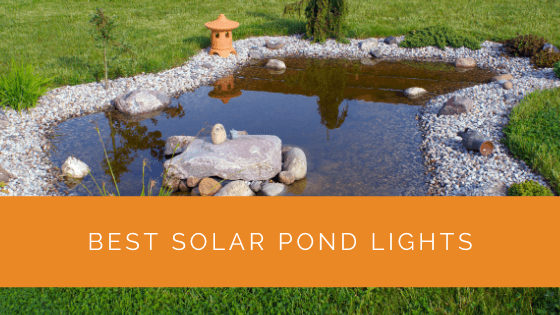
Solar pond lights transform your garden pond into a captivating focal point after dark, combining ambient lighting with the soothing sound and sight of water. Whether you’re looking to enhance an ornamental pond, create a wildlife-friendly garden feature, or simply add evening ambiance to your outdoor space, solar pond lights offer a low-cost, eco-friendly solution that requires no electricity and minimal maintenance. We’ve tested and reviewed the top solar pond lights available in the UK to help you find the perfect match for your garden.
From floating surface lights that drift gently across your pond to submersible underwater models that illuminate from below, solar pond lighting comes in a surprising variety of styles. The best options combine durability (IP68 waterproofing), decent brightness (at least 50 lumens for effective visibility), and a reliable solar panel that performs even on cloudy British days. This guide will help you understand the different types, compare top models, and choose a system that will add magic to your garden for years to come.
Our Top Picks
| Image | Name | |
|---|---|---|
| HONUTIGE Solar Floating Pond Lights Colour-changing floating spheres that cycle through seven colours automatically. Solar charged, no wiring, dual-use as floating or hanging lights. Sold in packs of two. | |
| Mokia Solar Floating Pond Light Compact globe-style floating light with multi-colour automatic cycling and up to 6-8 hours run time on a full charge. Automatic dusk-to-dawn activation. | |
| NATPOW Solar Submersible Pond Lights Three IP68 submersible spotlight heads with 18 LEDs total. Separate solar panel above waterline. Colour cycle or fixed single colour mode. | |
| VicTsing Floating Solar Pond Light Flat floating disc design with UV-resistant plastic housing. Warm white LED, auto dusk activation, 4-5 hours run time. Simple and durable. | |
| Smart Solar Coloured Solar Pond Light Submersible light with remote control for colour and brightness adjustment. Separate solar panel on cable for flexible positioning in shaded ponds. | |
| Esotec Solar Underwater Lights Three submersible white LED heads with AA battery backup for cloudy periods. Up to 8 hours run time. Established brand with a natural, clean light output. |
6 Best Solar Pond Lights
1. HONUTIGE Solar Floating Pond Lights
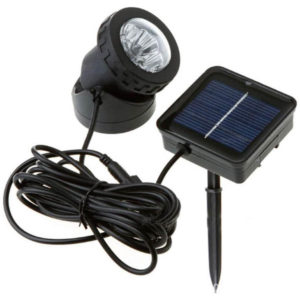
The HONUTIGE Solar Floating Pond Lights are a popular choice for UK pond owners who want instant visual impact without any installation work. These colour-changing spheres float freely on the water surface and shift automatically through seven colours, creating a vivid display that’s particularly effective on still summer evenings. They charge via an integrated solar panel during daylight hours and switch on automatically at dusk. No wiring, no manual switching.
The design is versatile beyond the pond itself. Three holes in the upper and lower sections let you hang the lights from garden structures if you’d prefer them out of the water, making them adaptable for patios, pergolas, or tree branches. Build quality is robust enough for UK weather, and the fully sealed waterproofing keeps them operational through rain. On a full summer day’s charge, expect five to six hours of light output.
These are sold in packs of two, which gives an immediate sense of scale on the pond surface. If you want something clean and simple that creates instant atmosphere without any effort, they’re excellent value.
Features
- 7-colour automatic cycling LED
- Solar charged, no wiring required
- Can float on water or hang from structures
- Fully sealed waterproofing
- Run time: 5-6 hours after full charge
- Sold in packs of 2
- Vivid colour effect on water
- Dual-use as hanging decoration or floating light
- Good value in multi-packs
- No fixed colour option
- Surface float only, not submersible
- Can drift to pond edges in wind
2. Mokia Solar Floating Pond Light
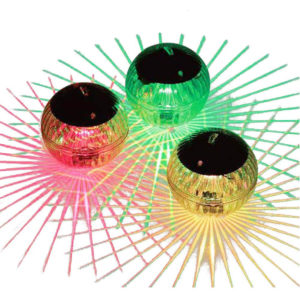
The Mokia Solar Floating Pond Light is a compact globe-style unit that sits attractively on the surface of a garden pond, pool, or water feature. Like the HONUTIGE above, it cycles through multiple colours automatically, but the Mokia’s construction is slightly more refined, with a smoother finish and more even light distribution across the sphere. It floats well and recharges reliably on a decent UK summer day, with six to eight hours of run time on a full charge.
One thing worth knowing upfront: the product listing shows multiple lights in its promotional images, but the pack contains just one unit. Buy accordingly if you’re hoping to create the full effect shown in the photos. Once you have the right quantity, these are genuinely attractive floating lights that work well as centrepieces in smaller ornamental ponds.
The built-in light sensor handles dusk activation without any manual switching. It’s a no-fuss purchase that delivers exactly what it promises, and the IP rating keeps it operational through UK rain.
Features
- Multi-colour LED, automatic cycling
- Solar panel integrated in sphere top
- Automatic dusk-to-dawn activation
- Suitable for ponds, pools, and fountains
- Run time: 6-8 hours on full charge
- Diameter: 10cm
- Elegant sphere design floats neatly
- Long run time on a summer charge
- Auto on/off is genuinely convenient
- Sold individually, not as a pack
- Listing images show multiple units misleadingly
- Colour can’t be fixed to a single hue
3. NATPOW Solar Submersible Pond Lights
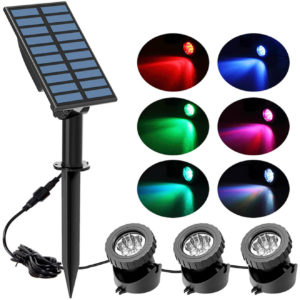
The NATPOW Solar Submersible Pond Lights offer a different approach to the floating sphere designs above. This set provides three separate lamp heads with 18 LEDs total, each fully submersible to IP68 standard. The standalone solar panel sits above the waterline to charge the built-in battery, while the spotlight-style heads can be repositioned easily to focus light on specific features: a fountain head, a cascade, or a group of aquatic plants.
Setup involves a long-press of the power switch to activate (hold for three seconds), which is a quirk worth knowing about before you assume the unit isn’t working. Once activated, the colour mode cycles automatically by default, or you can fix a single colour with a short press. The IP68 rating means the heads sit fully submerged without issues, and the stainless steel construction is solid for a product at this price point.
The 18 LEDs produce a noticeably stronger light output than floating sphere designs, making this a better option if you want to actually illuminate your pond rather than just decorate its surface.
Features
- 3 spotlight heads, 18 LEDs total
- IP68 fully submersible
- Separate solar panel above waterline
- Colour cycle or single colour mode
- Stainless steel construction
- Long-press 3 seconds to activate
- Stronger light output than floating alternatives
- IP68 fully submersible rating
- Flexible spotlight positioning
- Unusual 3-second long-press activation
- Solar panel cable can look untidy
- Colour change only by default
4. VicTsing Floating Solar Pond Light
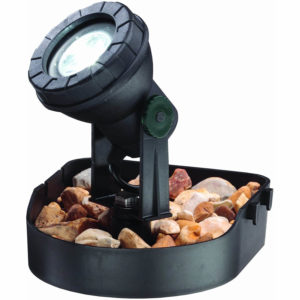
VicTsing is a well-known brand in the solar garden lighting space, and their floating pond light is a dependable, no-frills option that does exactly what’s expected of it. The design is a flat floating disc that sits level on the water surface, with the solar panel on top and the LED array facing downward into the water. It’s not as visually distinctive as the sphere designs, but it’s stable, simple to use, and produces a soft, warm glow across the pond surface.
The straightforward construction makes this one of the more durable picks on this list. UV-resistant plastic means the housing doesn’t yellow or degrade quickly, which is an important consideration given constant sun exposure. Run time of four to five hours is on the shorter side compared to the top picks above, but it covers most summer evenings from dusk through to a reasonable hour.
Features
- Flat floating disc design
- Solar panel integrated on top surface
- Warm white LED array
- UV-resistant plastic housing
- Run time: 4-5 hours after full charge
- Auto dusk activation
- Very stable flat disc design
- UV-resistant, durable build
- Easy to use, no setup required
- Plain aesthetic compared to sphere designs
- Shorter run time than top picks
- Warm white only, no colour options
5. Smart Solar Coloured Solar Pond Light
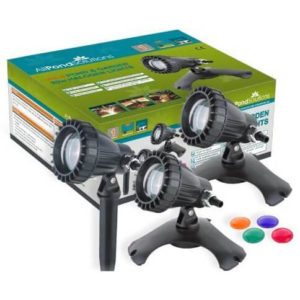
Smart Solar is a UK-based solar garden lighting brand with a solid reputation for reliable performance in British conditions. Their coloured solar pond light stands out from most of the competition by including a remote control, which is a genuinely useful feature. You can switch between colour modes, set a fixed hue, and adjust brightness without having to retrieve the light from the pond. This proves particularly handy when you want different effects for different occasions without getting your hands wet.
The submersible design works well in shallow ponds and water features, and the separate solar panel comes on a cable that allows you to position it in direct sunlight even if the pond sits in partial shade. In UK gardens where mature planting can cast dappled shade over the water, this flexible positioning is a real practical advantage. Run time is five to six hours on a full charge.
Features
- Remote control for colour and brightness
- Separate solar panel on cable
- Submersible design
- Multiple colour modes
- Run time: 5-6 hours
- Adjustable panel position for shaded ponds
- Remote control is a genuinely useful addition
- Flexible panel positioning for shaded ponds
- Reliable UK solar brand
- Remote adds cost over basic models
- Cable between panel and light can look untidy
- Must be placed on pond base, doesn’t float
6. Esotec Solar Underwater Lights
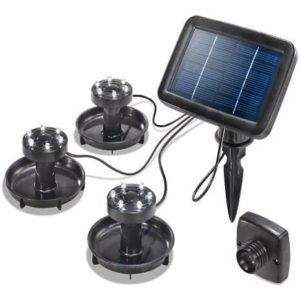
The Esotec Solar Underwater Lights are an established product from a brand that has been in the solar garden lighting space for many years. The kit includes three separate light heads that can be placed in or around the pond, giving more flexibility than a single-unit design. Each head is fully submersible, and the solar panel and internal battery manage charging independently of the mains. As a useful backup, the lights can also run on AA rechargeable batteries, which matters during extended overcast spells in a British winter.
The light output is white rather than colour-changing, which gives a cleaner, more natural look underwater. Buyers who prefer a calm, naturalistic lighting effect, particularly those with wildlife ponds or native planting, tend to prefer this over the colour-cycling of the floating sphere designs. Setup is simple, and the build quality reflects Esotec’s experience in the outdoor solar category.
Features
- 3 separate submersible light heads
- White LED output, no colour cycling
- AA battery backup option
- Solar panel with integrated battery
- In-pond or bankside placement
- Run time: up to 8 hours
- Three heads for wider pond coverage
- White light looks natural underwater
- AA battery backup for cloudy periods
- Reputable, established brand
- White only, no colour options
- Older design, more basic than newer models
Solar Pond Lights Buying Guide
Key Takeaways
- Solar pond lights divide into three genuinely different product types: floating lights (sit on the water surface, solar panel integrated into the unit, no wiring), submersible underwater lights (fully waterproof, cable-connected to an external solar panel, positioned below the waterline), and solar spotlights aimed at ponds from the bank (ground-stake or surface-mount, aimed at the water surface from outside); each creates a different visual effect and suits different pond sizes and designs
- IP rating requirements differ significantly between types: floating lights need IP67 (water resistant if briefly submerged by waves or rain) but the solar panel must stay above water; submersible lights need IP68 (continuous submersion rated, typically to 1-3 metres); bank-mounted spotlights can be IP65 if they stay dry, IP67 if they’ll face splash or heavy rain
- The solar panel placement problem is the primary practical challenge for pond lighting: ponds are surrounded by moisture, algae, plants, and overhanging trees — all of which shade the panel or degrade its surface; the panel must be positioned in clear sun, which often means it needs to be some distance from the water on a cable
- Fish safety matters if you have koi, goldfish, or wildlife ponds: very bright lights (500+ lumens) directly into the water can disorient fish, disrupt nocturnal feeding, and stress the pond ecosystem; warm white at low to medium brightness (50-200 lumens for a typical garden pond) is the sensible choice for wildlife-friendly lighting
- Battery capacity for pond lights must account for the reduced solar charging near water: humidity, reflected light, and proximity to vegetation and overhanging plants consistently reduces effective panel output near ponds; a 1,500mAh battery is a reasonable minimum; 2,000mAh+ for reliable autumn and spring operation
- Colour-changing RGB modes drain batteries significantly faster than steady warm white — a light running RGB cycling may achieve 3-4 hours of operation versus 6-8 hours of steady warm white from the same battery; for year-round reliability in UK autumn and spring, avoid RGB-only products and choose lights with a dedicated steady warm-white mode
- Genuine vs cosmetic solar panels are the most common quality failure in this category: many decorative floating pond lights include a tiny square of solar film that generates almost no charge and functions as a product visual rather than a functional charging component; always verify panel wattage (0.5W minimum, 1W+ for reliability) and battery capacity (explicitly stated in mAh)
Floating vs Submersible vs Bank-Mounted: Which Type for Your Pond
The most important buying decision for solar pond lights is the product type — because the right choice depends on what your pond looks like, how large it is, and what visual effect you want. The three types are not interchangeable.
Floating lights: Self-contained units that float on the water surface, typically spherical, disc, or lily-pad shaped. The solar panel is built into the top of the unit; the LED shines downward or radiates outward through a diffuser. Floating lights move with the water, which creates natural-looking gentle movement. They’re the simplest option — no cabling, no installation, just place them on the water. They work well for decorative garden ponds where the effect is ambient glow rather than directional illumination. The limitation: they can’t light specific features below the waterline, and they require open water surface without too much planting.
Submersible underwater lights: Sealed LED units with an external cable connecting to a solar panel positioned on the bank or on a stake near the pond. The light unit is placed on the pond floor or weighted to a specific position. Creates a genuine underwater glow visible through clear water — excellent for koi ponds, fountains, or water features where the lighting effect is meant to reveal what’s in the water. Requires cable routing from the panel to the water edge, and the panel must be positioned in sun. More installation effort but a dramatically better visual result for clear-water ponds.
Bank-mounted spotlights: Ground-stake or surface-mount solar spotlights positioned beside the pond, aimed at the water surface or surrounding planting. The solar panel is typically on a short cable from the spotlight head. Creates a reflection effect on the water surface and illuminates pond-edge planting and stones. Good for wildlife ponds or natural-style ponds where underwater lighting would be inappropriate. Also useful for ponds with dense planting or murky water where underwater lights wouldn’t be seen.
IP Ratings Explained for Pond Use
Understanding IP ratings properly prevents buying a product that fails within one season. The ratings mean different things for different parts of the product.
IP65: Dust-tight and protected against water jets. Adequate for bank-mounted spotlights that will face rain and splash but not direct submersion. Not adequate for anything that sits on the water surface or gets knocked in occasionally.
IP67: Fully sealed, tested to withstand submersion in up to 1 metre of water for 30 minutes. The correct minimum for floating pond lights, where rain, waves, and occasional submersion are normal operating conditions. Also the minimum for submersible lights used in shallow ponds (under 0.5m depth).
IP68: Rated for continuous submersion at specified depth (typically 1-3 metres for consumer products). Required for underwater pond lights permanently positioned below the waterline. The product specification should state the depth rating — not just “IP68” but “IP68 rated to 1.5m” or similar.
Check the IP rating applies to the entire product, including cable entry points and the junction between cable and light body. These are the most common failure points in cheap pond lights, where the main body is sealed but the cable gland isn’t properly rated.
Genuine vs Cosmetic Solar Panels: How to Tell the Difference
This category has more cosmetic-panel products than almost any other solar light category. A cosmetic solar panel looks like a solar panel but generates almost no useful charge — it’s there to make the product look solar-powered rather than to actually power it.
Signs of a cosmetic or undersized panel: no wattage figure stated anywhere in the listing (a real panel will have a rated wattage), very small panel area relative to the light (a postage-stamp-sized panel on a large floating globe), extremely vague product descriptions that emphasise the product’s decorative appearance without mentioning charging specifications, no mAh battery capacity stated.
Signs of a genuinely functional panel: panel wattage stated (0.5W minimum, 1W+ better), battery capacity stated in mAh (1,000mAh minimum, 1,500mAh+ better), specific runtime claims tied to charging conditions (e.g. “6-8 hours after 6-8 hours of direct sunlight”).
For floating lights with integrated panels, the panel must have unobstructed sky access from its position on the water. Ponds near trees, walls, or large garden structures may have sky access from only certain compass directions — consider whether a floating light can orient itself to face the sun during the day, or whether the fixed position of a bank panel gives more predictable charging.
Fish and Wildlife Safety
If your pond has fish — koi, goldfish, or native species — or if it’s a wildlife pond that you want to attract frogs, newts, and invertebrates to, the lighting choices have implications beyond aesthetics.
Very bright lights (500+ lumens) directed continuously into the water disrupt the day-night cycle fish rely on for feeding and resting behaviour. Koi in particular can show signs of stress from sustained bright night illumination — reduced feeding, erratic swimming, seeking the darkest areas. For fish ponds, use warm white lights (2700-3000K) at low to medium brightness (50-200 lumens for a standard 2m × 3m garden pond), and consider lights with a timer function so they switch off after midnight rather than operating dusk-to-dawn.
For wildlife ponds, bright lighting at the water surface directly disrupts nocturnal insect activity, which in turn affects amphibians and bats that depend on pond-edge insects. Bank-mounted spotlights aimed away from the water centre, or very dim floating accents rather than bright underwater lighting, are appropriate for wildlife-friendly installations.
Quick Buying Decision Guide
| Your Situation | Best Type | IP Rating Needed | Key Specification | Fish Safety | Budget |
|---|---|---|---|---|---|
| Decorative garden pond, ambient effect only | Floating lights (2-4 units) | IP67 | 1W+ panel, 1500mAh+, warm white mode, timer | 50-150lm for fish ponds | £20-50 for set |
| Koi pond, want to show fish at night | Submersible underwater lights | IP68 | Cable-panel design, 1W+ panel, 1500mAh+, warm white 2700K | Keep below 200lm, use timer | £35-70 |
| Wildlife pond, nature-friendly approach | Bank-mounted spotlights on pond edge | IP65 | Aim at plants not water, warm white, low output 20-50lm | No direct water lighting | £20-45 |
| Fountain or water feature with display | Submersible colour lights | IP68 | RGB + warm white mode, timer off after midnight, 2000mAh+ | Use steady mode not RGB cycling | £30-65 |
| Large pond (over 4m), multiple effect zones | Mix of floating + bank spotlights | IP67/IP65 | Same-brand matching for consistent colour temperature, 5m cable panels for bank units | Keep total output modest | £50-100 |
Case Study: Transforming an Ornamental Pond in Derbyshire
Background
A property owner in the Peak District had installed an ornamental pond five years earlier as a garden feature. Whilst the pond looked attractive during daytime, once the sun set, the pond disappeared into darkness. The garden was rendered largely unusable after dusk, even during the long summer evenings.
Project Overview
The homeowner wanted to extend evening enjoyment of the pond and surrounding garden without major construction work or electrical installation. They researched solar pond lighting and decided to combine floating lights with submersible lights to create varied illumination effects.
Implementation
The project was remarkably simple. Two floating colour-changing solar lights were placed on the pond surface, requiring literally no installation beyond dropping them in. Four submersible solar lights were positioned at various depths around the pond perimeter, tethered to prevent drift. A single solar edge light was positioned on a nearby rock ledge to illuminate the stone coping and water surface.
Total setup time was approximately fifteen minutes. The lights charged during the day and activated automatically at dusk.
Results
The transformation was dramatic. The pond, previously a dark void at evening, became the focal point of the garden. Floating lights drifted gently, creating moving patterns on the water. Submersible lights cast eerie blue and green illumination from below. The edge light highlighted the stone coping with cool white light, creating depth and dimension.
The property owner reported that garden entertaining extended well into the evening. The atmosphere was enhanced significantly. Aquatic wildlife continued to thrive, suggesting that the moderate light levels weren’t disruptive. The entire system required zero maintenance and no electricity bills.
Expert Insights From Our Solar Panel Installers About Solar Pond Lights
One of our senior solar installers with over twelve years of experience in renewable energy systems shared this perspective. “Solar pond lighting demonstrates that renewable energy solutions don’t need to be large or complex. These simple systems tap into free solar power and transform outdoor spaces. I recommend them to clients regularly, particularly those with wildlife ponds. The key is choosing adequate battery capacity and positioning the solar panel where it gets real sunlight, not under trees or heavy shade. British gardeners are often surprised how effectively these lights work, even through our cloudy seasons.”
Frequently Asked Questions
Are solar pond lights safe for fish?
Low-voltage submersible solar pond lights are generally safe for fish when used as intended. The lights run on 3.7V lithium batteries and produce no meaningful heat in the water. That said, avoid placing lights directly in spawning areas or where young fry might gather around the light source. Bright colour-changing lights can disturb fish if left on all night. Most pond keepers prefer a gentle white or single warm colour and use the auto-off timer to limit night-time operation to a few hours. Check that any submersible light you buy is rated IP68, not just IP65, as IP68 confirms genuine submersion tolerance.
What is the difference between IP65 and IP68 for pond lights?
IP65 means the unit is dust-tight and protected against water jets from any direction, but it is not rated for submersion. IP68 means the unit is rated for continuous submersion, typically to a stated depth (commonly 1 metre for garden pond lights). For floating pond lights that sit on the surface, IP65 is adequate. For lights you intend to place on the pond floor or submerge to light a feature from below, IP68 is non-negotiable. Always check the specific depth rating on IP68 products, as most garden pond lights are rated to 0.5 to 1 metre, sufficient for typical ornamental ponds but not deeper water features.
How long do solar pond lights stay on each night?
After a full charge on a clear UK day, most solar pond lights run for 6 to 8 hours. Products with a 1,000mAh or larger battery maintain this consistently through summer. In winter, shorter days and overcast skies reduce charging, bringing run time down to 3 to 5 hours. Using timer mode rather than dusk-to-dawn helps extend battery life across the season. Setting the light to run for 4 hours rather than all night uses the available charge more efficiently and means the pond still looks illuminated during the evening hours most people are actually in the garden or looking out the window.
Can I use solar pond lights in a shaded garden?
You can, but performance suffers. Solar pond lights rely on their integrated panel to charge during daylight. A panel in full or partial shade for most of the day will not generate enough energy for a useful run time each night. If your pond is in a shaded spot, look for products with a longer panel cable (1 to 2 metres or more), allowing you to position the panel on a sunny ledge or post nearby while the light sits in the water. Some floating pond lights have the panel built into the float body, which means panel positioning is fixed and these are best suited to ponds that receive at least 4 hours of direct sun daily.
Do solar pond lights work in winter in the UK?
They work, but at reduced performance. UK winters are overcast and the days are short, so solar panels generate a fraction of their summer output between November and February. Floating lights may also be taken out of smaller ponds during hard frosts to protect the battery and electronics. Most submersible and spotlight designs are robust enough to stay in through a typical UK winter. If you leave lights in through winter, a lithium battery handles repeated freeze-thaw cycles better than older NiMH chemistry.
What colour solar pond lights are best?
For most garden ponds, a single colour such as warm white, cool white, or a fixed soft blue creates the cleanest, most elegant effect. Warm white (2,700-3,000K) gives the water a natural golden glow that suits wildlife and planting ponds well. Cool white or daylight (6,000K) is crisper and suits modern, formal pond designs. Colour-changing lights look impressive as a demonstration but many pond owners find the cycling colours distracting over time. If you buy RGB, look for a model that also has a single-colour steady mode so you can use it subtly day-to-day and switch to the colour show for special occasions.
How many solar pond lights do I need for my pond?
A general rule is one floating or spotlight-style light for every square metre of pond surface, though this depends on the effect you want. A small 1m x 2m ornamental pond looks good with two or three floating lights placed at different points. For a larger wildlife pond, four to six uplighter spotlights around the perimeter are more effective than floating lights, as they illuminate marginal plants and the pond edge without cluttering the surface. Avoid over-lighting — too many lights on a small pond looks busy and can disturb wildlife. Fewer, well-placed lights create a more natural and attractive result.
Can I use solar pond lights in a garden water feature rather than a pond?
Yes, solar pond lights work well in water features, birdbaths, and decorative bowls as well as traditional ponds. Floating lights are particularly good in shallow water features where submersible lights might not sit correctly. For a millstone, slate waterfall, or bowl fountain, a small floating light or a single IP68 submersible adds dramatic night-time effect without any wiring. The main consideration is the same as for ponds: the solar panel needs to be positioned somewhere it will receive reasonable daylight, which in a shaded corner garden feature may mean a separate panel on a longer cable rather than a self-contained floating unit.
Summing Up
Solar pond lights offer a simple, cost-effective way to extend the usefulness of your garden into the evening hours. Whether you choose a floating light for simplicity, a submersible light for dramatic underwater effects, or an edge light for shallow water features, there’s a solar solution that matches your needs and budget. The best option depends on your pond size, sun exposure, desired brightness, and whether you want colour effects or natural white light.
For UK gardeners, solar pond lighting makes particular sense. The technology is proven, maintenance is minimal, running costs are literally zero, and you avoid the expense and hassle of electrical installation. Combined with the environmental benefits of renewable energy, solar pond lights are a genuinely smart choice for modern outdoor living.
Start by assessing your pond’s depth, sun exposure, and intended use. A floating light suits most situations and costs least. If you want dramatic underwater effects, choose a submersible model. If your pond is shallow or you want maximum brightness, an edge light delivers. Whatever you choose, you’ll be delighted by the transformation solar lighting brings to your evening garden.
Updated