
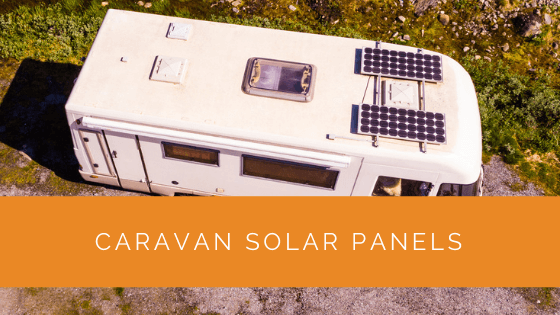
Adding solar panels to a caravan, motorhome, or campervan transforms how you use it. Free, silent electricity from the sun means longer off-grid stays, no hook-up fees, and appliances running without the noise and smell of a generator. For touring the UK and beyond, a well-designed solar setup makes a real practical difference, and it’s far more accessible than most people expect.
This guide covers everything you need to design a caravan solar system: panel sizing, 12V vs 24V systems, MPPT charge controllers, the case for LiFePO4 batteries, and the wiring safety rules that apply in the UK.
Contents
- 1 Key Takeaways
- 2 How Much Solar Power Do You Need?
- 3 12V vs 24V Systems
- 4 MPPT vs PWM Charge Controllers
- 5 Battery Options: Lead-Acid vs LiFePO4
- 6 Wiring Safety
- 7 Solar Charging in UK Conditions
- 8 Expert Insights From Our Solar Panel Installers
- 9 Frequently Asked Questions
- 9.1 How many solar panels do I need for a caravan?
- 9.2 Do caravan solar panels work in winter?
- 9.3 What is MPPT and why does it matter?
- 9.4 Can I fit solar panels to a caravan myself?
- 9.5 What is a DC-DC charger and do I need one?
- 9.6 Are flexible solar panels good for caravans?
- 9.7 How do I prevent my caravan solar panels from being stolen?
- 9.8 What battery capacity do I need for caravan solar?
- 10 Summing Up
Key Takeaways
- A 100W to 200W solar panel is sufficient for basic caravan power (lighting, phone charging, 12V fridge) in summer UK conditions.
- 12V systems are standard for caravans and campervans up to around 400Ah of battery capacity; 24V systems suit larger motorhomes with heavier loads.
- MPPT (Maximum Power Point Tracking) charge controllers are significantly more efficient than PWM controllers and are strongly recommended for any system above 80W.
- LiFePO4 (lithium iron phosphate) batteries offer 2,000–3,500 charge cycles, weigh roughly half as much as equivalent lead-acid batteries, and can be discharged to 90%+ without damage.
- All wiring must be appropriately fused and sized for the current carried, undersized cable is a fire risk, not just an efficiency issue.
- UK weather means real-world solar output is typically 40–70% of panel rated wattage on average summer days, factor this into sizing calculations.
How Much Solar Power Do You Need?
The starting point for any caravan solar design is understanding your actual power consumption. List every 12V appliance or device you plan to use, its wattage (or ampere draw), and how many hours per day you’ll use it.
| Appliance | Typical Draw | Hours/day | Daily Consumption |
|---|---|---|---|
| 12V compressor fridge (small) | 40W average | 24 | 960Wh |
| LED lighting (4 strips) | 20W | 4 | 80Wh |
| Phone charging ×2 | 20W | 3 | 60Wh |
| Laptop | 45W | 3 | 135Wh |
| Water pump | 60W | 0.5 | 30Wh |
| Total daily estimate | 1,265Wh |
In this example, you need to generate at least 1,265Wh per day. In UK summer conditions, a solar panel generates roughly 4 to 5 effective peak sun hours per day, so you’d need approximately 250 to 315W of panels to reliably cover this consumption (1,265Wh ÷ 4 hours = 316W). Adding a 20% margin for controller and wiring losses brings you to around 350 to 400W of panels for comfortable coverage.
12V vs 24V Systems
Most UK caravans and smaller motorhomes use a 12V leisure battery system, and for typical loads this is the simplest and most practical choice. Nearly all 12V caravan appliances, fridges, pumps, fans, lighting, are designed to run directly from a 12V battery without an inverter.
24V systems are worth considering for larger motorhomes or campervans with higher power demands. A 24V system runs at half the current for the same power, which means thinner cable can be used safely and resistive losses are lower. If you’re planning 600W or more of solar and 400Ah+ of battery, the cable savings and efficiency gains of a 24V system start to justify the additional complexity of 24V-to-12V step-down converters for appliances.
MPPT vs PWM Charge Controllers
The charge controller regulates the flow of electricity from your solar panels to your batteries. There are two main types: PWM (Pulse Width Modulation) and MPPT (Maximum Power Point Tracking).
PWM controllers work by simply switching the panel connection on and off rapidly to regulate voltage. They’re cheap and reliable but waste a significant portion of available solar energy, particularly when panel voltage is significantly higher than battery voltage, as is common in colder UK conditions.
MPPT controllers continuously calculate the optimal operating point of the panel to extract maximum power, then step the voltage down efficiently to match the battery. The efficiency gain is typically 15 to 30% in real-world UK conditions compared to PWM. For a 200W system, that’s potentially 40 to 60W of additional usable power per sunny hour, meaningful when you’re off-grid for days at a time.
For any system above 80W, MPPT is strongly recommended. The price premium over PWM has reduced significantly as the technology has matured, and reputable MPPT controllers from Victron Energy, Renogy, and EPever are available at reasonable cost.
Battery Options: Lead-Acid vs LiFePO4
The choice of battery technology has the single biggest impact on the practical usefulness of your caravan solar system. Flooded lead-acid and AGM batteries have been the traditional choice; LiFePO4 has become the clear preference for serious off-gridders.
| Feature | AGM Lead-Acid | LiFePO4 |
|---|---|---|
| Usable capacity | 50% of rated capacity | 80–90% of rated capacity |
| Cycle life | 300–500 cycles (to 50% DoD) | 2,000–3,500 cycles (to 80% DoD) |
| Weight (100Ah) | ~27kg | ~12–14kg |
| Charge speed | Slow (10–20% of capacity/hr) | Fast (up to 100% of capacity/hr) |
| Temperature sensitivity | Reduced performance below 0°C | Good performance to -20°C |
| Cost (100Ah) | £80–£150 | £250–£500 |
For caravan use, the weight saving alone makes LiFePO4 compelling, caravans have strict payload limits, and switching from 200Ah AGM (around 54kg) to 200Ah LiFePO4 (around 26kg) frees up nearly 30kg of payload. The longer cycle life means a LiFePO4 battery will last 5 to 10 times longer than an AGM under regular off-grid use. The higher purchase price is typically recouped well within the battery’s lifespan.
Wiring Safety
12V DC systems carry much higher currents than 230V AC systems for the same power. A 240W load at 230V draws about 1A; the same load at 12V draws 20A. This is why cable sizing is critical: undersized cables overheat, which is a genuine fire risk, not merely an efficiency problem.
The general rule is to calculate the maximum current in each cable run and select cable with a current rating at least 20% above that figure, accounting for the length of the run (longer runs need larger cable to limit voltage drop). Use marine-grade tinned copper cable for all solar installations, standard automotive cable lacks the corrosion resistance and flexibility for a long-term installation.
Every circuit must be fused as close to the positive battery terminal as practical. The fuse rating protects the cable, not the appliance, so it must match the cable’s current rating, not the appliance’s draw. All connections should be properly terminated with marine-grade crimp terminals; twisted-wire-and-tape connections are fire risks in a vehicle environment.
The solar panel to controller wiring should be fused at the panel end (a DC inline fuse or MC4-compatible fuse holder), and the controller to battery should be separately fused. Victron MPPT controllers have integrated load output protection; standalone fuses are required in the battery cable where the controller doesn’t provide this.
Solar Charging in UK Conditions
UK summer provides a useful solar resource for caravan touring. England and Wales receive approximately 1,200 to 1,400 peak sun hours annually at an optimal angle, with the majority occurring between May and August. A 200W panel in southern England generates roughly 800 to 1,000Wh on a good summer day and perhaps 200 to 400Wh on an overcast one.
For Scotland and the north of England, the resource is lower, perhaps 1,000 to 1,100 peak sun hours annually. This is still very usable for summer touring, but winter off-grid use in the UK is genuinely challenging even with a large solar array. Many caravan owners supplement solar with a DC-DC charger that charges the leisure battery from the tow vehicle’s alternator while driving, a useful and simple supplement that requires no solar input at all.
Expert Insights From Our Solar Panel Installers
One of our senior solar panel installers with over 14 years of experience in domestic and mobile solar commented: “The biggest mistake in caravan solar builds is undersizing the battery. People spec the panels correctly, buy a decent MPPT controller, and then fit 100Ah of AGM that’s only usable down to 50%, so effectively 50Ah. That’s not enough to get through a cloudy day and night off-grid. Go LiFePO4 if at all possible, and size for at least two days of consumption without solar. The weight saving is a bonus on top of the better capacity.”
Frequently Asked Questions
How many solar panels do I need for a caravan?
For light use (lighting, phone charging, small fan) in summer, a single 100W panel is a reasonable starting point. For running a 12V compressor fridge, laptop, and other appliances off-grid for multiple days, 200 to 400W of panels is more appropriate. Calculate your daily consumption in watt-hours and divide by 4 (the approximate effective peak sun hours per summer day in the UK) to determine minimum panel wattage.
Do caravan solar panels work in winter?
Yes, but with significantly reduced output. UK winter solar irradiance is very low, December effective peak sun hours in the south of England average around 1 hour per day. A 200W panel might generate only 100 to 200Wh on a typical winter day. For winter off-grid use, supplement solar with alternator charging via a DC-DC charger and carry a substantial battery bank.
What is MPPT and why does it matter?
MPPT (Maximum Power Point Tracking) is a charge controller technology that continuously optimises the operating voltage of your solar panels to extract maximum power. In UK conditions, MPPT typically extracts 15 to 30% more energy from the same panels compared to cheaper PWM controllers. For any caravan solar system above 80W, MPPT is strongly recommended.
Can I fit solar panels to a caravan myself?
Fitting the panels and 12V wiring is within the capability of a competent DIYer with basic electrical knowledge. However, any work on the 230V mains hookup side of the caravan, inverter installation, hookup socket modification, must be carried out by a qualified electrician under UK wiring regulations. The 12V solar circuit is separate from the 230V system and can be installed independently without Part P compliance, but good wiring practice (correct cable sizing, proper fusing, marine-grade components) is essential for safety.
What is a DC-DC charger and do I need one?
A DC-DC charger (also called a B2B charger) charges your leisure battery from your vehicle’s alternator while you’re driving. Modern vehicles with smart alternators and battery management systems don’t allow a simple split charge relay to work effectively, the DC-DC charger solves this by presenting a controlled load to the alternator. For UK touring where you may drive between sites, a DC-DC charger (typically 30–40A) significantly supplements solar charging and is a worthwhile addition to any system.
Are flexible solar panels good for caravans?
Flexible panels are popular for low-profile installations where a rigid frame would be unsightly or impractical. Their main disadvantages are shorter lifespan (typically 10–15 years vs 25+ for rigid panels), higher cost per watt, and potential overheating if installed directly on a flat roof surface without an air gap. For a permanent installation where longevity matters, rigid panels with a small standoff are generally preferable. Flexible panels suit campervans with curved roofs where rigid panels can’t be fitted flat.
How do I prevent my caravan solar panels from being stolen?
Rigid panels mounted with tamper-resistant fixings (security bolts requiring specialist bits) are significantly more difficult to steal quickly than panels with standard fixings. Cable locking devices that anchor the MC4 connectors are also available. For campervans parked in urban areas, parking in well-lit, overlooked locations overnight reduces risk. Flexible panels bonded directly to the roof with adhesive are effectively impossible to remove without damaging them, which makes them unattractive to opportunistic thieves.
What battery capacity do I need for caravan solar?
Size your battery for at least two days of consumption without solar input, this covers one fully overcast day with overnight use. For a daily consumption of 1,000Wh and LiFePO4 batteries (usable to 80% depth of discharge), you need 1,000Wh × 2 days ÷ 0.8 = 2,500Wh (approximately 208Ah at 12V). With AGM batteries (50% usable), the same calculation gives 400Ah, double the weight and cost for equivalent usable storage.
Summing Up
A well-designed caravan solar system transforms how you tour. LiFePO4 batteries, an MPPT controller, and appropriately sized panels give you genuine off-grid capability, lighter, quieter, and cheaper to run than a generator, with no fuel costs and no noise complaints from neighbouring pitches. Size generously, wire correctly, and the system will serve you for many seasons of UK and European touring with minimal maintenance. If you’re also thinking about solar for your home, our MCS-certified team can provide a free quote for a rooftop installation that earns income via the Smart Export Guarantee all year round.
Updated