
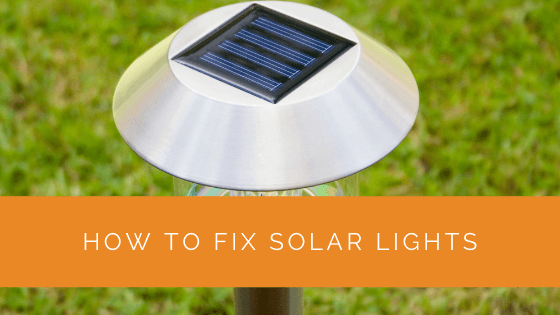
Most solar lights that stop working can be fixed in under ten minutes without any tools. The most common causes are dirty panels, dead batteries, a switch left in the wrong position, or a light placed somewhere it can’t get enough sun. Work through those four things first before assuming the light is broken.
This guide covers every fix worth trying, from the simplest checks to more involved repairs, along with what to do when a light genuinely can’t be saved. The advice applies to all types of solar garden lights available in the UK, including path lights, stake lights, wall lights, fairy lights, and decorative ornaments.
Key Takeaways
- Dirty solar panels are the most common cause of solar lights failing, and cleaning them often fixes the problem instantly
- Batteries in solar lights typically last 1 to 2 years before they need replacing
- A light that won’t turn on at night should be tested by covering the panel during daylight to confirm whether the sensor is working
- Lights placed in partial shade, or near other light sources, often malfunction even with fully charged batteries
- Water ingress is a slow killer: lights with cracked or poorly sealed casings fail over time, especially in wet UK winters
- Many solar lights can be fully restored for under £5 by replacing the rechargeable battery
1. Clean the Solar Panel
A clogged or dirty solar panel is the most common reason solar lights underperform or stop working entirely. Even a thin layer of dust, bird droppings, or algae can cut charging efficiency by 30 to 50 per cent. In the UK, where overcast days are already frequent, that reduction can push a light from “charges adequately” to “barely charges at all”.
Wipe the panel with a damp cloth. Use clean water with no detergent. Soap and cleaning products leave a residue that attracts more grime and, in the case of strong chemicals, can damage the protective coating on the panel surface. A soft, damp cloth is all you need. If there’s stubborn grime or algae, a very mild solution of water and white vinegar works well.
After cleaning, place the light in direct sunlight for a full day and check whether it turns on that evening. In most cases, a clean panel restores full function immediately.
2. Replace the Batteries
If cleaning the panel doesn’t help, the batteries are the next thing to check. Solar lights use rechargeable batteries, typically NiMH (nickel-metal hydride) AAs or AAAs, and these degrade over time. After 12 to 18 months of daily charge and discharge cycles, most budget batteries start to lose their capacity noticeably. After two years, they often can’t hold enough charge to power the light through a full night.
Signs the batteries need replacing: the light turns on but fades within an hour or two, the light barely glows even after a sunny day, or it simply doesn’t turn on at all despite a clean panel and good sunlight.
To replace them: open the battery compartment (usually on the underside of the panel cap or the body of the light), note the battery size and type, and replace with fresh NiMH rechargeables of the same specification. Standard NiMH AAs rated at 600 to 1000mAh are fine for most garden lights. Avoid alkaline batteries. They’re not designed for the daily charge-discharge cycle and will fail quickly or leak, potentially damaging the light.
Fresh batteries cost less than £5 for a pack and will restore most older solar lights to full performance. It’s the single most cost-effective repair you can make.
3. Check the Switch
This sounds obvious, but it’s genuinely one of the most common causes of a solar light that won’t turn on. Most solar lights have a physical on/off switch. It can be knocked off accidentally during positioning, cleaning, or by children or pets. On path stakes, the switch is usually under the panel cap. On wall lights, it might be inside the battery compartment or on the underside of the unit.
Make sure the switch is firmly set to “on”. Then cover the solar panel with your hand in daylight. The light should turn on within a few seconds. If it does, the switch and sensor are both working correctly, and any issues are related to charging (panel or batteries). If it doesn’t turn on when covered, the sensor or internal circuitry may have failed.
4. Move the Light to a Better Position
Solar panels need direct sunlight to charge effectively. In the UK, that means south-facing positioning in a spot that gets unobstructed sun for at least six hours a day during summer. Spots that look sunny in the morning but get shaded by a fence or tree by midday often don’t provide enough charging time.
Common positioning mistakes:
- Placing lights under trees or near hedges where dappled shade reduces panel output significantly
- Pointing the panel north or in a direction that gets little direct sun
- Placing lights near outdoor security lights, patio lights, or lit windows: these fool the sensor into thinking it’s still daytime, so the light never switches on at night
- Positioning lights on a north-facing wall where they receive almost no direct sun in winter
If your lights worked well when first installed but have gradually become less reliable, check whether a tree or bush has grown and is now casting shade where there wasn’t any before. Repositioning the light to a better spot often fixes the problem completely without any other intervention.
5. Check for Water Damage
Solar lights are designed for outdoor use, but IP ratings vary widely between models. A light rated IP44 is splash-resistant but not suitable for heavy rain. One rated IP65 or higher can handle full rain exposure. Cheaper lights often have inadequate sealing, and repeated exposure to heavy UK rainfall eventually allows moisture inside.
Signs of water ingress: condensation visible inside the clear lens, rust or corrosion on the battery terminals, flickering lights, or a light that fails after heavy rain but works again once it’s dried out for a few days.
If you suspect water damage: remove the batteries and any covers, and leave the unit to dry in a warm, airy place for 48 to 72 hours. An airing cupboard works well. Once thoroughly dry, replace the batteries and test the light. If it works again, apply a thin bead of silicone sealant around any gaps in the casing to prevent future ingress.
If the battery terminals have corroded, clean them carefully with a cotton bud dipped in a small amount of white vinegar or bicarbonate of soda paste, then dry thoroughly. Significant corrosion can cause poor electrical contact even if the battery has charge.
6. Give the Battery a Full Reset Charge
A battery that has been completely drained and left that way for an extended period can enter a protection state where it won’t accept a normal charge. This happens to lights that have been left in storage, or to lights that ran flat in winter and weren’t attended to for months.
To reset: switch the light off completely and place it in a spot with full direct sunlight for 72 hours. Don’t turn it on during this period. Let the panel charge the battery continuously. After 72 hours, switch the light on and test it after dark. Most batteries recover sufficiently for normal use after a full reset charge.
If the battery still won’t hold a charge after a 72-hour reset, replace it. A battery that’s in a protection state and won’t respond to extended charging has almost certainly reached the end of its life.
7. Check the Light Sensor
Solar lights use a light-dependent resistor (LDR) to detect darkness and trigger the LED to switch on. If the sensor is faulty, lights can behave erratically: turning on during the day, failing to turn on at night, or flickering unexpectedly.
Test the sensor by covering the panel with your hand during daylight. The light should turn on within 3 to 5 seconds. If it does, the sensor is working correctly. If it doesn’t respond, or responds very slowly, the sensor may be dirty, positioned incorrectly, or failing.
A dirty sensor can be cleaned with a damp cloth in the same way as the panel. A sensor that’s been knocked out of position may simply need the light repositioned. A genuinely failed sensor is harder to repair at home. Some manufacturers sell replacement sensor units, but it’s often more practical to replace the light entirely if the sensor has failed, particularly on budget models.
8. Inspect Cables and Connections
If you have string solar lights or fairy lights with multiple bulbs on a cable, a broken or damaged cable is a common cause of failure. Animals (particularly squirrels and rats) sometimes chew through light cables, and weathering can cause cracks in the cable insulation over time.
Check the full length of the cable for any visible damage. A damaged section can sometimes be repaired temporarily with self-amalgamating tape or electrical tape, though a clean repair with a proper cable connector is better. If the cable damage is extensive, or if corrosion has entered the damaged section, contact the manufacturer for a replacement cable or consider replacing the string.
For any solar light with a separate panel and body connected by a cable, check that the connector between the two is properly seated. Connectors can loosen over time, particularly in lights that are moved or repositioned regularly.
When to Replace Rather Than Repair
Some solar lights aren’t worth repairing. If the plastic casing has cracked or warped significantly, moisture will always find a way in. If the battery terminals have corroded beyond cleaning, or if the solar panel itself has yellowed or cracked (which reduces output dramatically), replacement is the better option.
The practical lifespan of most budget solar garden lights is two to four years. Higher-quality lights from brands with good IP ratings and better battery specifications can last five years or more with occasional maintenance. If your lights are approaching or beyond that range and developing multiple issues, it’s worth putting the repair time into researching better replacements rather than nursing aging lights through another season.

Case Study: Restoring a Set of Garden Path Lights After Two Winters
Background
A homeowner in the East Midlands had a set of eight solar path lights installed along a garden border. After two winters, five of the eight were no longer turning on reliably. The lights had never been maintained since installation.
Project Overview
The goal was to get as many lights working as possible without buying replacements. The lights were mid-range models with AA NiMH batteries and IP44 water resistance.
Implementation
Each light was removed and inspected. All eight panels were cleaned with a damp cloth. The battery terminals on three lights showed visible corrosion, which was cleaned with a cotton bud and bicarbonate of soda paste, then dried thoroughly. All eight lights had their batteries replaced with fresh 600mAh NiMH AAs at a cost of around £8 total. The lights were left in full sun for 48 hours before being tested. Two lights still failed to turn on after battery replacement. On inspection, one had a cracked lens with significant internal moisture damage. The second had a failed sensor that didn’t respond even when covered in direct sun.
Results
Six of the eight lights were fully restored and working reliably. The two failed lights were replaced. Total cost of the repair was under £15, compared to roughly £60 to replace the full set. The restored lights have since worked reliably through a third winter with no further issues.
Expert Insights From Our Solar Panel Installers About Solar Lights
We asked one of our solar installation team with over a decade of experience working with solar products in the UK to share the most common mistakes they see with garden solar lights.
“The single biggest mistake is location. People buy solar lights, put them in a shaded corner of the garden because that’s where they want the light to be, then wonder why they’re not working properly,” they explained. “The panel needs sun, not the light itself. In a UK garden with limited direct sun, you can sometimes run an extension cable between the panel and the light body to get the panel into a sunnier spot while keeping the light where you want it. Not many people know that’s an option.”
“The second thing is batteries. Most people have never changed the batteries in their solar lights. They’re not like torch batteries. They degrade gradually over 12 to 18 months, and the light gets dimmer and dimmer so slowly you don’t really notice. Then one day it just stops working and it seems sudden. Replace them every two seasons as a matter of routine and you’ll avoid most of the problems people come to us with.”
Frequently Asked Questions
Why did my solar lights stop working suddenly?
The most common sudden causes are a battery that has finally failed after gradual degradation, water getting into the casing, or the light being accidentally switched off. Start by checking the switch, cleaning the panel, and testing with fresh batteries. A light that worked fine and then stopped almost overnight is usually a battery issue.
How often should I replace solar light batteries?
Every 12 to 24 months as a routine, depending on quality. Budget lights with lower-capacity batteries typically need replacing annually. Mid-range lights with good NiMH batteries can last two years. Replacing batteries before they fail completely is far easier than diagnosing a light that’s gradually getting dimmer.
Can solar lights be repaired, or should I just buy new ones?
Most solar lights can be repaired with a battery replacement and a panel clean, which costs under £5 and takes ten minutes. If the casing is cracked, the panel has physically degraded, or the battery terminals are badly corroded, replacement makes more sense. Lights older than four or five years that keep developing problems are usually worth replacing rather than continuing to repair.
Why do my solar lights turn on during the day?
The most common causes are a faulty or dirty light sensor, or a nearby artificial light source (street light, security light, window glow) that’s confusing the sensor into thinking it’s daytime when it’s not, or vice versa. Clean the sensor first. If the light is near another light source at night, try moving it. If it still misbehaves after cleaning and repositioning, the sensor may need replacing.
Do solar lights work in winter in the UK?
Yes, but with reduced performance. Short winter days and frequent overcast skies mean panels charge more slowly and batteries don’t always reach full capacity. Most solar lights will still turn on in winter, but may only run for two or three hours rather than the six to eight hours you’d get in summer. South-facing placement and keeping panels clean matters even more in winter. Some people choose to bring decorative lights inside from November to February to preserve battery life.
How long should solar lights last?
The LED bulbs in solar lights typically last many years and rarely fail. The solar panel itself can last five to ten years. The batteries are the weak point: they usually need replacing every one to two years. The casing and waterproofing is often what limits the overall lifespan, particularly on budget lights. With reasonable care and occasional battery replacement, a well-made solar light can last five years or more.

Summing Up
The vast majority of solar lights that have stopped working can be fixed with one of two things: a clean panel or a fresh battery. Work through the checks in order, from the simplest (switch position, panel cleanliness) to the more involved (battery replacement, water damage inspection), and you’ll solve most problems without spending much time or money. For more on keeping your garden lights running well through the colder months, our article on how solar lights perform in UK winter covers what to expect and how to prepare. And if you’re finding that your lights are simply past their best, our guide to how long solar lights last will help you decide when it’s time to invest in replacements.
Updated