
Most UK roofs are suitable for solar panels, but not all are equally suited, and some roofs have specific challenges that affect system size, output, or installation approach. Before getting quotes, understanding whether your roof works well for solar saves time and helps you ask the right questions when an installer carries out their survey. This guide covers every factor an MCS-certified installer will assess when evaluating your roof.
The short answer for most homeowners: if your roof faces roughly south, south-east, or south-west, has a pitch between 20 and 45 degrees, is in reasonable structural condition, and receives reasonable sunlight without major shading, you almost certainly have a suitable roof for a productive solar installation.
Key Takeaways
- South-facing roofs at 30–40 degrees pitch are optimal, but east/west-facing roofs still produce 80–85% of the output of a south-facing equivalent.
- Shading from chimneys, trees, or neighbouring buildings is the most common reason solar underperforms on otherwise suitable roofs.
- Most UK roof types including tiles, slates, and flat roofs can accommodate solar panels. Asbestos cement roofs require specialist handling.
- Structural suitability is assessed by the installer. Most roofs can support the additional weight of solar panels without modifications.
- A roof with fewer than 10 years of remaining life before re-roofing is worth repairing before solar installation to avoid costly removal and reinstallation.
- The minimum usable unobstructed roof area for a practical solar installation is approximately 15–20 square metres.
Roof Orientation
Orientation is the single most important factor in solar output. The ideal orientation is true south, which maximises the number of hours of direct sunlight the panels receive throughout the day. In UK conditions, a perfectly south-facing roof generates around 1,100kWh per kWp per year in southern England and around 1,000kWh in Scotland.
South-east and south-west facing roofs produce approximately 8–12% less than a due-south installation, which is a minor difference in financial terms and entirely acceptable. East and west-facing roofs produce around 80–85% of the south-facing equivalent. This is still a financially viable installation, particularly with battery storage to shift generation to peak consumption periods.
North-facing roofs are the main problem. A due-north facing roof produces only 50–60% of a south-facing equivalent in UK conditions and may not be economically viable for a standard rooftop installation. If you have only north-facing roof space, east or west-facing aspects (on a hip or gable roof) may offer better results. Ground-mounted systems are also worth considering for properties with suitable garden space.
Roof Pitch
The optimal pitch for solar panels in the UK is between 30 and 40 degrees. At this angle, panels receive the most useful sunlight through the year, balancing summer and winter generation. Standard UK roofs typically fall between 30 and 45 degrees pitch, which means most roofs are close to optimal without any modification.
Steeper roofs (above 45 degrees) produce less in summer (when the sun is high) but more in winter (when the sun is low). The annual total is modestly lower than a 35-degree pitch. Very shallow roofs (below 15 degrees) and flat roofs require panel mounting frames to tilt the panels to a better angle, which adds cost but allows the system to perform well.
Flat roofs are a good option for solar, particularly on commercial properties and some residential buildings. Ballasted mounting frames (which don’t penetrate the roof membrane) sit at an optimal tilt angle and avoid the need for structural fixings. Installation is typically faster and cheaper than pitched roof work as no scaffolding is required for single-storey flat roofs.
Roof Size and Available Area
A standard solar panel in 2026 measures approximately 1.7 metres by 1.0 metre and produces 400–450W. For a practical domestic installation, you need sufficient unobstructed roof area to fit the number of panels that make sense financially. As a rule of thumb, each panel needs roughly 1.7 square metres of usable roof space.
| System Size | Number of Panels | Roof Area Required | Annual Generation |
|---|---|---|---|
| 2 kWp | 5 panels | ~9 m² | ~1,700 kWh |
| 3 kWp | 7–8 panels | ~14 m² | ~2,500 kWh |
| 4 kWp | 9–10 panels | ~18 m² | ~3,400 kWh |
| 5 kWp | 11–13 panels | ~22 m² | ~4,250 kWh |
| 6 kWp | 13–15 panels | ~26 m² | ~5,100 kWh |
Panels must also maintain minimum clearances from the roof edge (typically 300mm) and from roof penetrations such as chimneys, skylights, and soil pipes. In practice, the effective usable area is always somewhat less than the total roof area due to these exclusions.
Roof Condition
Solar panels have a 25–30-year warranted life. If your roof is likely to need significant work, re-tiling, re-slating, or structural repairs within the next 10 years, it is sensible to carry out that work before solar installation. Removing and reinstalling a solar array for roof repairs typically costs £800–£2,000 and can cause warranty complications with the panels and fixings.
An MCS-certified installer will assess roof condition as part of their survey. Common issues that should be addressed before installation include missing or damaged tiles or slates, deteriorated lead flashings around chimneys and valleys, rotten roof timbers visible in the loft, or a roof covering that is past its manufacturer-rated life (typically 60–80 years for concrete tiles, 30–50 years for clay tiles, and 50–100 years for natural slate).
Minor issues such as a few broken tiles, blocked gutters, or moss growth do not necessarily prevent solar installation but should be addressed alongside it. A good installer will flag these during the survey and can in many cases arrange for remedial work to be carried out as part of the installation process.
Shading Analysis
Shading is the factor most likely to reduce solar performance on an otherwise suitable roof. Even partial shading of a small number of panels can significantly reduce the output of the whole array, depending on how the inverter handles shaded panels.
The main shading sources to assess are nearby trees (which grow), chimney stacks (which cast shadows in morning and afternoon), dormer windows, neighbouring buildings (particularly for properties in urban terraces or with tall buildings to the south), and TV aerials or satellite dishes. The shading assessment should look at the worst-case periods: early morning, late afternoon, and winter months when the sun is low.
Shading can be mitigated with string inverter design (avoiding panels that shade each other in the same string), power optimisers fitted to individual panels, or microinverters. These approaches carry additional cost but can make an otherwise marginal shaded installation worth proceeding with. A good installer will use shade modelling software during the survey to quantify the impact and recommend the right approach.
Roof Type Suitability
Different roof materials have different implications for solar installation:
Concrete and clay tiles are the most common UK roof type and straightforward for solar installation. Standard mounting systems work well, and tile replacement after drilling is simple. Concrete tiles are among the cheapest and easiest roofs to install solar on.
Natural slate is beautiful and durable, but slates can crack if not handled carefully during installation. An experienced installer with proper slate-handling equipment manages this well. Replacement slates are needed where fixings penetrate the slate. Ask your installer whether they have specific experience with slate roofs before proceeding.
Interlocking/profiled tiles (S-profile, Roman, pantile) require compatible mounting clips rather than the standard tile hooks used on plain tiles. Most manufacturers supply appropriate mounting systems. Check that your installer is familiar with the specific tile type.
Flat roofs use ballasted or mechanically fixed mounting frames. Ballasted frames are preferred as they avoid penetrating the waterproof membrane. The roof must have adequate load-bearing capacity for the frame and ballast weight. A flat roof specialist should confirm this if there is any doubt.
Metal roofs (standing seam, corrugated) suit solar installation well. Clamp-based mounting systems attach to the seams without penetration, making installation clean and weatherproof. Metal roofs are common on agricultural buildings and commercial properties.
Asbestos cement roofs are common on older agricultural and industrial buildings. Drilling or working on asbestos cement requires specialist handling under HSE regulations. Solar installation on asbestos roofs requires either in-seam clamping systems that avoid drilling, or replacement of the roof covering first. A qualified asbestos surveyor should assess the roof before work begins.
Structural Suitability
Solar panels add approximately 15–20kg per square metre to the roof loading. For most UK roofs with standard timber rafters at 400–600mm centres, this is within the structural capacity without modification. The installer will carry out a visual assessment from the loft and external survey during the site visit.
Properties with unusual roof structures, roof conversions, or significant existing damage to the roof timbers may require a structural engineer’s assessment before installation. This is uncommon for standard domestic properties but worth flagging if you are aware of any structural concerns. The cost of a structural engineer’s assessment is typically £300–£600 and is well worth paying if there is any uncertainty.
Planning and Conservation Considerations
Most residential solar installations in the UK fall within permitted development rights and do not require planning permission, provided the panels do not protrude more than 200mm from the roof plane, do not exceed the height of the existing roof ridge, and are not on a listed building or in certain designated areas.
Listed buildings require Listed Building Consent from the local planning authority before any solar installation, and consent is not guaranteed. In-roof solar systems, solar roof tiles, and carefully positioned panels that minimise visual impact from the street improve the chances of consent but do not guarantee it. Conservation areas have additional restrictions on street-facing elevations but generally allow solar on rear slopes under permitted development.
Case Study: Leeds Semi-Detached, East-West Roof
Background
A couple in Leeds with a typical Victorian semi-detached house had an east-west oriented roof with no south-facing roof slope. The east elevation faced approximately 75 degrees east of south, the west elevation approximately 75 degrees west of south.
Project Overview
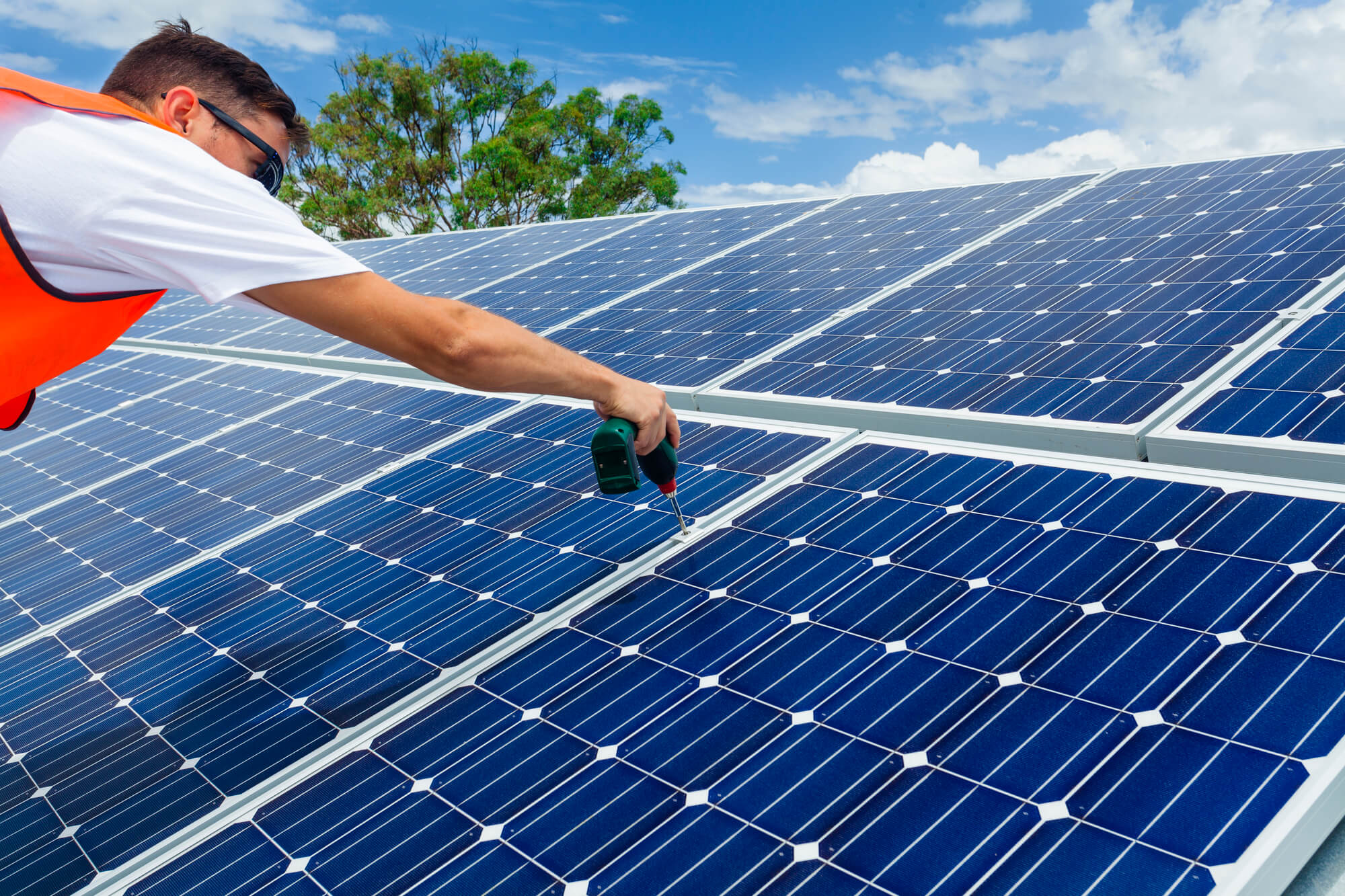
The installer recommended splitting the array between both slopes: 5 panels on the east-facing slope and 4 panels on the west-facing slope, totalling 3.6kWp. A string inverter was used with two separate strings to prevent cross-shading between east and west panels. Total system cost: £6,800 including a 7kWh battery to capture west-facing afternoon generation for evening use.
Implementation
The split east-west system was confirmed by the installer’s shade modelling as the most productive configuration for the roof geometry. Generation was estimated at 2,650kWh per year (approximately 80% of what a south-facing system of the same size would produce).
Results
First-year generation came in at 2,720kWh, slightly above estimate. Bill savings of £520 plus SEG income of £95 gave a total benefit of £615. The couple were pleased that a roof they had initially thought unsuitable produced a financially worthwhile result. Payback is estimated at 11 years.
Expert Insights From Our Solar Panel Installers About Roof Suitability
“People often rule out their roof before they’ve had a proper survey. I’ve installed productive systems on north-facing supplementary slopes, heavily shaded gardens with power optimisers, and 1950s bungalows that looked impossible on paper. The things that genuinely stop us are asbestos without the right approach, active structural problems, and a roof that’s clearly got less than 5 years of life left. Nearly everything else is workable. Get the survey done and let the numbers tell the story,” says one of our senior solar panel installers with over 14 years of UK residential experience.
Frequently Asked Questions
Does my roof need to face south for solar panels?
No. South-facing is optimal but east and west-facing roofs still produce 80–85% of the output of a south-facing equivalent. Split arrays across east and west slopes work particularly well with battery storage. North-facing roofs are the only orientation that typically doesn’t produce enough to justify installation on its own.
What is the minimum roof area needed for solar panels?
A practical minimum is around 14–15 square metres of usable unobstructed roof space for a 3kWp system (7–8 panels). Each standard 400W panel requires approximately 1.7 square metres. The usable area is always less than the total roof area due to clearances from edges, chimneys, skylights, and other penetrations.
Can I have solar panels on a flat roof?
Yes. Flat roofs use tilted mounting frames (typically set at 15–30 degrees) to optimise panel angle. Ballasted frames avoid penetrating the waterproof membrane. The roof must have adequate structural strength to carry the frame and ballast weight, which should be confirmed by the installer. Flat roof solar is common on commercial properties and some residential extensions or garages.
Will trees shade my solar panels?
If trees cast shade on the panels during peak generation hours (typically 9am–3pm), output will be reduced. The extent depends on which panels are shaded, for how long, and the inverter type. A shade analysis using software tools is the best way to quantify the impact. In some cases, tree pruning or power optimisers eliminate the problem. In others, shading is severe enough to make the installation unviable.
Can I have solar panels on a listed building?
Yes, but you need Listed Building Consent from the local planning authority before installation. Consent is not guaranteed and depends on the listing grade, the local authority’s policy, and the proposed installation approach. In-roof systems and solar tiles (such as Tesla Solar Roof or Marley SolarTile) are generally viewed more favourably than on-roof panels for listed buildings. An experienced planning consultant can advise before you apply.
Do solar panels damage the roof?
A properly installed solar array by a reputable MCS-certified installer does not damage the roof. Fixings are designed to be weatherproof and the manufacturer’s warranty covers the fixing system. Poorly installed systems, or installations where roof condition was not properly assessed, can occasionally lead to leaks. Always use an MCS-certified installer and check that they are RECC-registered for consumer protection.
What happens if I need to re-roof after solar is installed?
The solar array needs to be temporarily removed for any significant re-roofing work. This typically costs £800–£2,000 for removal and reinstallation by a solar specialist. To avoid this cost, it is sensible to address significant roof repairs before solar installation, or to plan the re-roofing and solar installation together as a combined project.
How do I know if my roof is strong enough for solar panels?
Your MCS-certified installer will assess roof structural suitability during the site survey as part of their standard process. For most standard UK homes with traditional timber rafter construction, the additional 15–20kg per square metre of panels is within structural capacity. If your installer identifies concerns, they will recommend a structural engineer’s assessment (£300–£600). This is uncommon for standard domestic properties.
Summing Up
Most UK roofs are suitable for solar panels. The key factors are orientation (south to south-west is best, east-west is workable, due north is the main concern), pitch (30–40 degrees optimal but most pitches are fine), available area (14+ m² for a practical system), roof condition (repair before installing if re-roofing is imminent), and shading (the most common performance issue, often solvable with the right inverter approach). The best way to get a definitive answer for your specific roof is a site survey by an MCS-certified installer. Contact us for a free roof assessment and solar quote.
Updated