
Detached houses offer the greatest flexibility of any residential property type for solar panels. With four roof slopes, a detached garage that often adds further usable area, and no shared walls to consider, a detached home can typically support a solar system large enough to power the majority of a family’s electricity needs, including an electric vehicle. If you own a detached house, solar is almost certainly worth exploring seriously.
This guide covers everything specific to solar panels on detached houses in the UK: how much roof area you realistically have, what system size is achievable, planning rules, garage roof options, costs, and the savings and payback period you can expect from a well-designed system.
Key Takeaways
- Detached houses typically have the largest usable roof area of any residential property type, often supporting systems of 6 to 10kWp or more.
- Four roof slopes give detached house owners more options than any other property type, with south, south-east, south-west, east, and west-facing slopes all potentially viable.
- A detached garage roof is a significant bonus: adding even a small 1 to 2kWp system on a separate outbuilding can meaningfully increase total generation.
- Most detached house solar installations are permitted development and do not require planning permission, provided the property is not listed or in a conservation area.
- A 6kWp system on a detached house typically generates around 5,100kWh per year in the Midlands, saving £730 to £920 annually, with payback of 10 to 13 years.
- Detached houses are particularly well suited to combining solar with battery storage and EV charging, creating an integrated home energy system that can dramatically cut running costs.
Is a Detached House Suitable for Solar Panels?
Almost every detached house in the UK is suitable for solar panels. A detached house has more roof area than any other residential property type for the same number of bedrooms, and crucially that area is spread across four independent slopes rather than the two slopes of a typical semi-detached or terraced property. This means there is nearly always at least one excellent south-facing slope available, and often two or three usable slopes in total.
The only genuine barriers to solar on a detached house are heavily shaded roofs, extreme disrepair, or a listed building designation. For the vast majority of detached homeowners, the question is not whether solar is suitable but which combination of slopes and system size will deliver the best return.
Roof Orientation and Slope Options
Because a detached house sits independently on its plot, it can face in any direction. Unlike a terraced or semi-detached house where the road determines which slopes face south, a detached house may have a south-facing front slope, a south-facing rear slope, or south-facing gable ends, depending on how it sits on its plot.
The most productive installation is a south-facing slope at 30 to 40 degrees pitch. But detached houses often have more options. A house with a south-facing rear slope and an east-facing gable can use both, generating well throughout the day. A house with east and west-facing main slopes can fit panels on both for an extended generation window. And many larger detached houses have subsidiary roofs over extensions, porches, or garages that add further capacity.
Before assuming your best slope is obvious, it is worth checking all four slopes on Google Maps satellite view and asking your installer to survey everything. Detached house owners frequently discover that a combination of two slopes produces 30 to 50% more generation than the main slope alone.
Roof Area and Panel Capacity
A standard three or four-bedroom detached house has a total roof area of 100 to 160 square metres across all slopes. The usable south-facing area on the main rear or front slope is typically 35 to 55 square metres, which accommodates 10 to 15 panels (4 to 7kWp). When a second usable slope is added, total system capacity commonly reaches 6 to 10kWp. Larger five-bedroom detached houses or those with generous single-storey extensions can support 10 to 14kWp across multiple surfaces.
At current panel sizes of 400 to 450W per panel, a 10kWp system requires around 22 to 25 panels. This is achievable on many detached houses without using every available slope. Your MCS-certified installer will design the optimal layout during the site survey, taking shading, orientation, and roof area into account for each surface.
Roof Condition and Structure
Like any property, the roof must be structurally sound before solar is installed. Panel and mounting systems add around 11 to 14 kg per square metre, which is well within the carrying capacity of most post-war detached house roof structures. Your installer will inspect the loft space to confirm rafter condition and spacing. If any re-roofing is likely within the next five to ten years, it is cost-effective to plan this before or alongside the solar installation, as removing and refitting a solar array for a re-roof adds £600 to £1,000 to the roofing bill.
Detached Garage Roofs
One option unique to detached houses (and some semi-detached properties) is using the garage roof for additional panels. A standard single garage has a roof of 15 to 20 square metres. If the garage is south-facing, this can support 4 to 6 panels (1.6 to 2.7kWp) as a standalone addition to the main house system.
Garage roof panels typically connect to the same inverter as the house system, which requires a short cable run between the buildings. Many detached houses already have underground electrical connections to the garage, making this straightforward. An additional 2kWp on a garage roof adds around 1,700kWh per year in generation, which at 50% self-consumption saves around £204 per year at current rates. The incremental cost of adding garage panels during a house installation is typically £1,500 to £2,500, giving a standalone payback of around 7 to 12 years for that portion.
Planning Permission for Detached Houses
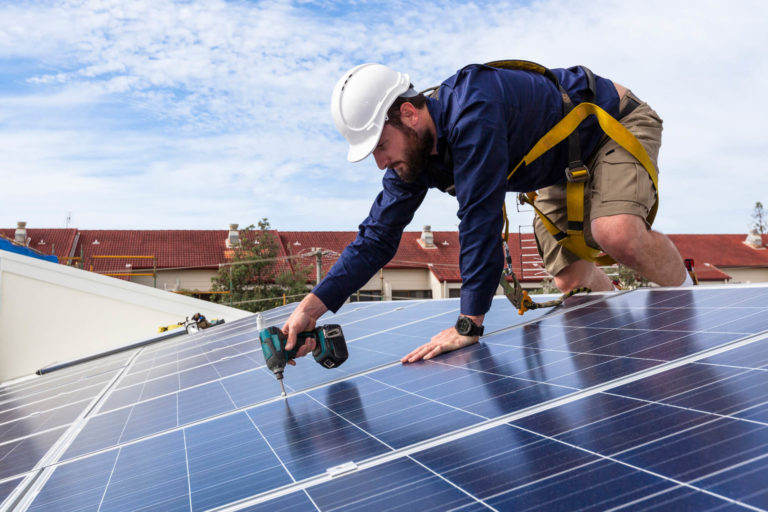
Solar panels on detached houses are permitted development for the vast majority of owners. Under the Planning Portal guidance, solar panels on a dwelling are permitted development as long as panels do not protrude more than 200mm beyond the roof plane, panels are not higher than the highest part of the roof (excluding chimneys), the property is not a listed building, and in conservation areas, panels are not on a roof slope facing the highway.
For most detached homeowners, fitting panels on the rear or side slopes is permitted development almost everywhere. Front slope panels are also permitted development outside conservation areas. If your property is in a conservation area and you want panels on the street-facing front slope, planning permission is required. This typically takes 8 to 12 weeks and costs around £200.
Detached garage panels are also permitted development under the same rules. A detached garage or outbuilding is treated as a separate structure, and panels on it are permitted development as long as the same conditions are met.
If your detached house is listed, listed building consent is required for any external alterations. This applies to any grade of listing. Your local planning authority can confirm your listing status if you are unsure.
System Sizes and Expected Output
Here is a realistic guide to typical system sizes and outputs for detached houses across the UK:
| Property Size / Orientation | Typical System Size | Annual Generation (South UK) | Annual Generation (North UK) |
|---|---|---|---|
| 3-bed detached, one south-facing slope | 5 to 7kWp (11 to 16 panels) | 4,250 to 5,950kWh | 3,600 to 5,100kWh |
| 4-bed detached, two usable slopes | 7 to 10kWp (16 to 22 panels) | 5,950 to 8,500kWh | 5,100 to 7,200kWh |
| 5-bed detached, multiple slopes + extension | 10 to 14kWp (22 to 31 panels) | 8,500 to 11,900kWh | 7,200 to 10,100kWh |
| Any size, garage roof added | +1.6 to 2.7kWp (4 to 6 extra panels) | +1,360 to 2,295kWh | +1,160 to 1,950kWh |
These figures assume south-facing slopes at 30 to 40 degrees pitch in the Midlands. South England (London, South East, South West) generates 10 to 15% more than these figures. Scotland and northern England generate 10 to 15% less. Your installer will use your exact postcode and orientation to model expected generation accurately.
Costs for Detached House Solar
Detached house systems tend to be larger than semi-detached or terraced installations, which means a higher total investment but also a larger annual return. The cost per kWp is broadly similar across system sizes, though very large systems of 10kWp or more benefit from slightly lower per-kWp pricing.
| System Size | Installed Cost (approx.) | Annual Saving (at 24p/kWh, 50% self-consumption) | Payback Period |
|---|---|---|---|
| 5kWp | £8,000 to £10,500 | £610 to £770 | 10 to 14 years |
| 6kWp | £9,500 to £12,500 | £730 to £920 | 10 to 14 years |
| 8kWp | £12,000 to £16,000 | £980 to £1,220 | 10 to 13 years |
| 10kWp | £15,000 to £20,000 | £1,220 to £1,530 | 10 to 13 years |
All prices include 0% VAT, which applies to residential solar panels in Great Britain until March 2027. These savings assume 50% self-consumption. Detached households with higher daytime occupancy, EV charging, or battery storage typically achieve 60 to 80% self-consumption, significantly improving the financial return. Adding Smart Export Guarantee income of 10 to 15 pence per kWh for exported surplus shortens payback by a further 1 to 2 years.
Solar, EV Charging, and Battery Storage
Detached houses are the property type where combining solar panels, battery storage, and electric vehicle charging delivers the most powerful home energy system. A detached house typically has a driveway and often a garage, making EV charging installation straightforward. A smart EV charger such as the Zappi or Ohme can be programmed to charge the car only when the solar system is generating surplus electricity, effectively using your car battery as an extension of your home storage.
A typical 8kWp solar system combined with a 10kWh home battery and a smart EV charger can cover 70 to 90% of a household’s combined electricity and EV charging costs from solar alone. For a family driving 8,000 miles per year in an EV, this saves approximately £800 to £1,200 per year on fuel costs in addition to the direct electricity saving. Total annual combined savings of £2,000 to £2,500 are realistic for a well-optimised detached house system, which substantially shortens effective payback even on a large investment.
Battery storage units well suited to detached houses include the GivEnergy 9.5kWh or 13.5kWh, Fox ESS H3 10kWh, Tesla Powerwall 3 (13.5kWh), and Solis hybrid systems paired with PYLONTECH batteries. A detached house with a large garage or utility room has excellent space for battery installation, and the short cable runs typical of a well-designed detached house installation minimise installation complexity.
Case Study: Cheshire 4-Bedroom Detached, 8kWp System
Background
A family of four in a four-bedroom detached house in Wilmslow, Cheshire, had annual electricity consumption of 6,200kWh, including an electric vehicle driven approximately 10,000 miles per year. The property had a south-west-facing rear slope of 38 square metres and an east-facing front slope of 35 square metres. There was a detached double garage with a south-facing roof of 22 square metres. Annual electricity spend before solar was around £1,900.
Project Overview
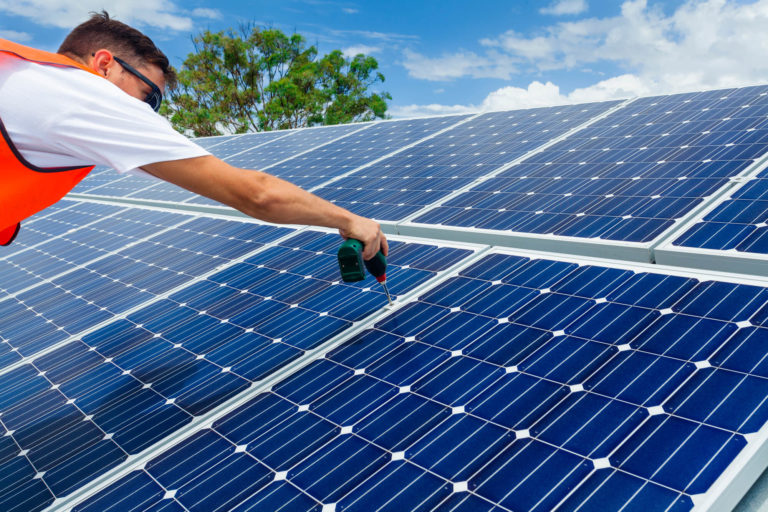
A site survey identified capacity for 10 panels (4.5kWp) on the south-west rear slope, 8 panels (3.6kWp) on the east front slope, and 2 additional panels (0.9kWp) on the garage, giving a combined 20 panels and 9kWp across three surfaces. The family chose to proceed with the two house slopes only at 8.1kWp, deferring the garage panels for a later phase. All three surfaces fell under permitted development. An MCS-certified installer completed the installation in two days. A Zappi smart EV charger was installed simultaneously.
Results
In the first full year, the 8.1kWp system generated 6,885kWh. The Zappi smart charger shifted 1,400kWh of EV charging to solar generation hours, and general household self-consumption accounted for a further 2,300kWh. Total self-consumption was 3,700kWh, or 54% of generation. This saved £888 on grid electricity at 24p/kWh. The remaining 3,185kWh was exported under the SEG at 12p, earning £382. Total annual benefit: £1,270. At that rate, the payback on the £13,500 combined installation cost (solar plus Zappi) is approximately 10.6 years.
The family subsequently added a 9.5kWh GivEnergy battery, pushing total self-consumption to 74% of generation. Annual combined savings rose to approximately £1,680 including SEG and EV charging, reducing combined system payback to around 13 years on the full £17,800 investment.
Expert Insights From Our Solar Panel Installers About Detached Houses
One of our senior solar panel installers with over 20 years of experience commented: “Detached houses are where we really get to do our best work. There’s usually enough roof to build a system that genuinely transforms the household energy bill, not just nibbles at the edges. The clients who get the best outcomes are the ones who come to the survey with an open mind about which slopes to use. We had a homeowner last year who was convinced he wanted panels on his south-west rear slope only, but when we surveyed the garage and the east-facing side slope as well, we ended up with a 10kWp system that generates 8,500kWh a year. That completely changed the economics. With a battery and an EV charger, they’re now covering about 80% of all their electricity including car charging from their own roof. The upfront investment was higher but the return is exceptional. Don’t go in with a fixed idea. Let the survey tell you what’s possible.”
Frequently Asked Questions
How many solar panels can I fit on a detached house?
A typical four-bedroom detached house can fit 16 to 22 panels (7 to 10kWp) across two usable slopes. A five-bedroom detached house with extensions can accommodate 22 to 31 panels (10 to 14kWp). A detached garage roof can add a further 4 to 6 panels. Your installer will confirm exact numbers during the site survey, accounting for roof area, shading, and orientation on each slope.
Do I need planning permission for solar on a detached house?
Most detached house solar installations are permitted development and do not need planning permission. Panels on rear and side slopes are almost always permitted development. Front slope panels are permitted development outside conservation areas. Listed buildings require listed building consent. In conservation areas, planning permission is required if panels on the front slope are visible from the street.
Can I put solar panels on my detached garage?
Yes. A detached garage roof is a separate structure and can have solar panels installed under the same permitted development rules as the main house. A south-facing single garage roof typically supports 4 to 6 panels (1.6 to 2.7kWp), generating around 1,400 to 2,300kWh per year. The panels are usually connected to the same inverter as the main house system via an underground cable run between the buildings.
How much does solar cost for a detached house?
A 6kWp system on a detached house costs approximately £9,500 to £12,500 installed with 0% VAT. An 8kWp system costs £12,000 to £16,000. A 10kWp system costs £15,000 to £20,000. These prices include panels, inverter, mounting, wiring, and commissioning. Battery storage adds £2,500 to £4,500 for a 5 to 10kWh unit.
How much will solar panels save on a detached house?
An 8kWp system on a detached house typically saves £980 to £1,220 per year in electricity bills at 50% self-consumption, plus Smart Export Guarantee income of £300 to £400 per year. Adding a smart EV charger and battery storage can push total annual savings to £1,500 to £2,500 depending on driving habits and tariff.
What is the payback period for solar on a detached house?
The payback period for solar on a detached house is typically 10 to 13 years for a solar-only installation. Adding battery storage extends the initial investment but also increases annual savings, so the payback period tends to remain in the 12 to 14 year range for a combined system. Households with EVs and smart charging often achieve effective payback closer to 9 to 11 years when fuel savings are included.
Is it worth combining solar with EV charging on a detached house?
Yes, solar and EV charging is one of the best combinations for detached homeowners. A smart charger such as Zappi or Ohme automatically charges your car from surplus solar generation rather than the grid. For a household driving 8,000 to 10,000 miles per year in an EV, this can save £600 to £900 per year in fuel costs in addition to the direct electricity bill savings from solar.
Can a detached house go fully off-grid with solar?
Full off-grid is technically possible for a detached house but is rarely practical or cost-effective in the UK. The low winter sun means solar generation drops to 10 to 30% of summer output, so covering all winter demand requires an extremely large battery bank. Most detached house owners are better served by a grid-connected system with battery storage that covers 70 to 90% of annual demand from solar, with the grid as a reliable backup for winter shortfalls.
Summing Up
Detached houses offer more solar potential than any other residential property type. The combination of four usable slopes, generous roof area, and the ability to add a garage roof can create a system large enough to cover the majority of your household’s electricity use, including EV charging. With 0% VAT applying to residential solar in Great Britain until March 2027 and Smart Export Guarantee rates holding at 10 to 15 pence per kWh, the financial case is strong.
The key to getting the most from solar on a detached house is a thorough site survey that looks at all available surfaces, not just the obvious rear slope. For professional solar panel installation with a free site survey, contact us for a free quote.
Updated