
Your roof type is one of the first things a solar surveyor checks. Some roofs are ideal for solar, some require special handling, and a few are genuinely unsuitable. Understanding your roof’s compatibility helps you plan realistically and avoid disappointment.
The good news is that most UK homes can have solar panels installed. Whether you have a pitched tile roof, a slate roof, a flat roof, or metal sheeting, viable installation methods exist. What changes is the cost, complexity, and exact system design. A south-facing pitched tile roof is straightforward and cheap to install on. A slate roof costs a bit more because skilled roofers must carefully remove and replace each slate. Flat roofs are possible but require ballast systems that add expense and take up more space. Asbestos-containing roofs need specialist surveys and handling.
This guide walks you through each roof type, explains the installation method for each, covers cost implications, and identifies which roofs genuinely aren’t suitable for solar.
Key Takeaways
- Pitched tile and slate roofs (most common in the UK) are ideal for solar installation with no special requirements
- Flat roofs can accept solar panels using ballast systems, but they require more space and cost 10-15% more than pitched roofs
- Metal roofs are straightforward and often cheaper to install on than tiled roofs
- Asbestos-containing roofs require professional surveys and specialist handling, adding £1,500-3,000 to projects
- South and south-west facing roofs are optimal; north-facing roofs generate 40-50% less output and are rarely recommended
- Roof age matters: consider replacing roofs older than 20-25 years before adding solar
- Pitched roofs need structural assessment to handle panel and mounting weight (typically 15-20kg per square metre)
- Building Control approval requirements vary by roof type and location (most straightforward for residential pitched roofs)
Pitched Tile Roofs (The UK Standard)
Installation Method
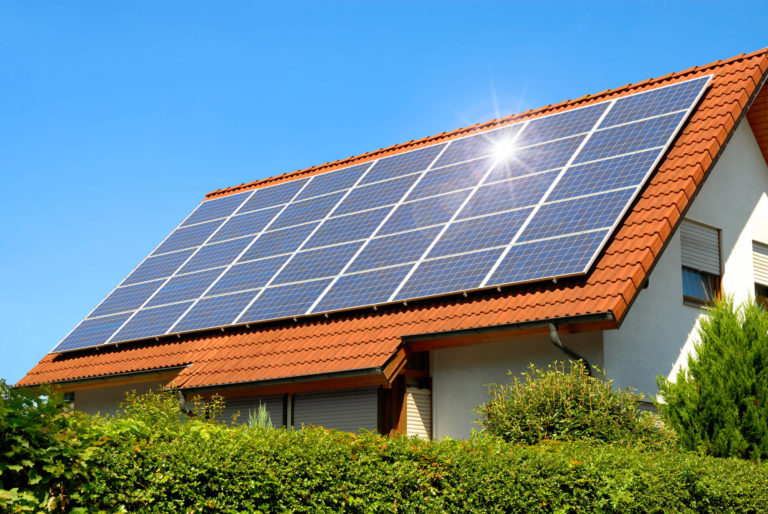
Pitched tile roofs are the most common in the UK and the easiest to install solar on. Installers remove rows of tiles where mounting rails will go, attach flashing and securing brackets to the roof structure, then replace tiles around the rails. The entire process takes just a few hours for a typical 3-4kW system.
Mounting rails run from the gutter line towards the ridge, spaced roughly 1 metre apart. The rails distribute the weight of the panels (about 15kg per square metre) across the roof structure. All joints and penetrations are sealed with roof cement to prevent leaks.
Cost Implications
Pitched tile roofs represent the baseline cost for solar installation. Labour costs are moderate because the process is familiar to installers. No special equipment or specialist skills are required beyond normal roofer competence. You’ll see quotes in the £6,000-8,000 range for a standard 4kW system on a pitched tile roof without complications.
Structural Assessment
A solar surveyor will visually inspect the roof’s condition and pitch. For most UK homes, structural capacity is not an issue. Roof trusses and joists are designed to handle snow loads of 100kg per square metre; solar panels add only 15-20kg per square metre. If your roof has visible damage, sagging, or rot, these must be addressed first.
Slate Roofs
Installation Method
Slate is beautiful and durable but requires skilled installation. Installers must carefully remove slates in the areas where mounting rails will attach, rather than breaking them. Each slate is numbered, removed, stored, and then precisely replaced after the rails are secured. This is slower and more expensive than tile installation.
Because slate is harder and more brittle, installers use special techniques and tools to remove and replace it safely. A skilled roofer can remove and refit a slate in 5-10 minutes, but this still adds significantly to labour time. A 3-4kW system on slate might take 1.5-2 days instead of one day on tile.
Cost Implications
Slate roof installation costs 15-25% more than equivalent tile roof work. A 4kW system on slate might cost £7,000-9,000 instead of £6,000-7,500. The additional cost reflects skilled labour and the time required to remove and replace slates carefully. Older slates become more brittle and harder to handle without breaking, which increases the cost further.
Flat Roofs
Installation Method (Ballast System)
Flat roofs use ballast-mounted systems rather than roof-penetrating installations. Concrete blocks or weighted frames hold panels down without holes being drilled through the roof membrane. This preserves the waterproofing integrity of the roof.
Ballast systems require more roof space (panels are typically angled at 30 degrees rather than lying flat, so they occupy more area). A 4kW system on a pitched roof might need 25 square metres; on a flat roof, it could need 35-40 square metres because of the angle.
Cost Implications
Flat roof installations cost 10-15% more per kilowatt than pitched roofs. A 4kW system on a flat roof might cost £6,800-8,500 instead of £6,000-7,500. The higher cost reflects the ballast system itself and additional structural assessment required because the system must be engineered to resist wind uplift without roof penetration.
Metal and Corrugated Roofs
Installation Method
Metal roofs and corrugated sheeting (common on agricultural buildings, some modern homes, and industrial structures) are quick to install on. Mounting clamps grip the corrugations without penetration, or bolts can be inserted through the ribs. The process is faster than tile or slate installation.
Cost Implications
Metal roofs often result in lower installation costs, particularly compared to slate. Labour time is minimal because no tile removal is required. Quotes might be 10-20% lower than equivalent pitched tile installations.
Asbestos-Containing Roofs
Asbestos Surveys
If your home was built before 1990, asbestos surveys are legally required before any roof work. Asbestos may be present in tiles, flashing, roof cement, or pipe insulation. Surveys cost £200-400 and are usually arranged by your installer. If asbestos is confirmed, two options exist: specialist removal before solar installation (£1,500-3,000), or working carefully around it without disturbance if it’s in a separate area from the mounting points.
Unsuitable Roof Types
Thatched roofs are generally unsuitable for solar panels. Installation requires roof penetration, which compromises the integrity of thatch. Most thatched buildings are Listed Properties with strict Conservation regulations preventing modifications. Severely damaged or end-of-life roofs should be replaced before solar installation, as removing and reinstalling panels mid-life doubles labour costs. Roofs with sagging, visible rot, or compromised structural integrity must be strengthened or replaced first.

Case Study: Victorian Terraced House in Edinburgh
Background
A homeowner owned a 1890s Victorian terraced property with an original slate roof. The house was not Listed but was in a Conservation Area. The homeowner wanted to reduce energy bills and was considering solar panels.
Project Overview
The surveyor noted that the slate roof was in good condition (well-maintained, no significant weathering damage). An asbestos survey was required because of the age. The survey identified asbestos-containing flashing but not in the areas where solar mounting would attach. The solar installer was confident they could work around the asbestos without disturbing it.
Implementation
A 3.5kW system was designed for the south-facing slope. Because the roof is slate, installation took 1.5 days instead of one day. Skilled roofers carefully removed 15 slates, attached the mounting system, and replaced the slates precisely. The entire project cost £7,800 (including asbestos survey but without specialist asbestos removal, because none was required).
Results
The system generates approximately 2,800 kWh per year, covering 60-65% of the household’s electricity demand. The additional cost for slate installation (roughly £900 more than it would have cost on a tile roof) is paid back over the first 3-4 years through energy savings. The house maintains its traditional character, and the slate roof continues to serve its protective role with no compromise.
Expert Insights From Our Solar Panel Installers About Roof Types
“Roof condition and type determine whether a solar project is straightforward or complex,” explains one of our senior solar panel installers with over 20 years of experience. “We always do a thorough survey before quoting. A pitched tile roof in good condition is ideal, quick, and affordable. Slate is fine if the slates are sound, but it adds time and cost. Flat roofs work but need more space and structural assessment. If someone’s roof is 30 years old, we strongly recommend replacing it first. And asbestos is managed easily if you’re aware of it, but it surprises people. We always order surveys for pre-1990 homes. Planning permission is occasionally required, particularly for Listed Buildings or flats in Conservation Areas. Always check locally before committing to a design.”
Frequently Asked Questions
Can you install solar panels on a slate roof?
Yes, but it costs 15-25% more than tile roofs because skilled roofers must carefully remove and replace slates. The installation takes longer, but it’s straightforward if the slate is in good condition. Asbestos surveys are required for pre-1990 properties, though asbestos rarely affects the installation itself.
Can solar panels go on a flat roof?
Yes. Flat roofs use ballast-mounted systems (weighted frames) rather than roof-penetrating installations. This preserves the roof membrane. Ballast systems cost 10-15% more because they require more space and additional structural assessment. They work well for commercial buildings and modern homes.
What if my roof contains asbestos?
Asbestos surveys are required for pre-1990 homes before any roof work. If asbestos is found in areas where mounting will attach, specialist removal costs £1,500-3,000. If it’s elsewhere (like flashing), installers can usually work around it without disturbance. Discuss options during surveying.
Should I replace my roof before installing solar?
If your roof is older than 20-25 years or showing significant wear, plan to replace it before solar. Solar panels last 25+ years, and removing them midway to replace the roof underneath is expensive. If your roof is in good condition and less than 20 years old, installation can proceed without replacement.
Can you install solar on a north-facing roof?
Technically yes, but it’s not recommended. North-facing roofs generate 40-50% less output than south-facing roofs in the UK. The financial return is poor, and most installers will advise against it unless you have no south-facing option. East and west-facing roofs are acceptable alternatives if south isn’t available.
Is Planning Permission required for solar panels on my roof?
For most homes, no. Residential solar on pitched roofs is treated as permitted development in England and Scotland. However, Listed Buildings, Conservation Areas, and flats often require Planning Permission. Check with your Local Authority or ask your installer during surveying.
Will solar panels damage my roof?
No. Modern flashing and mounting systems are designed to last 25+ years without leaks. The weight is minimal (15-20kg per square metre vs 100kg per square metre for snow loads). Properly installed solar does not damage roofs. Poor installation can cause leaks, so choose reputable MCS-accredited installers.
What’s the best roof orientation for solar panels?
South-facing is optimal in the UK, generating 100% of potential output. South-west and south-east are nearly as good (90-95%). East or west-facing roofs are acceptable (70-80%). North-facing is poor (40-50%) and not recommended. Roof pitch of 30-40 degrees is optimal for year-round generation.
Summing Up
Most UK roofs can safely and effectively support solar panels. Pitched tile and slate roofs are ideal and handle installation well. Flat roofs work but require ballast systems and more space. Metal roofs are quick to install on. Asbestos-containing roofs require surveys and careful handling, but this is manageable with specialist contractors.
The key is planning ahead. Get a professional survey, check for asbestos if your home is pre-1990, and verify that your roof is in sound condition. If your roof is old, plan replacement first. Properly installed solar adds no risk to your home and causes no damage. Choose MCS-accredited installers with good references, and your system will serve you reliably for its 25+ year lifespan.
Updated