
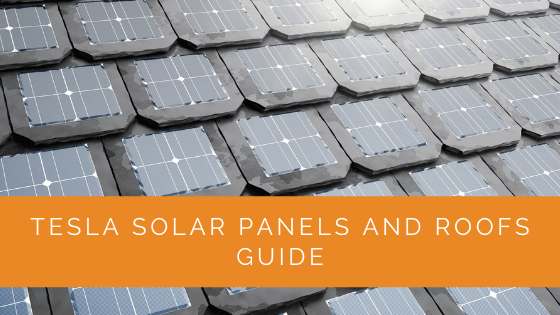
When people think of Tesla and solar energy, the image of gleaming roof tiles generating electricity often comes to mind. Tesla Solar Roof, the company’s integrated photovoltaic tile system, is innovative and visually striking. But here’s what UK homeowners should know: Tesla Solar Roof is not widely available in the UK market, and standard Tesla solar panels, whilst high-quality, are not significantly different from top-tier alternatives from established solar manufacturers.
In this guide, we’ll examine what Tesla Solar offers, why it’s not readily available in the UK, what Tesla solar panels actually are, and how they compare to proven installers and brands available on the UK market. We’ll also explore whether waiting for Tesla’s UK expansion makes sense or whether there are better options available now.
The key takeaway: Tesla is a respected name in renewable energy, but it’s not the only option, and for UK homeowners today, working with an established MCS-certified installer and premium panel manufacturers may offer better value and faster installation times.
Contents
- 1 Key Takeaways
- 2 What Is Tesla Solar Roof?
- 3 Tesla Solar Roof Availability in the UK
- 4 Tesla Panels: Who Makes Them and How Available Are They?
- 5 Tesla Maxeon Panel Specifications and Performance
- 6 Tesla Powerwall Battery in the UK
- 7 How Tesla Compares to Established UK Solar Installers
- 8 Should You Wait for Tesla in the UK?
- 9 Case Study: Homeowner Comparison in the South East
- 10 Expert Insights From Our Solar Panel Installers About Tesla and Alternatives
- 11 Frequently Asked Questions
- 11.1 Is Tesla Solar Roof available in the UK?
- 11.2 What are Tesla solar panels and who makes them?
- 11.3 How much more efficient are Tesla Maxeon panels than regular panels?
- 11.4 Can I buy Tesla Maxeon panels in the UK now?
- 11.5 How much does a Tesla Powerwall cost in the UK?
- 11.6 Should I wait for Tesla to launch in the UK?
- 11.7 How do Tesla panels compare to Canadian Solar or JA Solar panels?
- 11.8 Do Tesla solar systems qualify for Smart Export Guarantee (SEG) in the UK?
- 12 Summing Up
Key Takeaways
- Tesla Solar Roof tiles are not currently available in the UK and have limited availability even in the US due to complex installation and supply constraints
- Tesla manufactures high-efficiency Maxeon solar panels (in partnership with Maxeon Solar) which are available globally, including via some installers in the UK
- Tesla Maxeon panels are premium products with 22-23% efficiency and 25-year warranties, but cost 15-25% more than mid-range alternatives
- Tesla does not directly install systems in the UK; homeowners must use certified installers who stock Tesla panels
- Tesla Powerwall battery storage is available in the UK but typically costs £12,000-15,000 installed (2 units for 13.5kWh capacity)
- For most UK homeowners, established solar brands (Canadian Solar, JA Solar, Longi) offer comparable performance at lower cost and faster installation
- MCS-certified installers (not Tesla-branded) remain the appropriate choice for accessing UK solar grants, SEG contracts, and legal protections
- Waiting for Tesla UK expansion is risky; solar economics favour installing now at 0% VAT (until March 2027) over waiting for future uncertainty
What Is Tesla Solar Roof?
Tesla Solar Roof is an integrated roofing system where photovoltaic tiles replace conventional roof tiles. Each tile is a miniature solar panel embedded in a weatherproof glass structure that looks like traditional slate or terracotta roofing but generates electricity.
The concept is elegant: your entire roof becomes a power generator whilst maintaining a sleek, integrated aesthetic. No bulky black panels sitting on top of your roof, no roof penetrations for mounting systems. Just a roof that looks conventional from a distance but generates solar power across its entire surface.
Tesla Solar Roof tiles contain monocrystalline silicon cells with efficiency in the 15-17% range. The system includes Tesla Powerwall batteries for energy storage and a Tesla energy management app to monitor generation and consumption. In the US, where the product is most mature, homeowners report strong customer satisfaction with the aesthetics and performance.
However, Tesla Solar Roof has been plagued by supply constraints and installation challenges. The product is complex to install, requiring specialised training and coordination with roofers. Installation timelines in the US often exceed 6 to 12 months. Production has been limited, and the system costs significantly more than conventional solar panels plus a roof replacement (typically USD 25,000 to 50,000+ depending on roof size and complexity).
Tesla Solar Roof Availability in the UK
Tesla Solar Roof is not available in the UK as of 2026. Tesla has mentioned UK expansion in the past, but no concrete timeline or launch date has been announced. For UK homeowners interested in integrated solar roofing, there are other options, but Tesla Solar Roof is not one of them.
Even in the US and Australia, where the product was launched first, availability is limited to select postcode areas and delivery can take 6 months to over a year. For a UK-based product launch, similar constraints would likely apply.
Waiting for Tesla Solar Roof to arrive in the UK is not a practical strategy for homeowners wanting solar now. The 0% VAT rate on solar installations in the UK expires on 31 March 2027, after which VAT will return to 5%. Waiting for an uncertain Tesla UK launch could cost you thousands in additional VAT on a solar installation.
Tesla Panels: Who Makes Them and How Available Are They?
When people refer to “Tesla solar panels,” they’re usually referring to panels made by Maxeon Solar Technologies. Maxeon was spun out from SunPower Corporation and is now a separate company, though it maintains a partnership with Tesla. Tesla does not manufacture panels itself but sells Maxeon panels under the Tesla brand in certain markets.
Maxeon panels are premium monocrystalline modules with efficiency ratings of 22 to 23%, amongst the highest available. They have excellent temperature coefficients (meaning they lose less efficiency in hot weather) and come with strong 25-year warranties covering both power output and product defects. Maxeon panels are used by homeowners wanting maximum efficiency and durability.
In the UK, Maxeon panels are available from specialist installers, but they are not as widely stocked as mid-range alternatives like Canadian Solar, JA Solar, or Longi. Availability can be limited, and lead times may be longer than standard panels.
Tesla does not sell panels directly to UK consumers; they are purchased through certified installers. There is no “Tesla installer” network in the UK as exists in the US. Instead, independent MCS-certified solar installers stock Maxeon panels and sell them to customers.
Tesla Maxeon Panel Specifications and Performance
A typical Maxeon residential panel (400W model) has the following characteristics:
Efficiency: 22-23% (converting 22-23% of incident sunlight into electricity)
Temperature coefficient: -0.29% per degree Celsius (panels lose about 0.29% efficiency for every degree above 25 degrees Celsius; lower is better)
25-year linear warranty: Output guaranteed to remain above 87% at year 25 (industry standard is 80%)
Frame: Corrosion-resistant aluminium
Backsheet: Durable polymer with UV resistance
Cost: Approximately 15-25% higher than mid-range panels like Canadian Solar or JA Solar
Performance in UK conditions: A 4kW Maxeon system (10 panels) generates approximately 3,100 to 3,300 kWh per year in the UK (depending on location and shading), compared to 2,900 to 3,100 kWh for equivalent mid-range panels. The extra efficiency translates to about 5-10% more generation, which over 25 years adds up to approximately £3,000 to £5,000 in extra energy or SEG revenue.
For a premium product, this performance gain is worthwhile, but the upfront cost premium (typically £1,500 to £2,500 more than mid-range for a 4kW system) means payback on the premium takes 7 to 10 years. After that point, the superior efficiency benefit becomes clear.
Tesla Powerwall Battery in the UK
Tesla Powerwall is available in the UK, but availability and pricing can be challenging. The Powerwall is a 13.5kWh lithium battery system priced at approximately £10,000 to £12,000 per unit (without installation). Installation adds another £2,000 to £3,000. A typical residential system uses two Powerwalls (27kWh capacity) for approximately £25,000 to £30,000 total.
For comparison, a 10kWh LiFePO4 battery from manufacturers like GivEnergy, Fox ESS, or Solis costs £4,500 to £6,500 installed. Tesla Powerwall offers excellent build quality and Tesla’s energy management app, but the price premium is substantial: 3.5 to 4 times the cost of alternative batteries with similar capacity.
The Powerwall can be used standalone (paired with any solar inverter) or as part of Tesla’s integrated energy system. For most UK homeowners, Tesla Powerwall is a luxury choice; more cost-effective battery options are available from other manufacturers.
How Tesla Compares to Established UK Solar Installers
Tesla’s brand is strong, and the company has a reputation for innovation and quality. However, for UK homeowners today, established solar installers and panel manufacturers offer several advantages:
Availability: MCS-certified installers using panels from Canadian Solar, JA Solar, Longi, or Sunwatt are readily available nationwide. Tesla panels require hunting for specialist installers.
Pricing: Established mid-range panels offer 90% of Maxeon’s performance for 70-80% of the cost. For most UK homeowners, mid-range is the smart choice.
Installation speed: Standard systems can be installed within 4 to 8 weeks. Tesla systems often have longer lead times due to panel availability.
Warranty and after-sales support: MCS-certified installers in the UK are subject to robust consumer protection and warranty frameworks. If an issue arises, resolving it with a local installer is far easier than coordinating with Tesla.
SEG and grant eligibility: All MCS-certified installations (regardless of panel brand) qualify for Smart Export Guarantee contracts and any government grants. Tesla installations qualify equally, so there’s no advantage there.
The bottom line: Tesla is a respected brand, but it’s not the only way to get high-quality solar in the UK. Working with an established MCS-certified installer offers better value and faster installation.
Should You Wait for Tesla in the UK?
Waiting for Tesla to launch in the UK is a gamble with real financial consequences. Here’s why now is better than waiting:
VAT expires March 2027: Until 31 March 2027, solar installations in the UK are subject to 0% VAT. A typical 4kW system costs approximately £7,000 to £9,000 at 0% VAT. After March 2027, VAT rises to 5%, adding £350 to £450 to the cost. If Tesla launches after March 2027, you’ll pay 5% VAT from day one.
Panel costs are volatile: Solar panel prices have been steadily declining for decades. Waiting another 1 to 3 years for a Tesla UK launch might mean panels are cheaper then, but you also lose 1 to 3 years of generation and SEG revenue now.
Energy bill inflation: UK electricity prices are rising faster than panel costs are falling. Installing now locks in energy generation at today’s costs. Each year you wait, your grid electricity becomes more expensive and the ROI on your solar system improves.
No guaranteed timeline: Tesla has not announced a UK launch date. It could be 2027, 2028, or never. Betting your solar future on an unconfirmed product launch is risky.
If Tesla does launch in the UK and you still want their product, you can always add more panels or upgrade to Powerwall battery later. But delaying installation to wait for Tesla means losing the benefits of solar now.

Case Study: Homeowner Comparison in the South East
Background
A South East homeowner was interested in solar and had heard about Tesla. They wanted a 4kW system with battery storage and were considering waiting for Tesla to launch in the UK.
Project Overview
We compared three scenarios: (1) installing a 4kW system with Canadian Solar panels and a 10kWh Fox ESS battery now (0% VAT), (2) installing an equivalent system with Tesla Maxeon panels and Powerwall in hypothetical UK launch in 2027 (5% VAT), and (3) waiting 2 years hoping for a Tesla launch (losing generation and SEG income in the meantime).
Implementation
Scenario 1 (install now, Canadian Solar + Fox ESS): Total cost £11,500 (0% VAT). System generates 3,100 kWh in year 1, uses 2,200 kWh for home consumption, exports 900 kWh earning £135 in SEG revenue. Self-consumption saves approximately £550 in electricity. Year 1 benefit: £685.
Scenario 2 (install in 2027 with Tesla): Total cost £16,500 (5% VAT, panels more expensive, Powerwall more expensive). System generates 3,300 kWh in year 1. Same consumption and export as scenario 1. Year 1 benefit: £685 (same generation benefit, but paid £5,000 more upfront).
Scenario 3 (wait 2 years): Loses 2 years of generation (approximately 6,200 kWh, worth £1,550 in avoided grid electricity). Loses 2 years of SEG revenue (approximately £270). Pays 5% VAT when eventually installing. Net loss by waiting: approximately £2,000.
Results
The homeowner chose scenario 1: install now with Canadian Solar panels and Fox ESS battery. Total investment was £11,500, payback estimated at 12 to 14 years. After payback, they’ll benefit from nearly free electricity for another 15+ years as panels age with minimal degradation. If they had waited for Tesla and paid £16,500, payback extends to 17 to 19 years, consuming a significant portion of the panel’s remaining warranty period. The early installation was clearly the financial winner.
Expert Insights From Our Solar Panel Installers About Tesla and Alternatives
One of our senior solar panel installers with over 17 years of experience says: “Tesla is a great brand, and Maxeon panels are genuinely excellent. But I’ve been installing solar for nearly two decades, and I’ve never regretted recommending quality panels from Canadian Solar, JA Solar, or Longi. They’re proven, reliable, and offer better value. Homeowners often ask if they should wait for Tesla, and my advice is always the same: install now. The ROI on a 4kW system today is better than waiting for a hypothetical product launch tomorrow. If Tesla arrives and you love it, you can always add more panels. But waiting means losing real generation and real money now.”
Frequently Asked Questions
Is Tesla Solar Roof available in the UK?
No. Tesla Solar Roof is not available in the UK as of 2026. Tesla has mentioned potential UK expansion but has not announced a specific launch date. Even in the US, availability is limited and lead times exceed 6 months.
What are Tesla solar panels and who makes them?
Tesla sells Maxeon solar panels under the Tesla brand. Maxeon Solar Technologies manufactures the panels. Maxeon panels are premium monocrystalline modules with 22-23% efficiency, excellent temperature coefficients, and 25-year warranties. They cost 15-25% more than mid-range alternatives.
How much more efficient are Tesla Maxeon panels than regular panels?
Maxeon panels (22-23% efficiency) are 3-5% more efficient than mid-range panels (19-21% efficiency). This translates to approximately 5-10% more generation over the system’s lifetime. The efficiency advantage is real but modest relative to the 15-25% higher upfront cost.
Can I buy Tesla Maxeon panels in the UK now?
Yes, through specialist MCS-certified installers that stock Maxeon panels. However, Maxeon panels are not as widely available as mid-range alternatives. Lead times and availability can vary by region. Not all installers stock them.
How much does a Tesla Powerwall cost in the UK?
A single Powerwall (13.5kWh) costs £10,000-12,000 without installation. Installation adds £2,000-3,000. A typical residential system uses two units (27kWh capacity) for approximately £25,000-30,000 total. Alternative batteries like GivEnergy or Fox ESS offer similar capacity at £4,500-6,500 per 10kWh.
Should I wait for Tesla to launch in the UK?
No. Waiting risks missing the 0% VAT rate (expires March 2027), losing generation and SEG revenue, and missing out on rising electricity prices. If Tesla launches after you’ve installed, you can always add more panels later. Early installation provides better financial returns.
How do Tesla panels compare to Canadian Solar or JA Solar panels?
Tesla Maxeon panels (22-23% efficiency) are slightly more efficient than Canadian Solar and JA Solar mid-range panels (19-21% efficiency). However, the difference is small. Tesla panels cost 15-25% more upfront. For most UK homeowners, mid-range panels from established brands offer better value and faster availability.
Do Tesla solar systems qualify for Smart Export Guarantee (SEG) in the UK?
Yes. Any MCS-certified solar installation, regardless of panel brand (including Tesla Maxeon), qualifies for SEG contracts. The panel brand does not affect SEG eligibility or payments.
Summing Up
Tesla is an innovative company with strong products, but it’s not the only or necessarily the best option for UK homeowners now. Tesla Solar Roof is not available in the UK, and there’s no confirmed launch date. Tesla Maxeon panels are premium products but cost significantly more than comparable alternatives. Waiting for Tesla to launch in the UK means risking the 0% VAT rate (expiring March 2027), losing generation and SEG revenue, and betting on an unconfirmed product launch. For most UK homeowners, installing solar now with proven MCS-certified installers and established panel brands offers better value, faster installation, and stronger financial returns. To explore your solar options and get a competitive quote, contact us for a free quote. We can discuss whether premium panels are right for your situation or recommend cost-effective alternatives.
Updated